Monday Sep 14, 2026
Monday Sep 14, 2026
Monday, 14 September 2026 05:34 - - {{hitsCtrl.values.hits}}
Sri Lanka Retailers’ Association President Infiyaz Ali
The Ceylon Chamber of Commerce Chairperson Krishan Balendra
Deloitte Touche Tohmatsu India Partner Soumya Dwibedi

Centre for Poverty Analysis Consultant Dr. Roshan Perera

USJ Postgraduate Institute of Management Director Dr. Asanga Ranasinghe

Havelock City Mall Marketing and Leasing General Manager Avanthie De Zoysa

Ceylon Biscuits Director and Chief Executive Officer Nalin Karunaratne
The Hotels Association of Sri Lanka Chief Executive Officer Priantha Fernando

PepperCube Consultants Chief Insights Officer and Executive Director Crystal Nathan (Moderator)
 Modern trade forecast to reach no more than 40% of retail over the next decade
India’s growth seen as a major opportunity for Sri Lanka’s retail sector
Consumer data, regional markets and technology emerge as key drivers of retail growth
Sri Lanka targets 5 m tourists by 2030 as industry seeks higher-value visitors
Tourism spending needs to rise at least to $ 200 per visitor, per day
Tourism calls for stronger infrastructure and more targeted marketing in key markets
By Safna Malik
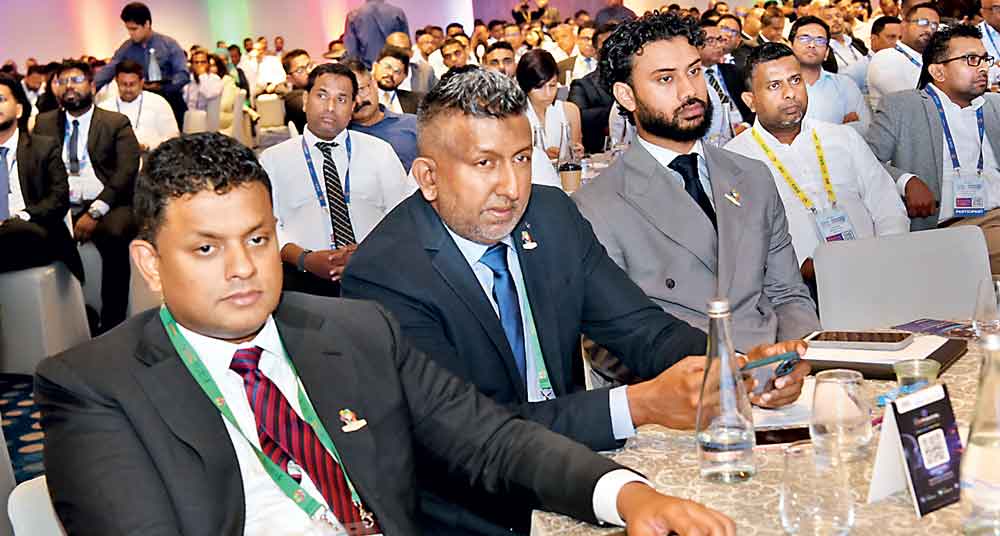
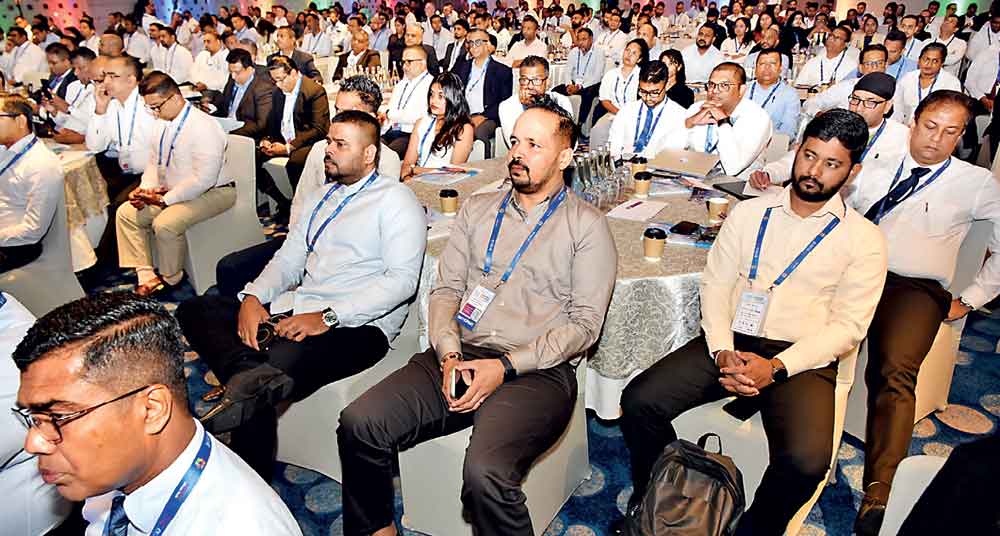
The Sri Lanka Retailers’ Association (SLRA), in partnership with the Ceylon Chamber of Commerce, last week successfully concluded the Sri Lanka Retail Forum 2026 under the theme “Retail Without Boundaries: Building the Next Growth Engine”, bringing together retailers, business leaders and industry experts to explore the changes shaping Sri Lanka’s retail sector and its next phase of growth.
Speaking at the event, Sri Lanka Retailers’ Association (SLRA) President Infiyaz Ali said the theme ‘Retail Without Boundaries: Building the Next Growth Engine’ reflected where the retail sector needed to go as geopolitics, technology and climate change continued to reshape the business environment.
 Retailers need to adapt fast enough to keep growing instead of just keeping up - SLRA President Infiyaz Ali
The forum provided an opportunity to learn from other markets and consider what could be applied in Sri Lanka, as retailers faced a rapidly changing business environment. “Retailers need to adapt fast enough to keep growing instead of just keeping up,” he said.
He also pointed to SLRA’s membership in the Federation of Asia Pacific Retailers Association, which gave its members access to a network spanning 18 countries across the Asia Pacific region.
Addressing the forum as the Chief Guest, Ceylon Chamber of Commerce Chairperson and John Keells Holdings PLC Chairperson Krishan Balendra said Sri Lanka had made important progress in economic stabilisation, with inflation moderating, foreign exchange availability improving and interest rates falling. However, he stressed that recovery alone was not enough and the next priority was sustainable growth.
Recovery alone is not enough. The next priority is sustainable growth - Ceylon Chamber of Commerce Chairperson and John Keells Holdings Chairperson Krishan Balendra
Balendra said policy consistency and predictability were essential for investment and called for Sri Lanka to maintain its reform momentum beyond the current IMF-supported program. Continued reforms, he said, would strengthen policy credibility, support growth and resilience, and improve access to international investment.
Turning to trade, he said Sri Lanka needed greater integration with regional and global markets through stronger exports, improved logistics, modernised customs, simpler regulations and investment facilitation. The removal of para tariffs was a welcome first step, but broader reforms were needed to make the country more competitive.
He also stressed the need to help medium-sized enterprises scale up through better access to finance, technology, skills and export opportunities, saying they could become the next generation of national businesses.
Pointing to Sri Lanka’s location in the Indian Ocean, Balendra said its proximity to India could become a major source of future economic growth. Indian tourist arrivals had increased from around 150,000 a decade ago to more than 500,000 last year, while around 85% of Colombo Port’s volume was transshipment, much of it linked to India.
India’s growth could have a similar impact on Sri Lanka to the benefits neighbouring countries gained from China’s rapid growth two decades ago. The retail sector, he added, would play an important role in this broader economic growth by supporting employment, innovation and consumer demand.
The keynote sessions covered key areas shaping the future of retail, beginning with Deloitte Touche Tohmatsu India LLP Partner Soumya Dwibedi, who addressed retail as a growth engine, regional and global shifts in go-to-market strategies, business transformation and the structural changes needed to support Sri Lanka’s retail expansion.
The Centre for Poverty Analysis Consultant Dr. Roshan Perera focused on productivity and performance, covering operational bottlenecks, efficiency and fiscal policies affecting retail sector growth.
The Postgraduate Institute of Management, University of Sri Jayewardenepura Director Dr. Asanga Ranasinghe addressed customer experience, brand leadership and building trust and loyalty through human connections.
The 1 Central Group Senior Vice President Hansa Wongsiripitack spoke on the future of retail and loyalty through a case study of The 1, Thailand’s digital lifestyle and loyalty platform connecting customers with Central Group businesses and partner brands. She demonstrated how loyalty programs could go beyond points and rewards by connecting customer data, personalised experiences and multiple touchpoints. The session also highlighted how a 360-degree customer view could strengthen engagement.
The most important thing is being relevant: how relevant are you to your consumer and to your target audience? - Havelock City Mall General Manager Marketing and Leasing Avanthie De Zoysa
A key highlight of the forum was the ‘Tech and Future Retail’ panel, featuring Havelock City Mall General Manager - Marketing and Leasing Avanthie De Zoysa, Ceylon Biscuits Ltd. Director and CEO Nalin Karunaratne, and The Hotels Association of Sri Lanka (THASL) CEO Priantha Fernando. The session was moderated by PepperCube Consultants Chief Insights Officer and Executive Director Crystal Nathan.
Phygital customer journey
De Zoysa said the mall combined its physical and digital customer experience. “In the shopping mall, we map the digital experience with the customer journey when a customer walks into the mall,” she said.
She said the journey began with vehicle recognition at the entrance. Instead of taking a parking ticket, the system recognised the vehicle number plate, showed available parking spaces to guide customers. Directional boards and mall directories were also introduced to help customers find their way around the mall and locate stores.
Once customers made a purchase, they could provide their mobile number to earn loyalty points. This allows the mall to track customer shopping patterns, including the stores they visited, how often they visited, how much they spent and what they bought.
This collected information is then used to send location-based notifications, such as promotions on customers’ favourite brands. The mall could also track how long customers stayed and reach out to with offers from their preferred brands. “So, from the time you enter the mall until you leave, the journey is connected,” she said. There is personalisation throughout the journey. Adding, Malls power the economy through taxes, job creation and revenue generation.
AI, big data and Sri Lanka tourism
Speaking about the future of Sri Lanka’s tourism industry, Fernando said the country still had a long way to go in adopting technology compared with more developed markets.
He said hotels needed to use technology better to maximise revenue, particularly because an unsold room meant lost income that could not be recovered. In other countries, hotel prices changed according to demand and room availability, allowing operators to adjust rates. “The industry embraces the latest era of technology,” he said, stressing the need for tourism businesses to move towards digital transformation.
Digital change was also reshaping the travel sector, he said, as travellers increasingly chose their destinations and travel arrangements themselves. DMCs and travel agents therefore needed to make information available online before visitors travelled.
Fernando said the share of business coming into Sri Lanka through DMCs and online travel agencies (OTAs) had fallen from around 81% four or five years ago to around 36% today. This meant DMCs would need to adapt their services to changing consumer behaviour.
Travel apps were also changing how tourists chose places to visit, shop, eat and find entertainment. Service providers across the tourism sector would therefore need to adapt as technology developed.
With Sri Lanka targeting five million tourists by 2030, compared with around 2.3 million currently, Fernando said the country also needed to increase tourist spending. Average daily spending was around $ 156 and needed to reach at least $ 200, he said, with more opportunities created through services and entertainment.
Sri Lanka had been catering more towards budget tourists, he said, while only 10,000 to 12,000 of the country’s approximately 55,000 formal hotel rooms were suitable for the high-end market. These hotels were already recording occupancy levels above 75% to 80%.
My prediction for the next 10 years is that modern trade will not be more than 40% - Ceylon Biscuits Director/CEO Nalin Karunaratne
Fernando also said Sri Lanka had not sufficiently targeted markets such as Japan, Australia and South Korea. Greater focus on these markets could help balance seasonal trends in tourism.
Modern trade growth
Turning to the future of modern trade, Ceylon Biscuits Ltd. Director and Chief Executive Officer Nalin Karunaratne said modern trade now accounted for around 18% to 25%, depending on the category and segment.
“Twenty-five or 26 years ago, the ratio was almost 90% general trade, with only around 10% to 12% modern trade or self-service,” he said. It had therefore taken about 25 years for modern trade to almost double its share.
Karunaratne predicted that modern trade would account for no more than 40% over the next 10 years. “My prediction for the next 10 years is that modern trade will not be more than 40%,” he said.
Legal and policy restrictions on international retail chains entering Sri Lanka could limit further growth, he said. However, local modern trade operators were “second to none” in their offerings and propositions, with more players entering the sector.
Convenience was another factor shaping consumer behaviour. Sri Lanka has around 220,000 retail outlets, with many located close to homes. A one-kilometre drive in Sri Lanka could also take almost twice as long as the same distance in Malaysia, he noted.
Small and medium-sized retailers and neighbourhood outlets were therefore growing faster than modern trade in some areas. The high cost of expanding modern trade was another factor, with larger outlets concentrated mainly in the Western Province and its outskirts, where customer traffic could support faster returns.
Karunaratne also pointed to per-capita income as a factor in the shift towards modern trade. Sri Lanka had not yet seen the level of economic transformation expected at higher income levels, he said, which was why he continued to stand by his 40% prediction.
Consumer data shaping mall retail
Speaking about how consumer behaviour data was influencing tenant selection and retail space design, De Zoysa said consumer data guided its choice of brands and stores. “Modern-day shoppers give us feedback through the many touchpoints available to them,” she said, adding that these touchpoints helped the mall understand consumer preferences.
“The most important thing is being relevant: how relevant are you to your consumer and to your target audience?” De Zoysa said, adding that staying relevant required the mall to keep evolving. Data guided the choice of brands, changes to its store mix and store sizes, as well as the balance between food and beverage (F&B) and non-F&B outlets. “Most of our changes are therefore driven by consumer data,” she said.
Tourism infrastructure and marketing
Explaining the infrastructure gap, Fernando said improvements would be needed to support the country’s plans for high-end tourism, highlighting the need for better accommodation and infrastructure.
Fernando said there was strong demand for Sri Lanka, noting that South Asia was seeing some of the highest tourism demand globally, with around 7% to 8% of global tourist movements, while the country had yet to gain its full potential in the regional market.
 South Asia is seeing some of the highest tourism demand globally, but Sri Lanka has yet to gain its full potential in the regional market - THASL CEO Priantha Fernando
Pointing to marketing as a key gap, he said Sri Lanka had not carried out proper marketing in its key generating markets. Much of the growth had been natural, with hoteliers and destination management companies (DMCs) promoting the destination, while tourism authorities needed to take a more planned approach.
Turning to visitor spending, Fernando said Sri Lanka could increase its prices. “We have to create more opportunities for them to spend their money,” he said. Sri Lanka remained reasonably priced while the quality of its offering had improved, he said. The change in the dollar exchange rate had also increased tourists’ buying power.
FMCG growth beyond volume
Karunaratne said consumers today have access to a great experience, while the same products are often replicated. Some companies were creating products for specific segments and positioning them differently from their mainstream portfolio.
He also pointed to companies developing their own house brands, which could pose a threat to existing players. One way to respond, he said, was to focus on a hero product rather than have an entire product portfolio in every segment. “One hero product can suffice,” he said.
The discussion continued through a series of special sessions, with Singer (Sri Lanka) PLC Group Managing Director Mahesh Wijewardene sharing the company’s transformation playbook, including category expansion, retail execution, brand modernisation and strategies to stay relevant in a changing economy.
Meanwhile, Finetech Consultancy Ltd. Group Director, Group CEO and Co-Founder Clehan Pulle explored AI-enabled customer service, including automated call handling, digital support queues and cloud solutions to improve productivity and reduce operating costs.
Barista Coffee Lanka Ltd. Chief Executive Officer Dilupa Pathirana then shared lessons from Barista’s growth journey, focusing on how continuous learning could support retail expansion. The overall forum offered retailers the opportunity to create more connected experiences and explore new avenues for growth.
- Pix by Shehan Gunasekara