Wednesday Aug 19, 2026
Wednesday Aug 19, 2026
Monday, 17 August 2026 04:16 - - {{hitsCtrl.values.hits}}
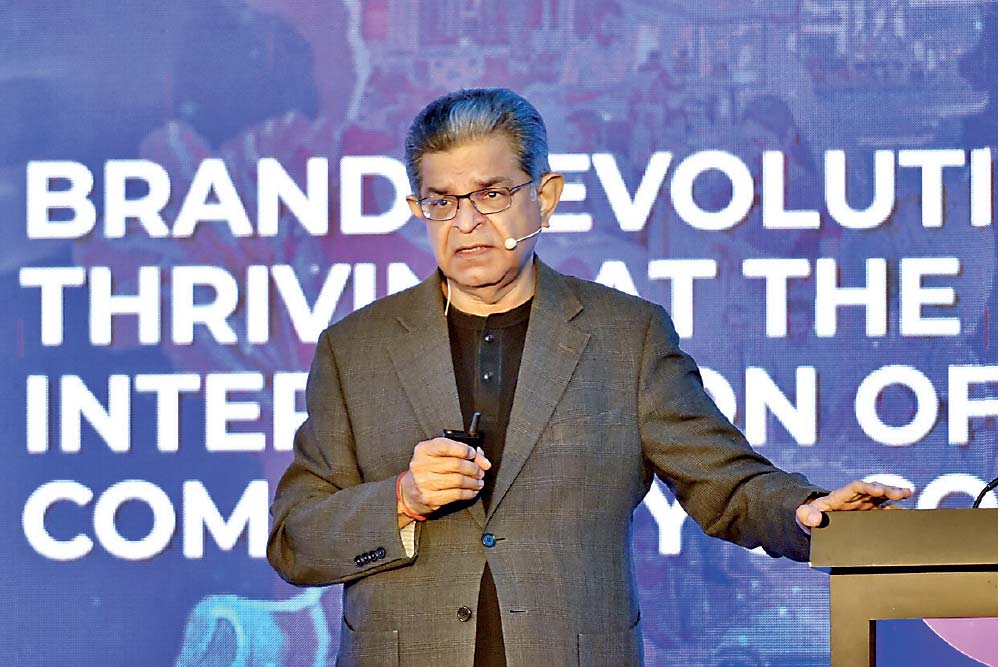
National University of Singapore Business School Associate Professor of Marketing and Executive MBA Program Academic Director Dr. Prem Shamdasani
By Charumini de Silva
Purpose is no longer a corporate social responsibility initiative or a marketing slogan, it has become one of the most powerful drivers of long-term business competitiveness, according to National University of Singapore (NUS) Business School Associate Professor of Marketing and Executive MBA Program Academic Director Dr. Prem Shamdasani.
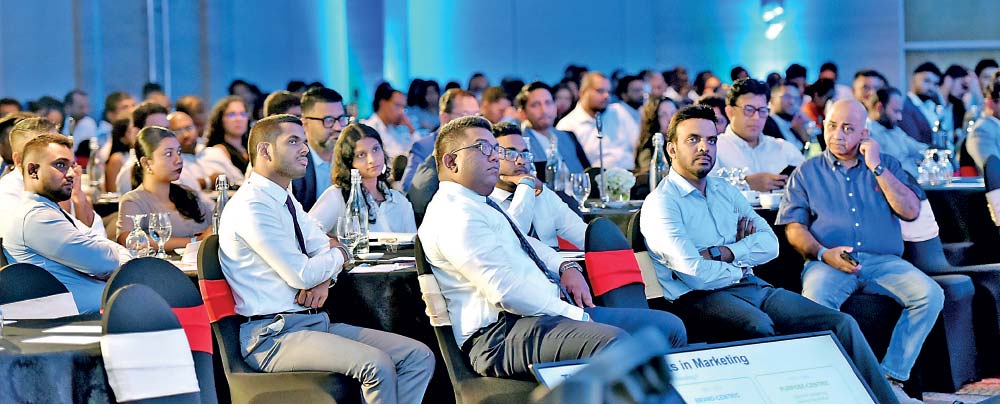
Delivering a keynote on ‘Future-proofing brands: Why purpose matters more than ever’ at the Sri Lanka Brand Conclave 2026, he argued that businesses can no longer rely solely on superior products or strong brands to remain competitive as technology rapidly commoditises industries and consumer expectations undergo a profound transformation.
He urged organisations to evolve from product-centric and brand-centric business models to purpose-centric enterprises that create economic value, while simultaneously generating positive social impact and environmental stewardship.
Dr. Shamdasani stressed that purpose is not an alternative to profitability but a prerequisite for sustainable profitability, arguing that companies embedding purpose across their operations consistently outperform peers through stronger customer loyalty, greater resilience, enhanced trust and reduced business risk.
Positioning Sri Lanka as a country with significant potential to lead in purpose-led business transformation, he said while the country may not always compete on technology or scale, it can differentiate itself globally through authentic purpose-driven businesses.
“I genuinely believe Sri Lanka has the potential to become a leader in purpose-led business transformation,” Dr. Shamdasani said, citing his experience working with leading Sri Lankan corporates including Sri Lanka Insurance, John Keells and Aitken Spence.
Purpose becoming a business imperative
He said one of the most common questions business leaders ask when discussing sustainability, ESG and corporate purpose is simple: “What’s in it for us?”
Dr. Shamdasani’s answer was equally straightforward. “Purpose is no longer a ‘nice-to-have’ initiative, but a business imperative driven by changing customer expectations, investor priorities, regulatory developments and intensifying global competition.”
He argued that profitability and purpose are complementary rather than contradictory. “Purpose without profitability isn’t sustainable. You need profits to continue investing in communities, employees and the environment,” he said.
Instead of focusing solely on financial returns, he insisted companies should embrace the “triple bottom line” of people, planet and profit, creating value simultaneously for shareholders, customers, employees and society.
From products to brands and now to purpose
Tracing the evolution of marketing, Dr. Shamdasani explained that businesses initially competed through products before shifting towards brand-building as markets became increasingly commoditised.
Today, however, he said even strong brands are no longer sufficient. Virtually every industry from artificial intelligence to aerospace and software is experiencing rapid commoditisation, eroding traditional competitive advantages.
“Technology alone rarely provides lasting competitive advantage,” he observed.
Businesses that remain obsessed with product innovation risk falling into what marketing scholars describe as, “marketing myopia” by failing to recognise evolving customer expectations.
He said strong brands still matter because they build trust, emotional connection and resilience, allowing companies to command premium pricing and maintain customer loyalty. But increasingly, purpose is becoming the next frontier of differentiation.
“Businesses now need to become purpose-centric. Long-term profitability increasingly depends on trust, transparency, responsibility and creating value for society alongside shareholders,” he pointed out.
Lessons from Apple, Nokia and Motorola
Using the evolution of the mobile phone industry, Dr. Shamdasani illustrated how even market leaders can quickly lose relevance when they fail to adapt.
“Motorola once dominated global mobile communications before being overtaken by Nokia, which itself appeared unassailable after capturing over 40% of the global handset market. However, the launch of Apple’s iPhone in 2007 fundamentally changed consumer expectations by transforming the mobile phone into an integrated digital lifestyle device,” he said.
He opined that Apple’s success was never simply about manufacturing superior hardware. Instead, it built a powerful ecosystem, distinctive design philosophy and emotional connection that consumers willingly bought into.
“Despite operating in highly commoditised product categories, Apple became one of the world’s most valuable companies because consumers purchase the brand experience rather than individual products,” he said.
Dr. Shamdasani said the lesson for businesses is clear.
Companies future-proof themselves not by making better products alone, but by building stronger brands and ultimately, stronger purpose.
Authenticity replacing marketing slogans
Nevertheless, he cautioned against treating purpose merely as another communications campaign.
He said recent controversies surrounding greenwashing, social washing and exaggerated ESG claims demonstrate that consumers and regulators increasingly demand authenticity.
Dr. Shamdasani stressed that purpose must be embedded throughout an organisation, from corporate strategy and procurement to manufacturing, employee management and customer engagement.
“Purpose isn’t another marketing slogan. It has to become part of the company’s DNA,” he added.
Growing consumer access to information through social media has made radical transparency unavoidable, with customers increasingly questioning where products originate, how workers are treated and whether sustainability commitments are genuine.
“Trust, once lost, is extraordinarily difficult to rebuild,” he warned.
Purpose reshaping supply chains
Drawing on his consulting experience, Dr. Shamdasani described how sustainability expectations are transforming global supply chains.
He recounted working simultaneously with Indonesian palm oil producer Sinar Mas and Nestlé during a period when the global food giant introduced significantly tougher sustainability requirements.
Nestlé demanded full traceability across its palm oil supply chain, requiring every shipment, plantation and supplier to be certified. Although compliance imposed substantial costs on suppliers, failure to comply meant losing access to one of the world’s largest multinational customers.
The case illustrated how purpose increasingly influences commercial relationships rather than merely enhancing corporate reputation.
Nestlé itself underwent a significant transformation after facing years of criticism over deforestation linked to palm oil production.
“Today, sustainability is integrated throughout its supply chain, while brands such as KitKat and Milo openly encourage ‘responsible consumption’ rather than maximising sales,” he said.
China and ExxonMobil illustrate different pathways
Dr. Shamdasani noted that purpose-led transformation rarely follows a single model.
He cited ExxonMobil’s growing investment in carbon capture technology, as an example of balancing commercial realities with long-term emissions reduction, even as broader renewable energy investments remain constrained by shareholder expectations.
China, meanwhile, demonstrated how national priorities can accelerate sustainable innovation.
Large-scale investments in renewable energy, solar technologies and electric vehicles have enabled China to become a global manufacturing leader, while making clean technologies increasingly affordable for emerging economies.
“Purpose and sustainability, can therefore drive innovation and competitiveness rather than simply satisfying regulatory requirements,” he pointed out.
Consumers increasingly buying values, not just products
One of the strongest arguments for purpose comes directly from changing consumer behaviour, Dr. Shamdasani said.
He noted that younger generations, particularly Generation Z and Generation Alpha, increasingly evaluate companies based on their values rather than simply price or product quality.
“Consumers now ask not only what a company sells, but what it stands for,” he added.
Global research consistently shows that customers value transparency, ethical business conduct, employee wellbeing, environmental responsibility and authentic organisational culture.
“Purpose also begins internally,” he noted. Companies cannot successfully project social responsibility externally if employees themselves are not treated fairly and respectfully. “Charity begins at home,” he remarked.
Evidence increasingly supports purpose-led business
Addressing scepticism from executives demanding measurable returns, Dr. Shamdasani cited growing global evidence showing that purpose-led organisations outperform competitors over the long term.
Research by firms including McKinsey indicates companies with clearly defined purpose achieve stronger revenue growth, while Unilever has consistently found that its purpose-led brands outperform conventional brands within its global portfolio.
“Purpose creates advocates rather than merely customers, strengthening loyalty while helping organisations recover more rapidly from crises because stakeholders trust their intentions,” he said.
It also reduces business risk through stronger employee commitment, improved customer retention and greater preparedness for tightening regulatory requirements.
Patagonia demonstrates purpose as competitive advantage
Among the strongest examples of purpose-led branding, Dr. Shamdasani highlighted outdoor apparel company Patagonia.
Rather than encouraging excessive consumption, Patagonia famously urged consumers through its “Don’t Buy This Jacket” campaign to purchase only what they genuinely needed.
The company designs products for durability, offers repair services and invests in sustainable supply chains, even helping develop organic cotton ecosystems benefiting competitors as well.
“While Patagonia’s products command premium prices, customers increasingly perceive them as delivering superior long-term value through longevity and repairability. Purpose therefore becomes a strategic investment rather than an operational cost,” he explained.
Purpose is strategic investment
Dr. Shamdasani also highlighted Dutch chocolate maker Tony’s Chocolonely as another example of purpose creating competitive advantage. Founded in 2005 after journalist Teun van de Keuken exposed child labour and modern slavery in West Africa’s cocoa industry, the company was established with a simple mission—to prove that chocolate could be produced ethically, whilst remaining commercially successful.
Rather than treating sustainability as a marketing campaign, Tony’s embedded its purpose throughout its business model. It built a fully traceable cocoa supply chain, paid farmers higher prices, invested in long-term supplier relationships and made transparency central to its brand. The company argues that poverty among cocoa farmers lies at the heart of child and forced labour, and that creating fairer commercial relationships is essential to eliminating exploitation.
Dr. Shamdasani said Tony’s Chocolonely illustrates how companies can place human rights at the centre of business, while remaining profitable, demonstrating that purpose-driven strategies can strengthen both commercial performance and consumer trust.
Sri Lanka has an opportunity to lead
Dr. Shamdasani argued that businesses capable of combining commercial excellence with genuine purpose will emerge as tomorrow’s winners.
“Technology can be copied, products become commodities and even powerful brands lose relevance.
Purpose, however, creates trust, resilience, loyalty and meaning that competitors struggle to replicate,” he said.
He called on Sri Lankan businesses not to wait for regulators or overseas buyers to impose higher sustainability standards, but instead proactively embrace purpose-led transformation.
“Purpose is no longer simply about doing good. It is about building businesses that remain relevant, resilient and competitive in an increasingly uncertain world,” he stressed.
For Sri Lanka, he suggested, purpose could become a defining competitive advantage in the global marketplace, enabling local companies to differentiate themselves through trust, transparency and long-term value creation rather than competing solely on price or scale.
Program highlights
The conclave also featured an insight session by Kantar Sri Lanka Director and Country Head Himalee Madurasinghe on understanding Generation Z and Alpha, while a strategic discussion on sensory branding brought together Spa Ceylon Ayurveda Wellness Co-Founder and Group Director Shalin Balasuriya and Prima Group Sri Lanka General Manager Sajith Gunaratne, moderated by Janashakthi Group Chief Marketing Officer Gamika De Silva.
Other sessions included Barista Coffee Ltd., CEO Dilupa Pathirana speaking on building brand loyalty through customer experience, and Unilever Sri Lanka marketing leaders Imeshika Kariyawasam and Shamara Perera discussing how the company has modernised its brand playbook.
The forum also marked the launch of the Brand Academy, Brand Leaders Circle and Marketers Meet, while Marketing and Leadership Institute CEO Thomas Barta delivered a keynote on “The 12 Powers of a Marketing Leader.”
A panel discussion on leveraging the evolving digital ecosystem featured Dialog Axiata PLC Group Chief Marketing Officer Lasantha Thevarapperuma and Singer Sri Lanka PLC Marketing Director Janmesh Paul Anthony, moderated by Food Revolution Ltd. Co-Founder Imal Fonseka.
John Keells Group Leisure Sector Senior Vice President – Global Alliances and Partnerships Dileep Mudadeniya presented a case study on “Sri Lanka to the World,” while The One Club for Creativity APAC Regional Director Tay Guan Hin delivered the closing keynote on “Creative Collision: How Great Ideas Emerge from Tension and Contradiction.”
- Pix by Ruwan Walpola