Saturday Jul 04, 2026
Saturday Jul 04, 2026
Wednesday, 25 March 2026 00:16 - - {{hitsCtrl.values.hits}}
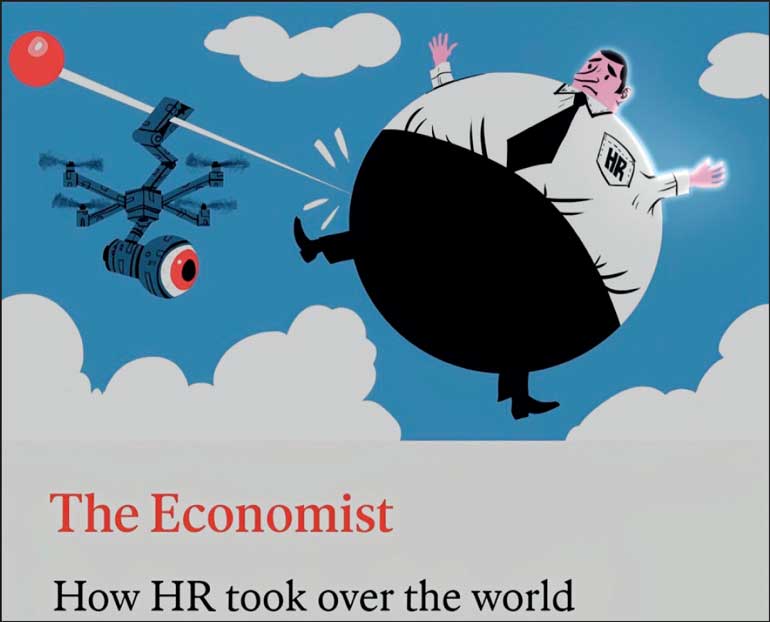
According to The Economist, Human Resources (HR) has expanded its influence from back-office administration to a central strategic function, growing faster than overall employment due to increased corporate volatility, talent shortages, and complex legal risks
 In today’s competitive and unpredictable business environment, the difference between companies that thrive and those that struggle is rarely technology, capital, or strategy alone. More often, it is people — their capability, commitment, and leadership — that determine whether an organisation succeeds or fails. For this reason, effective Human Resource Management must sit at the very heart of business success.
I have been an HR practitioner since the time Personnel Management (PM) evolved into Human Resource Management (HRM). Over the years, I have sat in many board meetings and, unfortunately, watched HR sometimes make a mockery of what good HR should represent. Even during the PM era, it was widely understood that people were the most decisive factor in organisational performance. Yet many companies failed to fully recognise the strategic role that HR could and should play in shaping business outcomes.
Over the past two decades, thinking around HR has evolved significantly, influenced by scholars and practitioners such as Dave Ulrich, Zeynep Ton, Josh Bersin, Laszlo Bock, and Peter Cappelli. Their work has helped organisations recognise that HR must move beyond administrative functions and become a genuine strategic partner to leadership. At its core, HR has a clear but powerful mandate: to attract, develop, motivate, and retain the best talent. When done well, HR becomes a central driver of organisational success. When done poorly, it becomes either irrelevant or obstructive. Unfortunately, in many organisations HR still falls into one of two ineffective extremes.
The first is the “shadow power broker” model, where HR operates quietly behind the scenes, influencing promotions, transfers, and career decisions without transparency. While this may create an illusion of influence, it often erodes trust and discourages talented individuals who value fairness and openness. The second extreme is the “administrative police” model, where HR focuses primarily on compliance, policies, internal newsletters, welfare activities, and rule enforcement.
While these tasks have their place, they do little to strengthen an organisation’s competitiveness or long-term performance. Neither of these models reflects what HR should truly represent.
Strategic partners
In reality, HR should function as a strategic partner to the CEO and the board, helping build the organisation’s most valuable and sustainable competitive advantage — its people. Yet in many companies the Chief Financial Officer continues to wield far greater influence. Financial discipline is essential, but when financial thinking dominates every decision, HR risks being pushed to the margins of strategy.This imbalance is difficult to justify.Consider a professional sports team. If you owned a cricket team, would you rely primarily on the treasurer or the captain? The treasurer can explain the finances, but the captain understands the strengths, weaknesses, and potential of the players. The captain knows how to assemble and lead a winning team.In many ways, HR should play a similar role within an organisation.
HR professionals
 The most effective HR leaders are not bureaucrats or political operators. They are individuals with credibility, business understanding, and moral authority. They understand how organisations function and how talent drives performance. Indeed, some of the best HR leaders have spent time running operations — managing a factory, leading a business unit, or overseeing a major function. This operational experience allows them to engage meaningfully with business leaders and align people strategies with commercial realities. The best HR professionals combine two important qualities. They are part confidant, listening carefully to concerns, grievances, and ideas from across the organisation. At the same time, they are part coach, willing to provide honest feedback when leaders or employees lose direction.
HR’s true value
HR’s true value lies not only in recruiting, counselling, and, when necessary, parting ways with employees — it lies in building systems that drive performance. Effective HR leaders design robust performance management frameworks that identify top talent, develop future leaders, and address underperformance constructively. They create reward structures that genuinely motivate employees and provide development opportunities that allow talent to grow and thrive. HR also plays a critical role in helping organisations confront difficult issues — whether managing complex labour relations, addressing declining performance, or dealing with talented but disruptive individuals. Strong organisations do not shy away from these conversations; they address them thoughtfully and decisively. Ultimately, companies that consistently outperform their competitors understand a simple truth: people strategy is business strategy. For this reason, CEOs and boards must elevate HR to the same level of professionalism and strategic importance as finance. Financial capital can be replicated, and technology can be acquired, but a strong culture, exceptional leadership, and a high-performing workforce are far harder for competitors to replicate. In the final analysis, organisations do not succeed because of their spreadsheets or bank balances. They succeed because of their people. That is why good HR must sit at the very heart of business success.Unfortunately, in many companies HR still takes a back seat rather than being recognised as a central driver of performance and long-term value. This is often because HR itself fails to demonstrate the strategic value it can bring, or because boards and senior leadership simply do not fully understand what good HR can contribute to building a competitive organisation.
(This reflection was inspired by several conversations with a friend who owns a diverse group of businesses and clearly understands the importance of good HR, yet struggles to fully enable it within his own organisations)
References
https://www.ft.lk/opinion/AI-at-work-Why-CEOs-and-HR-must-lead-the-charge/14-779762
https://www.ft.lk/management/Future-of-HR-as-a-profession-and-business-impact-of-HR/53-776750
https://www.rolandberger.com/en/Insights/Publications/Dave-Ulrich-on-the-outside-in-view-of-HR.html#:~:text=Dave Ulrich, a renowned HR, value to stakeholders outside the
The Future Workplace Experience: 10 Rules For Mastering Disruption in Recruiting and Engaging Employees
Book by Jeanne C. Meister and Kevin Mulcahy




