Tuesday Sep 15, 2026
Tuesday Sep 15, 2026
Wednesday, 31 December 2025 00:00 - - {{hitsCtrl.values.hits}}

UNIDO International Regulatory Reform Expert Delia Rodrigo
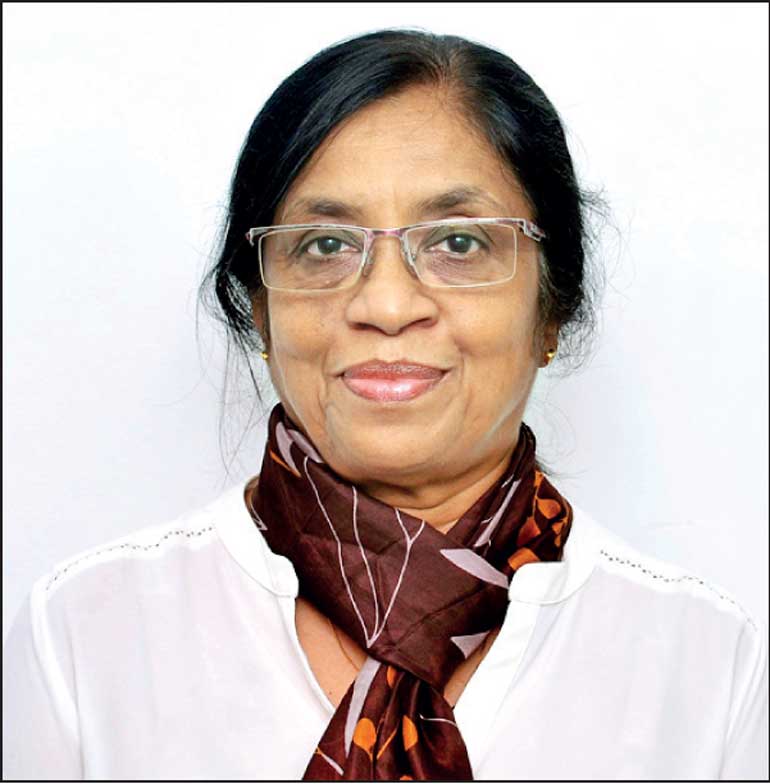
UNIDO National Quality Expert Sumathy Rajasingham
 The following are excerpts of an interview with United Nations Industrial Development Organisation’s (UNIDO) International Regulatory Reform Expert Delia Rodrigo and and National Quality Expert Sumathy Rajasingham who are shaping the adoption of Regulatory Impact Assessment (RIA) in Sri Lanka under the aegis of the Ministry of Science and Technology and the support of the European Union. In this interview they share insights from their expertise to answer questions on RIA’s core, its benefits, global lessons, challenges, and the path ahead.
Most people rarely think about the rules that frame their daily lives, yet every product we buy, every service we rely on, and every investment that enters the country is shaped by regulation. When rules are thoughtfully designed, they protect the public, give firms clarity, and keep competition fair. When rules are pushed through without evidence or engagement, the results can be costly, unpredictable, and difficult to enforce. Good economies do not leave this to chance but invest in the craft of making rules well.
Sri Lanka is now steering in this direction and is taking steps to improve how regulations are made. At the centre of this shift is RIA or Regulatory Impact Assessment. RIA is not a slogan or a box to be ticked, but a disciplined way to choose between the best options. The United Nations Industrial Development Organisation’s (UNIDO) International Regulatory Reform Expert Delia Rodrigo explains, “RIA is a process to improve decision making.” It helps regulators assess the likely impacts of interventions by identifying the best way to address a problem through a qualitative or quantitative comparison of costs and benefits among options. That requires searching for relevant data, testing assumptions, and engaging with the people who will live with the outcome. The effect is practical and powerful: decision makers think before they act, they set out the reasons for their choice, and they invite scrutiny that ultimately strengthens the rule.
Sri Lanka’s renewed push did not start from zero. The first introduction came in 2018, when the Consumer Affairs Authority hosted an awareness workshop. When leadership shifted, momentum faded. The idea remained dormant until 2025, when the Ministry of Science and Technology (MoST) allocated national quality infrastructure funds to revive the adoption of RIA. That decision flagged off a national workshop, bringing together 23 ministries and regulatory agencies. The response was immediate with 31 applications to pilot RIA. Eight have been selected and are now moving forward with technical support from UNIDO. It is the most active RIA program Sri Lanka has attempted, and for a country repositioning for recovery, the stakes are real.
 Q: What does RIA change in the regulatory mindset?
Delia Rodrigo: RIA makes decision making structured. We begin with the problem and consider different options, not just what tradition suggests. We compare costs and benefits and engage relevant stakeholders before choosing. This increases transparency and strengthens evidence-based decisions. It also brings predictability because the reasons are documented and open to review.
Sumathy Rajasingham: Our traditional mindset is control and compliance. We issue rules and demand adherence. What is often missing is a systematic look at effectiveness. Even well-intended regulations can place a heavy burden on businesses, citizens and Government efficiency. RIA begins to shift that culture towards regulation for impact rather than regulation for control.
Q: Why is this shift important now?
Sumathy Rajasingham: Sri Lanka is working to stabilise the economy, restore confidence and improve competitiveness. A system where proposals advance without adequate analysis or consultation creates uncertainty. That can raise costs and slow investment. RIA encourages social participation, informs society about Government intentions and explains the rationale behind actions. That builds trust and gives firms clearer signals to plan.
Q: What has been achieved so far under the current push?
 Sumathy Rajasingham: The MoST organised a two-day workshop that drew interest from 23 ministries and regulatory agencies. We received 31 applications for RIA pilot projects, of which proposals from IRCSL, CAA, CEA, NAQDA, NDDCB, SLTB, CDA and MUSSD were selected. These agencies are now preparing full RIA reports with technical support from UNIDO. The interest is promising. The next step is to translate that interest into a mindset where RIA is routine, not novel.
Q: Globally, what does good RIA practice look like?
Delia Rodrigo: RIA is widely used around the world. Systems vary according to legal, administrative, economic and political conditions, but good practice is consistent. There must be strong political leadership, a mandatory requirement for regulators to conduct RIA, compulsory public consultation, and proper oversight to ensure the quality of the RIAs. Without these elements, RIA risks staying at the surface.
Q: What challenges do countries typically face when getting started?
Delia Rodrigo: There are several. Limited available data and technical capacity to quantify costs and benefits. Weak stakeholder engagement mechanisms and mistrust between regulators and the private sector. Administrative resistance and regulatory capture. Lack of coordination at the centre of Government. These are not unique to Sri Lanka, but they underline the need for deliberate capacity building.
Q: How does RIA connect to trade and investor confidence?
Delia Rodrigo: RIA aligns regulation with international expectations. When measures are proportionate, evidence-based and transparent, exporters face fewer technical barriers in markets such as the EU. Compliance becomes easier to plan, which reduces risk. For investors, especially during recovery, clarity about why regulations exist and how they will be applied is essential. It lowers uncertainty and encourages investment in sectors where Sri Lanka seeks to grow.
Q: What is the road ahead for Sri Lanka if this momentum continues?
Sumathy Rajasingham: The reports from the eight pilot agencies will be important early proof. They will show stakeholders how RIA improves the design of regulation. The next step is to mainstream RIA within the wider national quality infrastructure and through a proposed National Quality Council that can monitor whether RIA is conducted when new regulations are drafted. That is how we ensure sustainability. Once RIA is integrated into policymaking, it becomes part of how Government works rather than a separate, temporary exercise.
Q: What would you say to leaders who are unsure about the value?
Delia Rodrigo: RIA keeps governments from acting on instinct when evidence is available. It helps avoid costly mistakes, builds public trust and supports competitiveness. It offers a disciplined way to make decisions that affect the economy and society. For Sri Lanka, this is about growth that is more resilient and governance that is more credible.
Delia Rodrigo is an international regulatory reform specialist with over 20 years of experience across the World Bank and UNIDO. She brings a global lens. Sumathy Rajasingham is a National Quality Infrastructure Specialist at UNIDO who focuses on Sri Lanka’s quality infrastructure, drawing from her work on standards and conformity assessment.




