Thursday Mar 05, 2026
Thursday Mar 05, 2026
Wednesday, 4 March 2026 00:16 - - {{hitsCtrl.values.hits}}
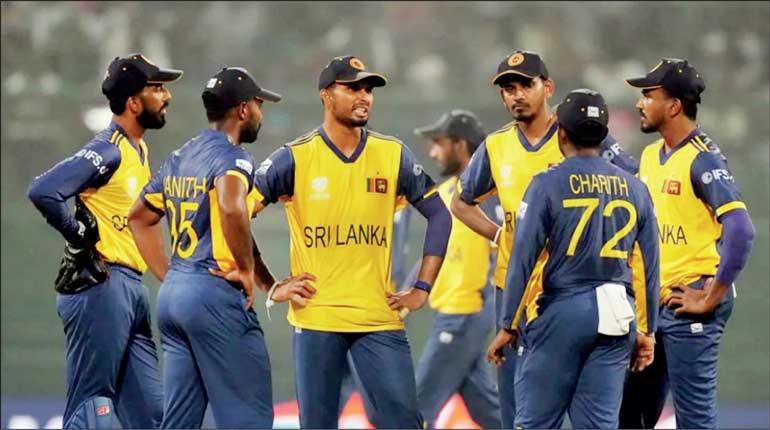
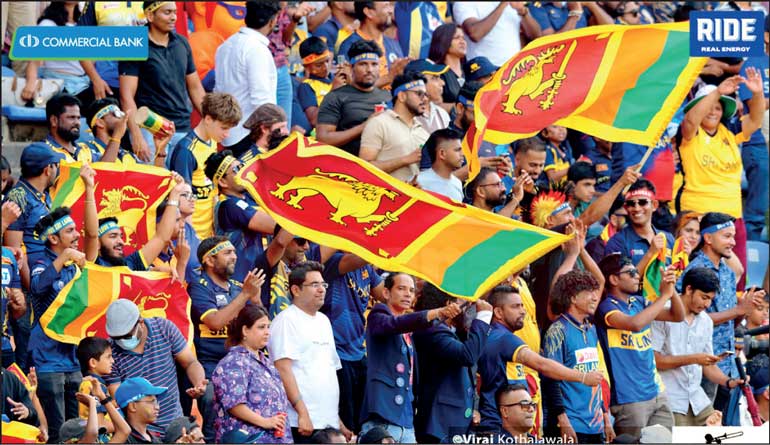
 Cricket has long been Sri Lanka’s most valuable soft-power asset. Today, it doubles as a mirror, reflecting the same issues haunting the economy: weak governance, opaque decision-making, and chronic short-termism. For a business audience, what happens at the crease now matters far beyond the boundary line.
From Lahore 1996 to Colombo 2026: A fraying story
For Sri Lanka’s corporate class, the 1996 World Cup win was not just nostalgia; it was a strategic benchmark. It proved the nation could outthink giants and organise world-class projects, underpinning confidence that Sri Lanka could also manage efficient supply chains and sound institutions.
Fast-forward to 2026. Amidst debt default and IMF restructuring, cricket has stopped being innocent background entertainment. Each administrative scandal raises an uncomfortable question: if the country cannot run its flagship sport competently, what does that imply about its ability to manage complex economic systems?
Why cricket matters to business
It is tempting to treat sport as off-duty territory, but cricket belongs on the business radar for three reasons.
1. National brand and soft power: Cricket remains the primary lens through which the world views Sri Lanka. A disciplined team projects stability, while disputes and poor performance damage the nation’s image. Although investors do not decide based on sport alone, impressions formed in such high-visibility domains shape the overall narrative. As Sri Lanka courts foreign investment and moves beyond a “crisis” label, the conduct of its most recognisable institution is a crucial part of the reputational equation.
2. Governance signalling: Sri Lankan cricket’s institutional flaws, opaque decisions, revolving leadership, and weak accountability, mirror the wider public sector. This resistance to scrutiny normalises opaque governance, echoing the regulatory whiplash faced in other industries. For investors, these signals are critical, shaping expectations about the reliability of state-linked entities and formal commitments. When a quasi-public institution as visible as cricket resists scrutiny, it signals that opacity and informality are the default.
3. Social cohesion and talent retention: Cricket uniquely unites Sri Lankans across social divides, offering a vital shared identity. Yet, mismanagement and politicisation breed cynicism extending beyond sport, leading young professionals to view it as another system wasting talent. For an economy struggling to retain human capital, this perception is a structural risk, not just a cultural annoyance. When employees see gatekeepers protected over merit, it reinforces the anxieties driving emigration.
Cricket as a case study in institutional failure
Viewed through a business lens, Sri Lankan cricket looks like a troubled organisation with familiar weaknesses.
Institutional decay: Sri Lanka’s cricketing infrastructure was once a competitive advantage. Today, politicised club voting blocs and uneven investment in youth development mirror degraded public infrastructure. Short-term personal gains repeatedly trump long-term institutional health.
Short-termism over strategy: Frequent swings in selection and leadership create a volatile environment. Instead of a clear, multi-year plan, the system moves from series to series in crisis-management mode. In corporate terms, this resembles an organisation trapped in reactive firefighting. Enterprises that operate this way rarely deliver sustainable returns.
 Opaque governance: Questions around broadcasting rights and sponsorship deals touch on fundamental risk issues: board composition, audit quality, and conflicts of interest. When handled informally, the outcome is mistrust and a reputational penalty that the entire country may end up paying in the form of reduced confidence and higher perceived risk.
The cost of failure: Not just matches, but narratives
Each heavy defeat has an emotional cost. However, there is a subtler, cumulative cost for the country’s psyche and economic outlook. When Sri Lankans see talented players underperform for reasons unrelated to merit, they recognise their own anxieties. Graduates facing limited job prospects and entrepreneurs navigating inconsistent regulation see the same story: potential exists, but systems fail.
Narratives matter because they shape behaviour. If stakeholders internalise the belief that Sri Lanka cannot run high-visibility institutions competently, capital is parked offshore, top talent leaves, and risk premia remain elevated. Cricket does not create these macro-level patterns, but it reinforces the beliefs that underpin them.
Pathways to reform
Compared with tax reform, fixing cricket governance is a contained problem with clear stakeholders. A credible turnaround requires four standard elements: a strengthened board with independent oversight and term limits; routine transparency in finances and selection; independent performance reviews with public findings; and structured stakeholder engagement that resists political capture. These are proven governance practices; their transformative potential lies in consistent application within a high-visibility arena.
The private sector’s role
Corporate Sri Lanka provides cricket’s financial backbone, giving it leverage. Brands attached to the sport have a legitimate interest in its integrity; conditioning sponsorship on governance standards is prudent risk management, not interference. Companies should raise governance expectations during negotiations and use their platforms to prioritise standards over results. Treating cricket as a governance-free zone undermines the culture of accountability Sri Lanka seeks to build.
Conclusion: A test of national capability
Sri Lanka’s road to economic recovery will be long. Credible institutions will be central to any enduring solution. Cricket will not deliver debt sustainability, but it can answer a revealing question: is the country capable of designing and executing a credible turnaround?
If the answer is “no” even in this domain, it becomes harder to claim that deeper reforms will succeed. If cricket can clean up its own house, it offers a powerful proof of concept that the nation can still align talent, governance, and performance. The next time a Sri Lankan side walks out to play, boardrooms are watching more than a game; they are watching a live experiment in institutional credibility.
(The author is Professor of Marketing at University of Surrey. He could be reached via email at [email protected])




