Wednesday Sep 16, 2026
Wednesday Sep 16, 2026
Thursday, 18 December 2025 03:28 - - {{hitsCtrl.values.hits}}
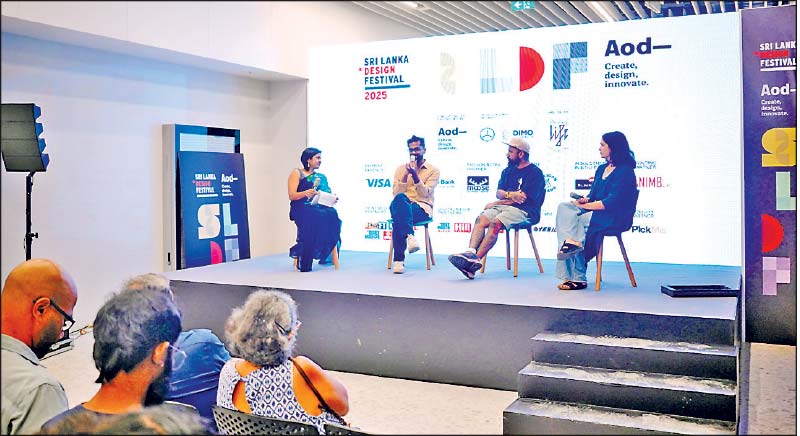
From left: Moderator Chathurangi de Silva, Dr. Dilina Nawarathne, Sanskar Madan Sawant and Sophia Sansoni
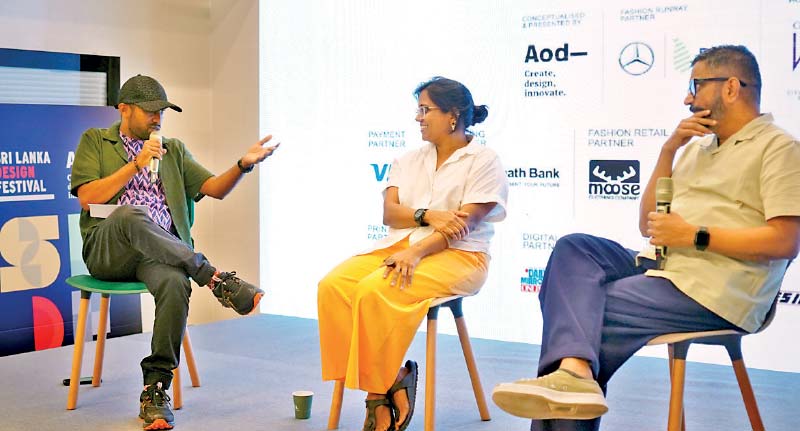
From left: Moderator Mooniak Design Studio Founder Pathum Egodawatta, Good Life X Sri Lanka Founder Randula De Silva, and DesignUp - Catenate.io Director Shiva Viswanathan
By Safna Malik
The Design Dialogues 2025, a key segment of the annual Sri Lanka Design Festival (SLDF), took place over two days at Cinnamon Life, City of Dreams. Presented by the Academy of Design (AOD) and curated by Mooniak Design Studio, the event brought together leading creative professionals from Sri Lanka and India to discuss the theme “How can design shape the future of Sri Lankan identity?” The Design Dialogue explored the role of design in defining local culture, strengthening Sri Lanka’s cultural voice, and positioning Colombo as a regional creative hub within South Asia and beyond.
The SLDF, marking its 17th year, also included flagship events such as the Mercedes-Benz Fashion Week Sri Lanka (MBFWSL) and exhibitions displaying emerging design talent. However, it was the Design Dialogues that particularly highlighted the increasingly significant role of design in addressing cultural, business, academic, and urban development challenges facing Sri Lanka.
The opening session, “Design and South Asian Identities in Business,” was moderated by Mooniak Design Studio founder Pathum Egodawatta. The panel featured Good Life X Sri Lanka Founder Randula De Silva and DesignUp - Catenate.io Director and Founder Shiva Viswanathan. Discussion centred on the necessity for South Asian creative agencies to stake their claim in the global market, underlining the value of storytelling and unique local insights in building sustainable businesses.
De Silva emphasised the importance of businesses leveraging the unique dynamics of local markets, cautioning against adopting a single unified ‘South Asian Identity.’ She argued that workplaces and brands grounded in community values are more authentic and better aligned with local realities. His perspective highlighted the risks of homogenising diverse cultures under broad regional labels.
Viswanathan supported this view by urging creative firms to chart their own courses rather than imitate Western business and design models, some of which have failed in their contexts. He noted a shift in global perception, recognising South Asia as a region rich in serious creative talent rather than as a provider of cheap labour. The panellists agreed that combining creativity with cultural storytelling is essential for competitive positioning and protecting the commercial and heritage value of regional symbols.
The second session, “New Ways of Design: Beyond the Western Textbook,” was led by University of Moratuwa lecturer in integrated design Chathurangi De Silva. Panellists included Homework Studio Founder and Director Sanskar Madan Sawant, Barefoot Design and Strategy Sophia Sansoni, and University of Moratuwa lecturer Dilina Janadith.
They discussed the persistent dominance of Western design paradigms and their limitations when applied to South Asian contexts.
Sawant pointed to active movements among designers moving away from factory-based mass production towards approaches more rooted in local craft traditions. The panel stressed the need for design to be thoughtful, slow, and grounded in ethical practice. Sophia Sansoni underlined that design must prioritise respect for local people and practices.
Chathurangi De Silva shared examples of student projects collaborating with craft communities and working with indigenous materials, emphasising the role of ethical engagement in design education. Dilina Janadith highlighted the importance of decolonising design curricula in Sri Lanka, advocating a shift towards acknowledging local cultural and environmental realities.
This academic discourse reflected a broader shift towards design practices that value indigenous knowledge and encourage designers to develop solutions tailored to regional needs. The third session, “Branding Cities for People, Not Just Tourists,” was moderated by Public Works Story Design Studio Writer and Co-creator Shamalee De Silva Parizeau.
The panel included University of Moratuwa Senior Lecturer in Architecture, Sithumini Rathnamalala and Colombo Urban Lab Co-founder and Director Iromi Perera. The discussion examined how Sri Lankan cities, particularly Colombo, are navigating the complexities of global exposure and urban identity.
Sithumini Rathnamalala emphasised that city branding transcends logos and marketing campaigns; it is an act of narrative creation that shapes how residents feel about their city and their sense of belonging. Iromi Perera echoed this, stating that city branding must centre on the emotional, cultural, and political stakes for local communities, rather than just catering to tourists or external audiences.
The panel raised critical questions about who shapes a city’s identity and the power dynamics involved in urban storytelling. They called for inclusive processes that amplify resident voices and ensure city branding contributes to genuine place-making rooted in local culture and experiences.
The concluding session, “What Could a Unified Lankan Identity Look Like?” tackled the historic social divisions within Sri Lanka in the context of a rising, new national identity gaining international attention. Speakers engaged with the challenge of constructing a collective narrative that unites diverse communities without erasing their distinctiveness.
They explored how design can play a pivotal role in fostering dialogue and reconciliation, creating visual and spatial frameworks that signal inclusivity and respect for difference. The session provided insightful perspectives on the potential for design to function as a tool for healing and nation-building, alongside its cultural and economic roles.
The forum offered attending professionals and stakeholders valuable insights into the powerful role design holds in shaping Sri Lanka’s future identity. Conversations at the Design Dialogues 2025 demonstrated a widespread recognition that design in Sri Lanka is undergoing a transformative turn, embracing local heritage and ethical practice while responding to the pressures of global markets.
As Colombo positions itself as a growing creative capital in South Asia, the discourse set out during the dialogues illustrates a deliberate effort by Sri Lankan designers, academics, and business leaders to craft an identity that honours tradition while innovating for the future.




