Saturday Sep 26, 2026
Saturday Sep 26, 2026
Wednesday, 28 January 2026 11:59 - - {{hitsCtrl.values.hits}}
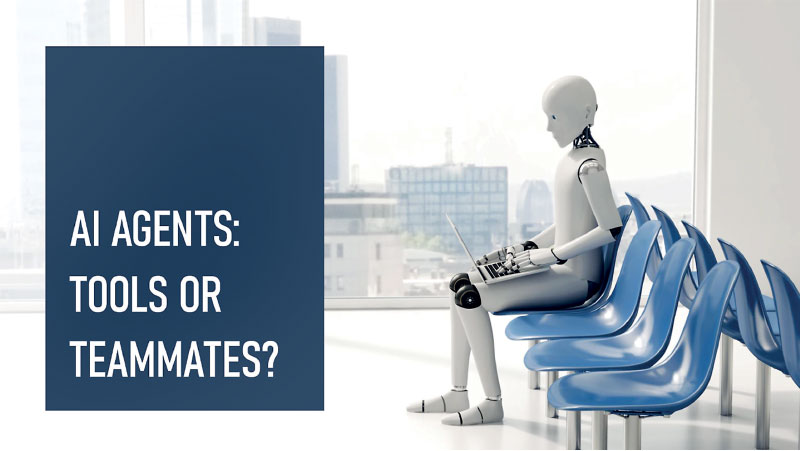
For most of history, machines have been tools — objects humans controlled directly to make work easier. A hammer extended human strength. A calculator extended human speed. A computer extended human processing power. But a fundamental shift is now underway. Machines are no longer just tools we operate; they are becoming teammates we collaborate with.
This transformation is powered by advances in Artificial Intelligence (AI), machine learning, and automation. Modern systems can learn from data, recognize patterns, adapt to new situations, and make recommendations. Instead of simply following instructions, these technologies assist, support, and sometimes even anticipate human needs. The result is a new kind of workplace partnership between people and intelligent systems.
In today’s offices, AI tools already act like digital colleagues. Software can draft emails, summarize reports, analyze customer data, and create presentations. Rather than replacing workers, these systems reduce time spent on repetitive tasks. A marketing professional, for example, can use AI to analyze campaign performance in seconds, allowing more focus on strategy and creativity. The machine handles the heavy data processing; the human provides insight and direction.
In healthcare, the partnership between humans and machines is even more visible. AI systems analyze medical images, compare them with vast databases, and flag potential issues. Doctors still make final decisions, but AI offers an extra layer of precision and speed. This collaboration improves diagnosis and allows healthcare professionals to focus more on patient care rather than administrative tasks.
Manufacturing has entered the era of collaborative robotics, often called “cobots.” Unlike traditional industrial robots that operate separately from humans, cobots work side by side with workers. They handle heavy lifting, repetitive assembly, or precision tasks, while humans manage quality control and complex decision-making. This teamwork increases productivity and improves safety.
Customer service is another area where machines are becoming teammates. Chatbots and virtual assistants handle routine inquiries, freeing human agents to address complex or sensitive issues. Customers receive faster responses, while employees can concentrate on tasks that require empathy and problem-solving.
Education is also evolving through human-machine collaboration. AI-powered learning platforms adjust lessons based on student performance, identifying strengths and weaknesses. Teachers gain detailed insights into learning patterns, enabling them to tailor instruction. The technology does not replace educators; it supports them in delivering more personalized learning experiences.
As machines take on more supportive roles, the nature of work itself changes. Skills such as creativity, emotional intelligence, critical thinking, and adaptability become more valuable. While machines excel at processing data and following patterns, humans remain essential for innovation, ethics, and complex judgment.
However, this new partnership requires trust and transparency. Workers need to understand how AI systems make decisions. If employees feel that technology is unpredictable or unfair, resistance can grow. Organizations must ensure that AI tools are explainable and used responsibly.
Training is also crucial. Employees must learn how to work effectively with digital systems. Just as earlier generations learned to use computers, today’s workforce must develop digital literacy and AI awareness. Businesses that invest in upskilling create smoother integration between people and technology.
There are also broader ethical considerations. Decisions influenced by AI must be monitored to prevent bias or misuse. Clear guidelines and human oversight ensure that technology serves people, not the other way around.
Looking ahead, the line between human and machine collaboration will become even more integrated. Smart systems may suggest solutions during meetings, optimize workflows automatically, or predict problems before they occur. The workplace will increasingly resemble a network of humans and intelligent systems working together toward shared goals.
This shift challenges the old narrative of “humans versus machines.” Instead of competition, the future points to cooperation. Machines bring speed, scale, and analytical power. Humans bring context, empathy, creativity, and moral reasoning. Together, they form stronger teams than either could alone.
The organizations that thrive in this environment will be those that design work around collaboration rather than replacement. Leaders must foster cultures where technology is seen as a partner in innovation. When machines become teammates, businesses unlock new levels of productivity and possibility.
Ultimately, the evolution of machines from tools to teammates reflects a broader truth: technology’s greatest value lies not in what it replaces, but in what it enables people to achieve.




