Friday Oct 16, 2026
Friday Oct 16, 2026
Monday, 31 August 2026 00:04 - - {{hitsCtrl.values.hits}}
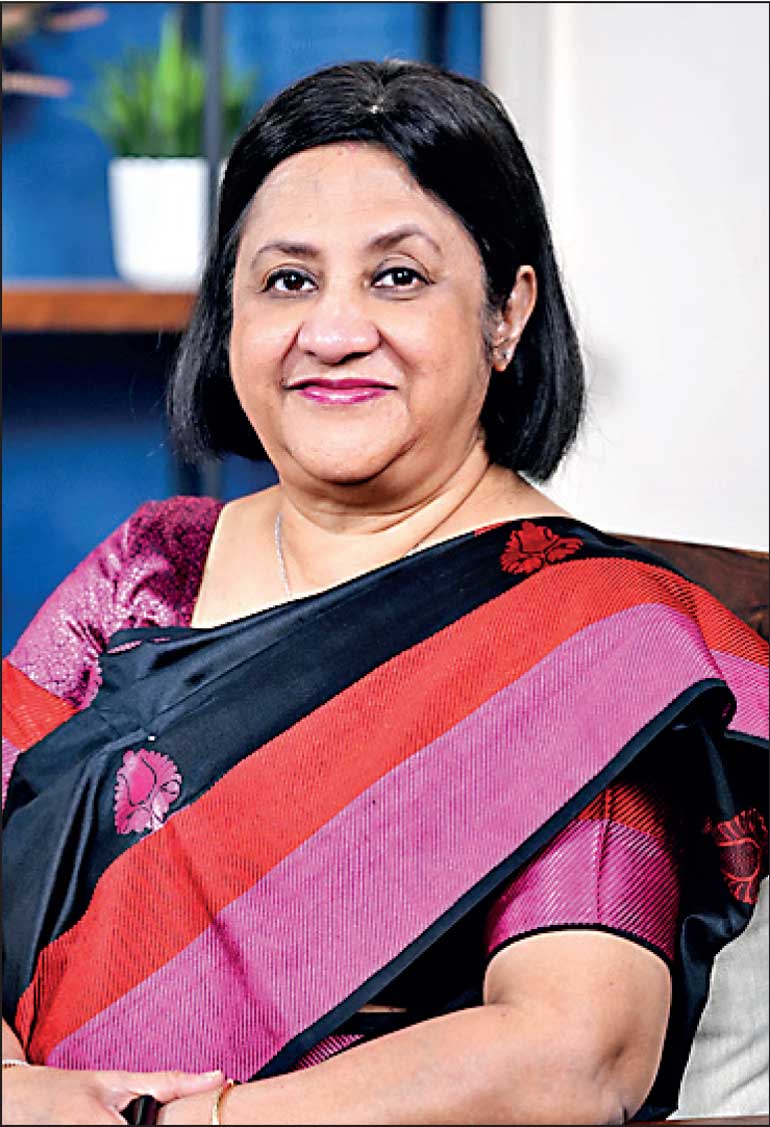
South Asia President and CEO
Arundhati Bhattacharya
Salesforce South Asia President and CEO Arundhati Bhattacharya shares key insights in exclusive interview with Daily FT. Below are excerpts of the interview;
Q: How does Sri Lanka fit into Salesforce’s South Asia growth strategy, and what opportunities make it important to your long-term vision?
A: Sri Lanka is emerging as one of the more compelling growth stories within South Asia, a market where technical talent, entrepreneurial energy, and industries with strong regional and global ties are converging at the right moment. In sectors like tourism, financial services, retail, and diversified conglomerates, the ability to understand and serve customers better is becoming a genuine competitive differentiator, not just a nice-to-have.
What makes this moment significant is that Sri Lanka’s own national ambitions are aligning with where the world is heading. Digital Sri Lanka 2030 puts skills, entrepreneurship, trusted digital services, and inclusive digitalisation at the heart of national growth, and the World Bank’s $50 million digital transformation project is reinforcing that with real investment in digital public infrastructure and private-sector innovation. That’s the kind of foundation that turns a promising market into an important one.
We’re already seeing the early signals: Sri Lanka is the second-strongest startup ecosystem in South Asia after India, with software and data-driven businesses making up roughly 60% of that startup base — and we’ve deliberately expanded our Startup Program there to back that momentum.
Our long-term vision isn’t about pushing technology adoption for its own sake — it’s about growing alongside Sri Lanka as it builds the capabilities and confidence to participate more fully in a digital, AI-enabled economy. Internally, we sometimes describe Colombo as feeling like a natural extension of the India market from a Salesforce standpoint — that’s how closely we see these growth trajectories linked, and it’s exactly why Sri Lanka has a real seat at the table in our South Asia strategy, not just as a market we’re entering, but as one we expect to matter more and more over the next decade.
Q: What progress are you seeing in customer adoption in Sri Lanka, and how are organisations using Salesforce to improve experience, efficiency and growth?
A: The momentum that we are observing in Sri Lanka is encouraging. We are seeing organisations across diversified businesses, hospitality, retail, education and consumer sectors examine how they can create more connected customer journeys. The important shift is from digitising individual functions to connecting the organisation around the customer. A business may have digital channels, but if sales, service, marketing and commerce operate with different customer information, the experience remains fragmented. Bringing that context together can help employees make better decisions and engage customers with greater consistency.
Sri Lanka’s own digital behaviour shows why this matters. The Central Bank reported more than 460,000 merchants registered for LANKAQR by the end of 2025, alongside approximately 69.6 million intrabank transactions through digital channels in the fourth quarter.
As digital convenience becomes familiar, expectations rise across every industry. The next opportunity for businesses is to convert digital activity into trusted, connected and meaningful customer relationships.
Q: How are Sri Lankan customers evolving from digital to AI-driven transformation, and how is Salesforce enabling scalable outcomes through AI and data?
A: AI enthusiasm and AI readiness are not the same thing. Many organisations are interested in what AI can do, but scalable value depends on whether their data is connected, reliable and governed, and whether AI is embedded in a clearly defined workflow.
The first phase of transformation was largely about putting processes and channels online. The next phase is about making them intelligent. In practical terms, an AI agent could help a service team address routine requests, provide a salesperson with relevant customer context or support more timely and personalised engagement. The purpose is not to remove people from the process, but to give them more capacity for judgement, relationships and complex decisions.
Salesforce brings together applications, trusted customer data, automation and Agentforce on a unified platform. Agents operate within established permissions and governance controls, allowing organisations to introduce AI with greater visibility and accountability.
My advice to businesses is to resist the pressure to pursue AI for its own sake. Begin with one valuable problem, prepare the data, define the guardrails and measure the outcome. Responsible scaling is far more valuable than rapid experimentation without a clear business purpose.
Sources: Salesforce on Agentforce and AI-led transformation in Sri Lanka; Salesforce Agentforce 360 Platform—security, privacy and governance; Digital Sri Lanka 2030—AI, data governance and trusted services.
Q: What is Salesforce doing in Sri Lanka to build digital and AI skills, and how does talent development support customers and the startup ecosystem?
A: Skills are as fundamental to the digital economy as technology infrastructure. A country can have access to advanced tools, but meaningful transformation happens only when people know how to apply them to local business and societal challenges.
Through Trailhead, Agentblazer learning, workforce-development partners and the Trailblazer Community, Salesforce provides accessible pathways for students, professionals, entrepreneurs and career-switchers to develop practical capabilities in CRM, data, AI and automation. Salesforce is actively aiming to skill AI learners in Sri Lanka through structured training, mentorship and locally led cohorts.
The value extends beyond the individual learner. Customers require skilled professionals to implement and manage technology responsibly. Partners need talent to support customers as demand develops. Startups need people who can combine technical understanding with commercial and industry context.
Sri Lanka already has a strong reputation for technical talent. The opportunity now is to broaden access, connect learning with practical experience and help people build skills that remain relevant as AI changes the nature of work. Talent development is not separate from digital transformation; it is what makes transformation sustainable.
Q: How do you see Salesforce contributing to Sri Lanka’s long-term growth, especially in startups, innovation and digital transformation?
A: Our role should be catalytic: helping businesses transform, enabling people to build relevant skills and giving entrepreneurs access to an ecosystem that can support their growth.
Sri Lanka’s startup base is particularly promising. When we announced the expansion of the Salesforce Startup Program to the country in early 2026, Sri Lanka was identified as the second-strongest startup ecosystem in South Asia after India, with software and data businesses accounting for nearly 60% of its startup base.
The programme gives eligible startups access to AI-powered technology, mentorship, community support and joint go-to-market opportunities. At the time of the announcement, it supported more than 435 startups across India and Singapore, including over 230 AI-first businesses. The objective is to bring the experience and connections of that regional ecosystem closer to Sri Lankan founders.
Capital and technology matter, but startups also need customers, mentorship and access to markets. The growing focus in Sri Lanka on startup acceleration, inclusive entrepreneurship and international market access reflects the broader momentum building across the country’s innovation ecosystem.
If the public sector, industry, educators, entrepreneurs and technology providers work together, Sri Lanka can build globally relevant businesses while creating skilled jobs and more inclusive growth.




