Saturday Sep 26, 2026
Saturday Sep 26, 2026
Wednesday, 28 January 2026 12:24 - - {{hitsCtrl.values.hits}}
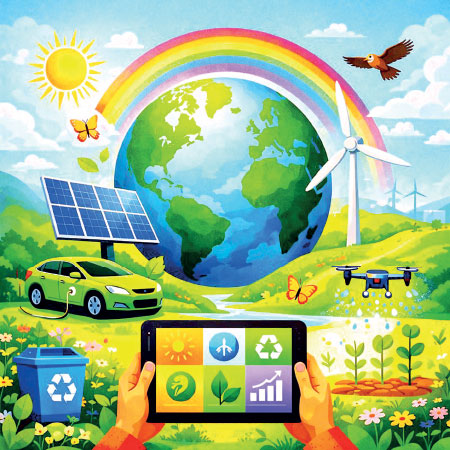 Do you still remember the thick smog that used to blanket your neighborhood every December? In some countries, during the cold winter months, you could barely see the house across the street on bad days. Now, if you get to visit one of those developed nations during the winter months, the air is noticeably clearer. It’s one of those small victories that we’re actually making progress.
The relationship between technology and the environment has always been complicated. For decades, we blamed our gadgets and factories for poisoning the planet. And honestly, we weren’t wrong. But somewhere along the way, something shifted. The same innovative spirit that created many of our environmental problems started working overtime to fix them.
The Solar Revolution
Take solar panels, for instance. My neighbor installed them last year, and he won’t shut up about it. Every time we chat over the fence, he’s showing me his app, tracking how much energy he’s generated that day. “See this?” he’ll say, pointing at his phone. “That’s the sun paying my electric bill.” What started as clunky, expensive panels that only wealthy environmentalists could afford has transformed into something ordinary people can actually use. Installation costs have rapidly dropped over the past decade. Now you see them on rooftops everywhere.
In many other countries, smart thermostats have become standard in new homes, learning your schedule and adjusting temperatures automatically. People say they could save about thirty percent on their heating bills after installing one. They don’t have to think about it or do anything special. The device just figured out when people were home and when they weren’t.
Cleaning Our Oceans
Then there are the ocean cleanup projects that sound like science fiction but are actually happening right now. These floating systems drift through the Pacific, collecting plastic waste that’s been accumulating for decades. Sometimes you might have seen some footage of these contraptions in action on television or on your mobile phone while browsing. How great to watch tons of garbage being pulled from the water, didn’t you feel the same way as watching someone vacuum a living room that hasn’t been cleaned in fifty years?
Transportation Gets Cleaner
Electric vehicles deserve their own conversation. Weren’t we skeptical at first, don’t you admit? The early models seemed impractical, with limited range and inconvenient charging. But look at the transformation that has taken place in recent years, and the advancement in technology is remarkable. You can drive your electric car everywhere now, charge it overnight at home, and spend a fraction of what you used to on gas. Isn’t it a better option? Quieter, smoother, and a car that will not spew exhaust everywhere you go.
Smarter Farming
On the other hand, agriculture is getting a technological makeover too. Precision farming uses sensors, drones, and data analysis to help farmers use exactly the right amount of water and fertilizer for their crops. Nothing gets wasted.
Remember the days when farmers used to guess at these things, relying on experience and intuition. Now, their equipment tells them precisely what each section of their field needs. They are producing more food while using fewer resources.
Small Changes, Big Impact
Cities are becoming smarter about managing waste as well. Some municipalities in developed countries now use artificial intelligence to optimize garbage collection routes, reducing fuel consumption and emissions. Recycling facilities employ optical sensors that can identify and sort materials faster and more accurately than human workers ever could.
Even our phones are helping. Apps that track your carbon footprint, identify recyclable items, or connect you with local environmental initiatives make it easier for regular people to participate. You don’t need to be an activist or a scientist anymore. You just need to care a little bit and have a smartphone.
Of course, technology isn’t a magic solution. We still have a whole lot of challenges ahead. But with all these innovations spread over the past few years, we can be cautiously optimistic. The industrial revolution, along with the advancement of technology, has contributed largely to global warming, and now we are utilising the latest technology to reverse the harm it has done to our planet.
We should not keep high hopes, completely on the big breakthroughs making headlines. But what really matters are the small improvements happening everywhere, often hardly getting noticed. It can be just a person who figures out how to make batteries last longer. Another one is developing a more efficient water filtration system, or a team of engineers creates better insulation using recycled materials.
These innovations add up. They compound. And they’re becoming accessible to ordinary people rather than remaining locked in laboratories or available only to the wealthy.
A decade ago, no one probably ever imagined that technology would clean the air they breathe. But here we are, breathing a little easier, one innovation at a time.
MP




