Saturday Sep 26, 2026
Saturday Sep 26, 2026
Wednesday, 28 January 2026 12:27 - - {{hitsCtrl.values.hits}}
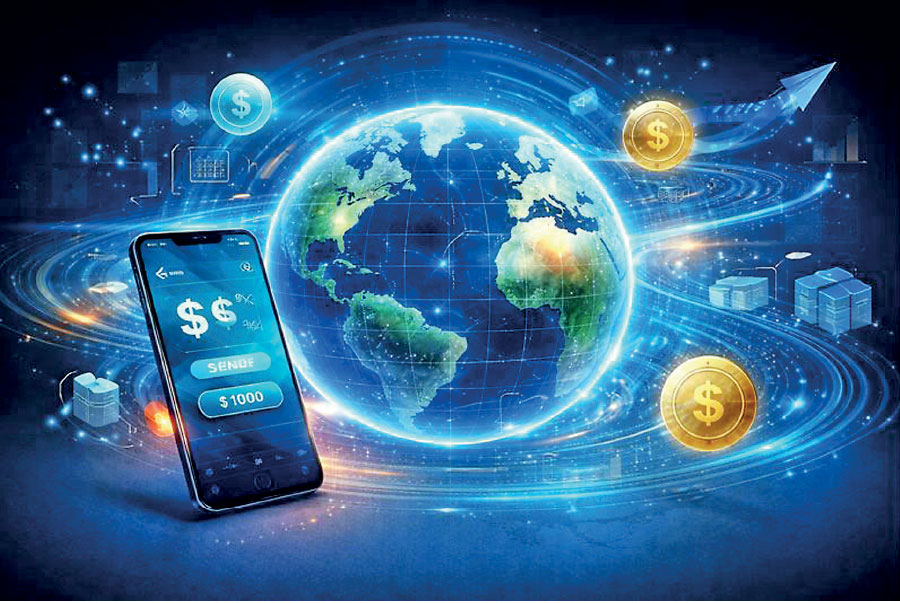
Does this sound like you a few years ago? A person who used to dread the monthly ritual. Every first Friday, you leave work early, rush to a money transferring agent nearby, and stand in line for what feels like hours. The fluorescent lights hummed overhead while you waited to send money to your mother or a loved one across the seas. The fees ate into your paycheck, and your mother wouldn’t see the money for days. But do we suffer like this to send money now? You just tap your phone during your lunch break, and the transfer is done before your meal arrives.
This shift isn’t just your story anymore. It’s becoming everyone’s story.
The way we move money around the world has undergone a revolution that would’ve seemed like science fiction just fifteen years ago. Remember when sending cash overseas meant filling out forms in triplicate, paying exorbitant fees, and hoping everything arrived safely? Those days are fading fast, replaced by a landscape where your phone is more powerful than any bank branch ever was.
If you have ever gotten a chance to walk into any immigrant neighborhood in a well-developed country today, you’ll notice something interesting. Those money transfer storefronts that once dominated every corner have disappeared, replaced by phone repair shops and bubble tea cafes. The transformation happened quietly, then all at once. Between 2019 and 2024, digital money transfers grew by over 300 percent globally, according to industry analysts. Traditional brick-and-mortar services are scrambling to catch up.
What’s driving this seismic change? Competition, mostly. Thanks to the latest technology in the IT industry, many online money transfer platforms have popped up; they have managed to not only digitalize the old-fashioned international money transactions but also reimagine them. They asked a simple question: why should sending money cost more than sending an email?
The old guard charged hefty fees because they could. Digital platforms slashed these costs dramatically. Many now charge less than 2 percent, and some offer free transfers above certain amounts. The difference isn’t just mathematical—it’s deeply personal.
Many employees from developing countries like ours who are working in Middle Eastern countries, they usually send money to their families twice a month. The fees meant they could only afford smaller amounts. Now they send more, more often.
But cost is only part of the story. Speed matters too. The old system operated on what we used to call “snail mail logic”—everything took three to five business days, as if the money was literally traveling by boat. Digital transfers happen in minutes, sometimes seconds. When there’s an emergency back home, when someone needs medicine or has to pay an unexpected bill, those minutes matter enormously.
The technology behind this transformation is surprisingly sophisticated yet beautifully simple from the user’s perspective. Behind that “send money” button is a complex web of banking partnerships, regulatory compliance systems, and real-time currency exchanges. Companies have built APIs that connect directly to local banking systems worldwide, bypassing the correspondent banking networks that slowed everything down.
Blockchain technology is also developing rapidly; however, not in the way the experts predicted. Instead of replacing traditional money entirely, cryptocurrency rails are being used for cross-border settlements between money transfer companies themselves. This happens invisibly to most users, who still send and receive regular currency. They don’t need to understand blockchain any more than they need to understand how email protocols work.
The regulatory landscape hasn’t made this easy, of course. Money transfer rules differ from country to country. So do the anti-money laundering requirements and know-your-customer protocols. Digital platforms have had to go through these rules and regulations carefully, and sometimes they need more compliance officers than engineers. But they’ve successfully turned regulation into a competitive advantage by building systems that make verification less complicated.
Mobile money systems in developing countries are developing in a much larger way than ever before. In some countries, these online apps have revolutionized how people think about money itself. All these platforms started as domestic services but quickly became crucial components for international transfers. Now someone in London can send money directly to a mobile wallet in Nairobi, where it can be used to pay for everything from electricity to groceries without ever touching cash.
What’s next? The path seems clear. Costs will continue dropping. Speed will keep increasing. The line between domestic and international payments will blur until it’s almost meaningless. All your online transfers will flow freely to any part of the world, just as your Facebook posts reach all your followers around the globe in no time.
For all the foreign employees, international students, and millions of others who need international money transactions, it is not just the technology that is getting more and more advanced over time, but it is also our dignity, efficiency, and ability to keep families connected across borders.
MP




