Monday Aug 17, 2026
Monday Aug 17, 2026
Monday, 17 August 2026 04:09 - - {{hitsCtrl.values.hits}}
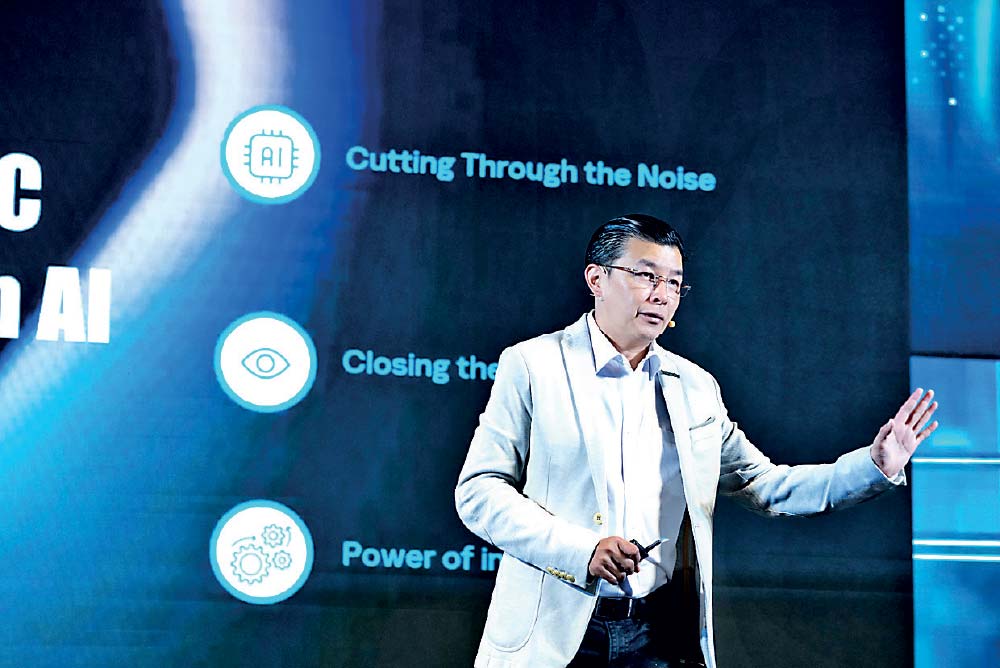
Kaspersky Asia Pacific Managing Director Adrian Hia speaks at Kaspersky’s Asia Pacific Cyber Security Weekend, with the theme “When Speed Outpaces Visibility” held in Guangzhou, China
As speed and connectivity reshape modern enterprises and organisations in the region, driven mainly by AI and its applications, security teams face growing blindspots across IT and OT environments. As a result, cybersecurity today is no longer just a race against time. It is a race against invisibility
- Kaspersky Asia Pacific Managing Director Adrian Hia
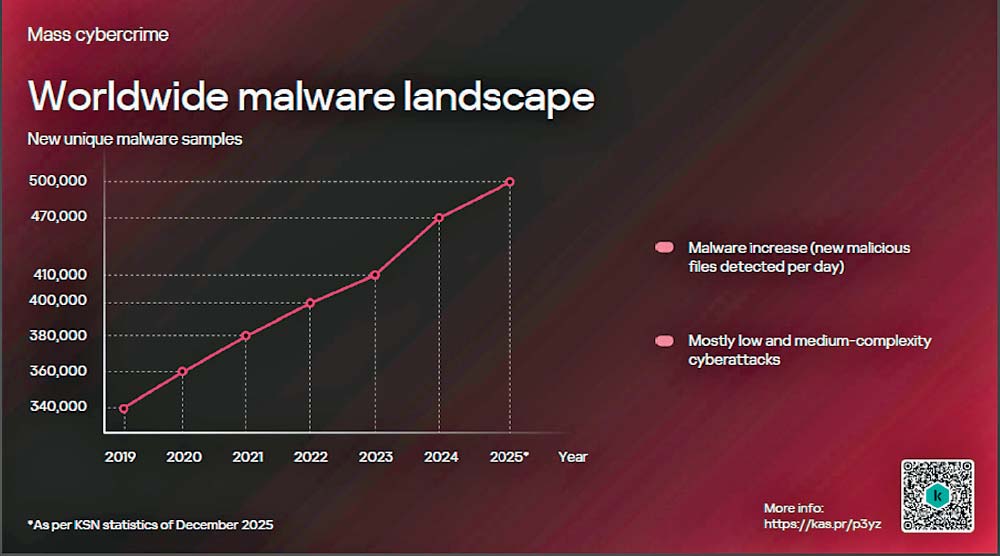
FT AlertIn 2025, Kaspersky detected and blocked half a million unique malicious files daily, which is 7% higher than in 2024. Recent cyberattacks across Asia Pacific show that the divide between the online and physical realms is completely gone
|
FT AlertAI agents introduce a new supply chain layer—this year alone, Kaspersky identified over 15,000 malware samples disguised as agentic AI software. Because agents dynamically depend on third-party frameworks, APIs, and plugins, a single compromised upstream dependency can cascade across downstream systems, dramatically expanding the surface for cyber sabotage and cyberespionage
|
FT AlertBased on a new report from the Kaspersky Compromise Assessment division, in 31% of incidents that were analysed, malicious activity in organisations had been going on for over three months. Over half (52%) of high-severity compromises were only discovered after 90 days of going undetected, and the oldest incident identified over the last year remained undetected for as long as four years. The findings point to a broader challenge in security operations
|
Sounding the alarm against the recent severe threats on enterprises and Government organisations, Kaspersky recently tackled the visibility gap plaguing the Asia Pacific (APAC) region, and how Security Operations Centre (SOC) in the age of AI can help. It stressed one cannot defend what cannot be seen.
This was the main takeaway of Kaspersky’s annual media conference, APAC Cyber Security Weekend, with the theme “When Speed Outpaces Visibility” held at Guangzhou, China
Headlined by the global cybersecurity company’s Asia Pacific Managing Director Adrian Hia, the event tackled one of today's biggest cybersecurity challenges: attackers, backed by Artificial Intelligence (AI), are moving faster than organisations can see, understand, and respond.
“As speed and connectivity reshape modern enterprises and organisations in the region, driven mainly by AI and its applications, security teams face growing blindspots across IT and OT environments. As a result, cybersecurity today is no longer just a race against time. It's a race against invisibility,” said Hia.
New era of cybersecurity
Hia tackled key cybersecurity trends Kaspersky is observing: AI-assisted attacks, cyber sabotage targeting infrastructure across IT and OT systems, and more sophisticated cyberespionage.
“Last year, we detected and blocked half a million unique malicious files daily, which is 7% higher than in 2024. Recent cyberattacks across APAC show that the divide between the online and physical realms is completely gone. Recently, Nichirei Corp suffered a cyberattack that disrupted its logistics network. Meanwhile, India’s manufacturing sector has become an APAC hotspot for industrial ransomware, with groups consistently paralysing factory floors and industrial IT services,” revealed Hia.
“AI agents introduce a new supply chain layer—this year alone, Kaspersky has identified over 15,000 malware samples disguised as agentic AI software. Because agents dynamically depend on third-party frameworks, APIs, and plugins, a single compromised upstream dependency can cascade across downstream systems, dramatically expanding the surface for cyber sabotage and cyberespionage. As threats become AI-native and defences AI-powered, APAC organisations must look beyond just stopping attacks and ask whether they actually have visibility into what's already happening inside their environments,” he added.
Based on a new report from the Kaspersky Compromise Assessment division, in 31% of incidents that were analysed, malicious activity in organisations had been going on for over three months. Over half (52%) of high-severity compromises were only discovered after 90 days of going undetected, and the oldest incident identified over the last year remained undetected for as long as four years.
The findings point to a broader challenge in security operations. Many organisations have invested in security technologies, but technology alone cannot compensate for gaps in monitoring, detection, and operational readiness.
“Our recent report highlights why a modern, unified SOC is becoming business-critical. When organisations rely on reactive security practices or lack continuous monitoring, attackers gain valuable time to move laterally, escalate privileges, and compromise critical assets. A mature SOC shortens that window by providing the visibility, expertise, and operational discipline needed to detect threats before they become major incidents,” Hia said.
SOC built with AI expertise to restore visibility
As cybercriminals increasingly leverage AI to scale and automate attacks, defenders must do the same. Kaspersky has been combining AI with human expertise for the last two decades.
Since 2004, Kaspersky has built and refined advanced Machine Learning (ML) models trained on huge volumes of anonymised global telemetry, collected ethically and responsibly from millions of endpoints worldwide. This reservoir of high‑quality data has enabled the company to develop and leverage on AI systems that are not only safe and accurate but also resilient to evolving threats.
“AI isn't an add-on at Kaspersky. For the past 20 years, AI has been embedded across our entire technology stack, enabling faster detection, smarter automation, and consistent protection. We have always believed that as cyber threats continue to evolve, the future of cybersecurity lies in the collaboration between AI and human expertise. It is not either or – it is HuMachine Intelligence, as we call it. It is the philosophy that has guided our innovation for years and will continue to shape how we protect organisations against the threats of tomorrow,” Hia explained.
Companies that manage complex IT infrastructures and handle massive data volumes can leverage the comprehensive solutions from the Kaspersky Next product line, which provide real‑time protection, full threat visibility, and robust EDR/XDR investigation and response capabilities. Generative AI models within the platform swiftly transform raw data into structured, actionable intelligence for security teams and decision‑makers, enabling them to work more efficiently while reducing manual effort and bridging skill gaps.
Kaspersky also helps organisations restore their visibility through its managed security services such as Kaspersky Compromise Assessment, Kaspersky MDR and Kaspersky Incident Response, which cover the entire incident management cycle – from threat identification to continuous protection and remediation.
To enable a successful SOC deployment and ongoing maintenance, Kaspersky offers early engagement through it Kaspersky SOC Consulting during the initial setup or when enhancing your existing security operations. This comprehensive consulting service is designed to help companies build a robust SOC and streamline its processes.
Kaspersky ensures Cybersecurity True to Business, focusing on providing clear outcomes, protecting revenue, easing workloads and preventing downtime. Kaspersky’s deep threat intelligence and security expertise is constantly transforming into innovative solutions and services for organisations of every size, from small businesses to large enterprises, combining proven AI-driven protection technologies with simple management and expert support.
Recognised in independent tests and trusted by millions of individuals worldwide and nearly 200,000 organisations, Kaspersky helps detect threats earlier, respond faster and operate with greater confidence and freedom, protecting what matters most.




