Monday Sep 21, 2026
Monday Sep 21, 2026
Friday, 24 July 2026 00:03 - - {{hitsCtrl.values.hits}}
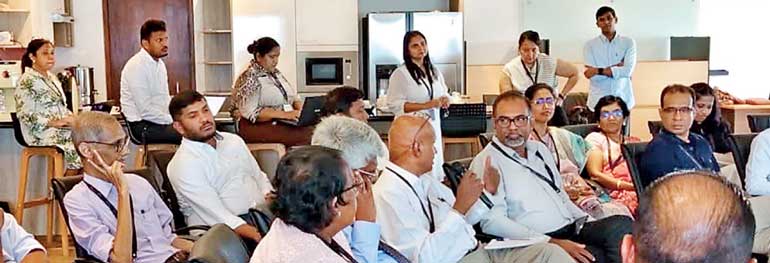
As artificial intelligence (AI) continues to reshape industries and redefine workforce expectations, the Sri Lanka Association for Software and Services Companies (SLASSCOM) convened a high-level Roundtable on Talent, bringing together leading academics and industry leaders to explore how Sri Lanka’s higher education sector and the IT and BPM industry can work together to develop a future-ready workforce.
The discussion comes at a pivotal time for Sri Lanka’s digital economy. With the IT and BPM industry contributing nearly $ 2 billion annually and standing among the country’s largest export sectors, participants emphasised that developing globally competitive talent has become more critical than ever. While technical expertise remains essential, today’s graduates must also possess critical thinking, problem-solving capabilities, communication skills, adaptability, and a commitment to lifelong learning to thrive in an AI-driven economy.
The roundtable examined the evolving role of AI in the workplace and its implications for higher education, highlighting the need to rethink curriculum design, teaching methodologies, and student assessment. Participants agreed that universities must move beyond equipping students with technical competencies alone and instead cultivate graduates who can apply technology to solve real business challenges, innovate, and create measurable value.
Industry leaders noted that employers are increasingly seeking individuals who can think strategically, collaborate effectively, and continuously reskill as technology evolves. The discussion underscored the importance of developing graduates who are not merely technical executors, but solution builders capable of understanding business needs and driving digital transformation across industries.
A key outcome of the roundtable was the proposal to establish a SLASSCOM Academia Working Group to foster sustained collaboration between universities and the IT and BPM industry. The working group will serve as a platform to strengthen dialogue, align academic programs with evolving industry requirements, and identify opportunities for joint initiatives that enhance graduate employability.
Regular curriculum reviews with active industry participation, expanding high-quality internship opportunities, incorporating AI-assisted software engineering frameworks into academic programs, and placing greater emphasis on entrepreneurship, domain expertise, English language proficiency, and other essential professional skills will all be a part of this initiative.
Additionally, recognising that digital transformation extends well beyond the technology sector, the discussion further highlighted the importance of building partnerships across industries including banking, healthcare, manufacturing, and government.
As Sri Lanka’s digital economy continues to evolve, the roundtable reaffirmed SLASSCOM’s commitment to fostering stronger collaboration between academia, industry, and policymakers to build a resilient, future-ready talent pipeline. By driving meaningful dialogue, encouraging industry-academia partnerships, and championing initiatives that align education with emerging workforce needs, SLASSCOM continues to play a leading role in shaping the nation’s digital talent ecosystem and positioning Sri Lanka to seize the opportunities of an AI-powered global economy.




