Tuesday Jul 07, 2026
Tuesday Jul 07, 2026
Tuesday, 7 July 2026 05:21 - - {{hitsCtrl.values.hits}}
 Sri Lanka gave the world its first female Prime Minister in 1960 – decades before most democracies were even having the conversation. It has long been able to point to women’s political milestones as evidence of progress, and more recently, women’s representation has increased in local government and on listed company boards.
That progress is less visible in the workplace. Women make up more than half the population, but only around a third of the labour force, and their representation narrows further as seniority rises. Presence does not carry through into leadership or decision-making in the same way.
This raises a more pressing question for organisations. The issue is not only whether women are present, but whether that presence translates into influence, progression, and authority. Female labour force participation remaining around 31.3%, despite high educational attainment and Sri Lanka’s strong human development indicators, brings that gap into sharper focus (Country Gender Equality Profile: Sri Lanka, 2026).
Representation rises, but power narrows
That imbalance is visible across national institutions and within organisations. Women now hold 9.8% of parliamentary seats. Local government representation has risen from around 2% to about 22%. Participation on listed company boards increased from about 8.4% in 2024 to around 30% in 2025. These are meaningful gains, particularly where policy direction or deliberate action has created room for change.
Yet in a country where women account for more than half the population, representation remains below parity across institutions, sectors, and levels of leadership. Inside organisations, it narrows further from about 40% at entry level to around 20% at senior management. Even in sectors with strong female participation, progression into decision-making remains limited, reflecting the distance between presence and influence.
Politics shows a similar pattern, with women more often present in portfolios associated with care, while finance, infrastructure, and civil engineering remain largely male-dominated. Representation has increased, but structural and cultural barriers continue to shape who progresses, where they progress, and how much authority they are able to hold.
When leadership is drawn from the same social, cultural, and professional profiles, the range of perspectives available to decision-makers narrows. Over time, this shapes how problems are defined, which risks are noticed, and whose potential is recognised early enough to be developed.
Social norms play a central role in this. Women are still more readily associated with care-oriented roles. Leadership in high-authority domains is still treated as requiring a different profile. Those assumptions quietly shape nominations, promotions, access to mentors, and the assignments that build credibility. A workforce that does not reflect the society around it is less equipped to identify blind spots, understand shifting expectations, or solve with relevance.
Sri Lanka performs among the poorest in the region on gender norms, despite leading on female literacy and maternal health. The gap between what this country’s women are capable of and what its institutions are drawing on, constrains how well those institutions can think, compete, and grow.
Broader representation strengthens creativity, judgment, and problem-solving because it expands what institutions are able to see and solve for.
What changes when those perspectives are actually present in the room?
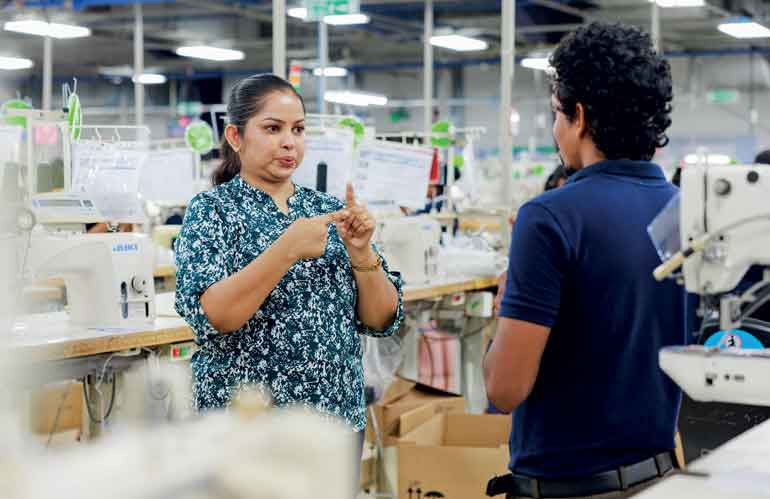
Representation changes institutions most clearly when it reaches decision-making spaces. Workplace needs that were previously invisible become visible when people with lived experience are part of leadership and management.
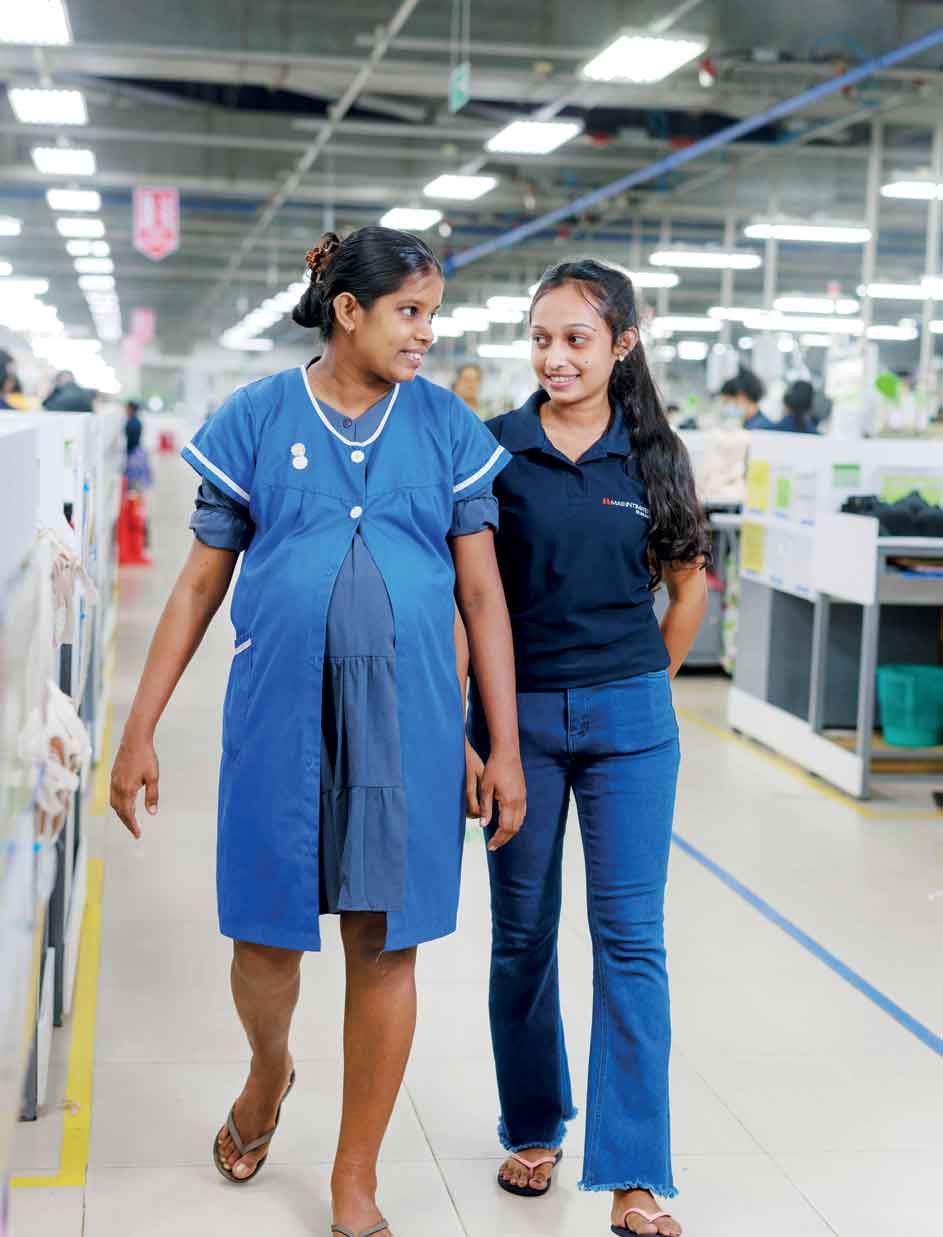
The introduction of lactation rooms at MAS is one such example. The need had existed for years. It became possible to act on once women in leadership could identify the gap, articulate its importance, and push it into practice. This is where representation begins to alter the institution itself – in what organisations notice, what they consider urgent, and what they are prepared to solve.
When those shaping decisions understand the realities being addressed, change becomes more grounded and more likely to endure. The question for any organisation is simple: are the people making decisions the same people who understand what those decisions affect?
For that impact to last, inclusion has to move from individual responses to institutional discipline. Progress depends on organisations willing to keep listening, keep learning, and keep correcting systems as new barriers become visible. Policies need to be tested in practice. Leaders need to revisit assumptions. Institutions need to hold themselves accountable for whether representation is translating into real influence.
It took over a hundred years of global advocacy and activism for women to gain the right to vote. Change that looks obvious in retrospect is rarely fast. Organisations will make mistakes, and the work will need adjustment as social expectations, employee needs, and business realities change.
Diversity, Equity and Inclusion has become contested language in a number of markets. Political backlash may change the terminology organisations use but it does not change the underlying business need to build workplaces where people can contribute, progress, and lead without being held back by structural barriers. The real measure is whether companies stay with this long enough for representation to shift from presence in the workforce to power within the institution.
For business leaders, the next step is to examine where influence actually sits inside the organisation. It is possible to have diversity in the workforce while authority remains concentrated within familiar networks and familiar assumptions about who is ready to lead. That is where the real test begins. Organisations need to look beyond headcount and ask whether people from different backgrounds are being given access to senior guidance, operational responsibility, and the visibility that builds leadership credibility over time. When that pathway is weak, representation remains fragile.
The responsibility for leaders is therefore to close the distance between who is present in the organisation and who has the authority to shape its future.
Listen to the full episode on “Conversations That Count 2.0” podcast on DEI here - https://masholdings.com/podcast-category/conversations-that-count-2-0/?episode=10553
(Esther Hoole is a Strategic Partnership and Coordination Analyst at UN Women Sri Lanka and Surein Wijeyeratne is the Director – Corporate Communications at MAS Holdings.)



