Friday May 15, 2026
Friday May 15, 2026
Friday, 8 May 2026 04:13 - - {{hitsCtrl.values.hits}}
A landmark international clinical trial has found that a Mayonce-daily three-in-one blood pressure pill can significantly reduce the risk of repeat strokes among patients who have survived a brain bleed, also known as a haemorrhagic stroke.
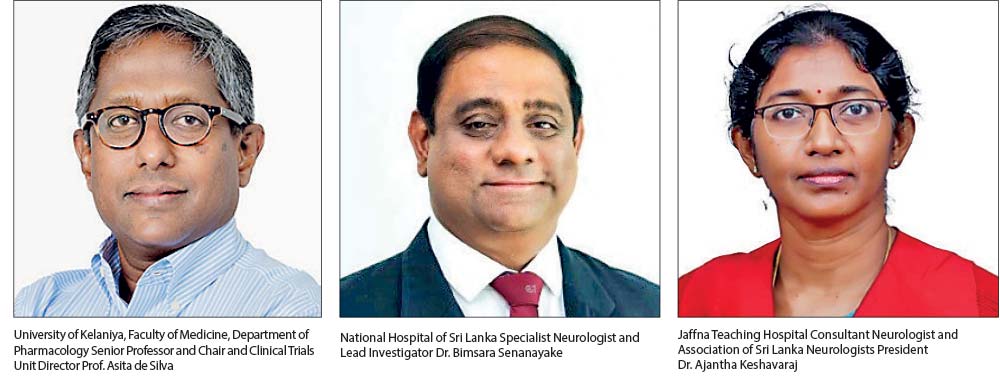
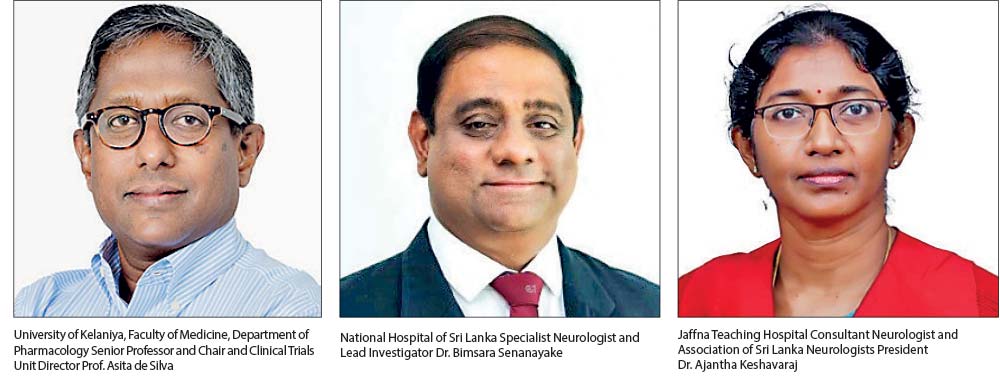
The TRIDENT trial, coordinated in Sri Lanka by a research team led by Senior Professor Asita de Silva of the Clinical Trials Unit, Faculty of Medicine, University of Kelaniya, found that the low-dose single pill combination reduced the risk of another stroke by up to 40% and the risk of another brain bleed by 60% among high-risk patients. The findings were published on 23 April in the prestigious New England Journal of Medicine.
The tablet combines three widely used blood pressure medicines in low doses, amlodipine, telmisartan and indapamide, into a single once-daily pill. By simplifying treatment, the approach helps patients adhere to medication and maintain better blood pressure control, which is critical in preventing future strokes, heart attacks and other cardiovascular complications.
The TRIDENT trial studied 1,670 stroke survivors across 11 countries including 11 specialist neurology centres in Sri Lanka over seven years. Nearly 73% of participants were Asian, with almost 70% of patients from Sri Lanka, making the results especially relevant to Sri Lanka and South Asia.
Around 60,000 people in Sri Lanka suffer a stroke every year, while cardiovascular disease accounts for more than 40% of all deaths. High blood pressure affects around 40% of Sri Lankan adults aged 30 to 79 and remains the single biggest risk factor for stroke.
“Clinical trials conducted by us with Sri Lankan clinicians and international collaborators during the last 10 years have shown a triple low-dose combination of blood pressure lowering drugs in a single pill is a very strong approach to control blood pressure compared to routine approaches in clinical practice today. This new drug was recently approved by the US Food and Drug Administration to treat high blood pressure and included in the WHO model list of essential medicines recently for countries to adopt. We have now very clearly shown sustained and long-term control of blood pressure with this approach can reduce the risk of recurrent stroke dramatically. This is a game changer,” said Professor Asita de Silva.
He added that the strong Sri Lankan contribution to the trial also demonstrated the country’s growing role in global medical research.
“Almost 70% of the data for TRIDENT was generated from Sri Lanka. In addition to the local relevance of trial results and the quality of data that supports generalisability of findings to other countries, this is another example of how well Sri Lankan clinicians and clinical researchers can contribute to improving global health,” he said.
National Hospital of Sri Lanka Specialist Neurologist and Lead Investigator Dr. Bimsara Senanayake said the findings provide important evidence for improving treatment after intracerebral haemorrhage.
“Very limited treatment options for intracerebral haemorrhage, uncertainty about the effectiveness of more-intensive blood pressure control, and how best to do it have remained unresolved for decades, and I think the TRIDENT trial now gives all of that information for us to implement in our clinical practice. The findings are especially significant because patients who survive this type of brain bleed face a heightened risk of another catastrophic event in the years that follow. The better blood pressure control we can achieve in intracerebral haemorrhage, the better for the patients,” he said.
Issuing a statement on the results of TRIDENT, World Stroke Organisation President Professor Jeyaraj Pandian described the findings as a major advance in stroke prevention. “TRIDENT is a major advance in showing the enormous benefits of effective blood pressure control after an intracerebral haemorrhage,” he said.
The findings are expected to support changes in clinical practice, particularly as the triple pill used in the trial has already been approved by the US Food and Drug Administration and included in the WHO Model List of Essential Medicines for the treatment of hypertension.
President of the Association of Sri Lankan Neurologists and one of the study authors, Dr Ajantha Keshavaraj said: ‘Our results have the potential to mark a real shift in how we manage blood pressure following a stroke. This novel treatment along with lifestyle changes such as reduced salt intake could save thousands of lives by preventing repeat strokes”.
The New England Journal of Medicine, in an accompanying editorial, also stressed the importance of strict blood pressure control as a priority for preventing cardiovascular disease.



