Friday Oct 16, 2026
Friday Oct 16, 2026
Wednesday, 15 July 2026 00:00 - - {{hitsCtrl.values.hits}}

Western Hospital Kidney Transplant Coordination Centre Transplant Physician and Director Dr. Habeeba Sheriff
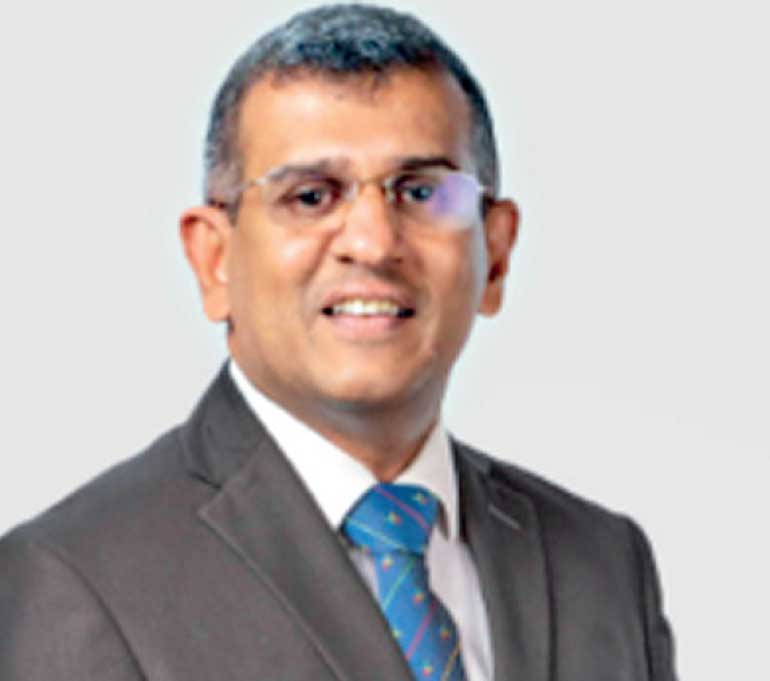
Durdans Hospital CEO/Director Medical Services Dr. Lasantha Karunasekara
Sri Lanka's ublic healthcare system carries an enormous load. Hospitals are stretched, waiting lists are long, and the demand for specialist care continues to grow. It is within this reality that private healthcare has stepped into a role far greater than many give it credit for. The Association of Private Hospitals and Nursing Homes has long maintained that the sector's contribution is not simply one of convenience for those who can afford it, but a genuine and structured complement to the national health system. That argument rests on four pillars: clinical governance, transparency, system impact, and innovation.
Governance at core of everything we do
Clinical governance, at its core, is about accountability. According to Western Hospital Kidney Transplant Coordination Centre Transplant Physician and Director Dr. Habeeba Sheriff it is "the ... framework through which healthcare organisations guarantee that patients receive safe, effective, and high-quality care." The emphasis, as Dr. Sheriff is quick to point out, must always remain on the patient.
In practice, that means hospitals operating on par with internationally recognised benchmarks. Frameworks such as Joint Commission International Accreditation (JCIA), Australian Council on Health Care Standards (ACHSI) and ISO standards define how every department functions, from surgical theatres and pharmacy operations to infection control and waste management. Hospitals are assessed regularly and must demonstrate compliance to maintain accreditation.
Quality, patient safety and performance are also tracked through more than 50 measurable indicators such as infection rates, surgical complication rates, readmission figures, medication management and long-term patient outcomes. Dr. Sheriff points to a telling example from her own unit. When an unexpected rise in creatinine levels was observed across several transplant patients, the team did not treat each case in isolation. The team observed the patterns and the investigation traced the problem to a medication batch, and its handling process following which, the Companies were promptly alerted. This example demonstrates one of the core principles of clinical governance: using data, vigilance, and system-wide communication to improve patient safety.
Informed consent is another cornerstone of clinical governance. “Before any complex procedure, particularly something as high-stakes as kidney transplantation, patients need to understand not just what will happen, but why, what the risks are, and what alternatives exist. Family members are brought into those conversations too, because recovery does not end in the operating theatre” Dr. Sheriff further explained. Successful governance depends on maintaining a sharp focus on patients while continuously reviewing systems, outcomes, and practices. When implemented effectively, clinical governance not only protects patients but also creates a culture of excellence that benefits entire healthcare organisations.
Building trust through visible transparency
Public confidence in healthcare depends heavily on transparency. Voicing his opinion, Durdans Hospital CEO/Director Medical Services Dr. Lasantha Karunasekara presents a strong argument that transparency in the private sector is more tangible than most people assume in terms of pricing, patient care and open communication. Patients have access to detailed information regarding room charges, nursing fees, medication costs, procedure-related expenses and diagnostic charges. Contrary to popular belief, healthcare providers increasingly offer itemised billing that allows patients to understand precisely how costs are calculated. Package-based pricing for common procedures further improves predictability and enables patients to make informed decisions. Further access to consultants and matters related to patient treatment, and care pathways are frequently and transparently discussed and available for loved ones to ease their anxiety and address concerns.
Patient complaints and adverse incidents are systematically reviewed through formal governance structures. “When things go wrong, the response matters just as much as the disclosure. Patient complaints and adverse incidents are reviewed through formal multidisciplinary governance structures, not quietly filed away. It is imperative to transform patient feedback and clinical incidents into opportunities for organisational learning and continuous improvement,” Dr. Karunasekara added.
Addressing a real dent in the system
The impact of private healthcare on national health outcomes is tangible, even if it does not always make headlines. Dr. Karunasekara describes it as a sector that has expanded well beyond hospital admissions. “A substantial proportion of outpatient healthcare services are delivered through private healthcare providers,” he notes, through direct consultant channeling, and OPD medical officers. Significant efforts and resources are focused on primary care for early detections, treatments and preventions of NCDs in the country by rolling out health screening programs, corporate wellness initiatives, and routine assessments that catch problems early and reduce pressure on acute services.
Access to specialists remains one of the most stubborn challenges in any healthcare system. Private hospitals have addressed this in part through regional centres, laboratory networks, satellite clinics and channelling facilities, bringing care closer to patients and cutting waiting times for consultations and diagnostics. Structured healthcare packages and discounted programmes have extended these services to broader segments of the population, including public sector employees. The goal, as Dr. Karunasekara puts it, is “not only to improve convenience but also to ensure that patients receive necessary care before delays lead to worsening health outcomes.”
Innovation as standard practice
Some of Sri Lanka’s most advanced diagnostic technology has come through private sector investment. Advanced imaging systems, high-end laboratory diagnostics, cancer detection technologies and specialised radiological services now allow for earlier, more precise diagnoses that simply were not possible a decade ago for which the Government would not have had the necessary resources or institutional capacity to adequately respond, thereby placing an additional strain on an already overstretched healthcare system and budget.
The shift toward digital healthcare has also been driven, in large part, by private healthcare providers. Electronic health records, patient portals, hospital management systems and digital laboratory reporting have changed how care is coordinated and how patients interact with their own health information. Artificial intelligence is entering the picture too, supporting data analysis, imaging interpretation and predictive risk assessment. Dr. Karunasekara is measured about what that means in practice: “AI should be viewed as a clinical support tool rather than a replacement for healthcare professionals.” Final decisions, he insists, remain with the physician.
The road ahead
What ties all of this together is a commitment to standards that does not waver when the pressure is on. As Dr. Sheriff puts it, “effective governance requires continuous auditing, data analysis, open communication, multidisciplinary collaboration, and adherence to standards and commitment to patient safety.” That is not a one-time exercise. It is an ongoing discipline.
For the private sector to hold the public’s trust, it must also hold itself to account. Stronger collaboration with public healthcare, sustained investment in technology, clinical governance and a culture of genuine transparency are not aspirations. They are requirements. The case for private healthcare’s role in Sri Lanka’s health system has never been stronger. The responsibility now is to keep earning it.




