Tuesday Sep 15, 2026
Tuesday Sep 15, 2026
Saturday, 25 April 2026 00:01 - - {{hitsCtrl.values.hits}}
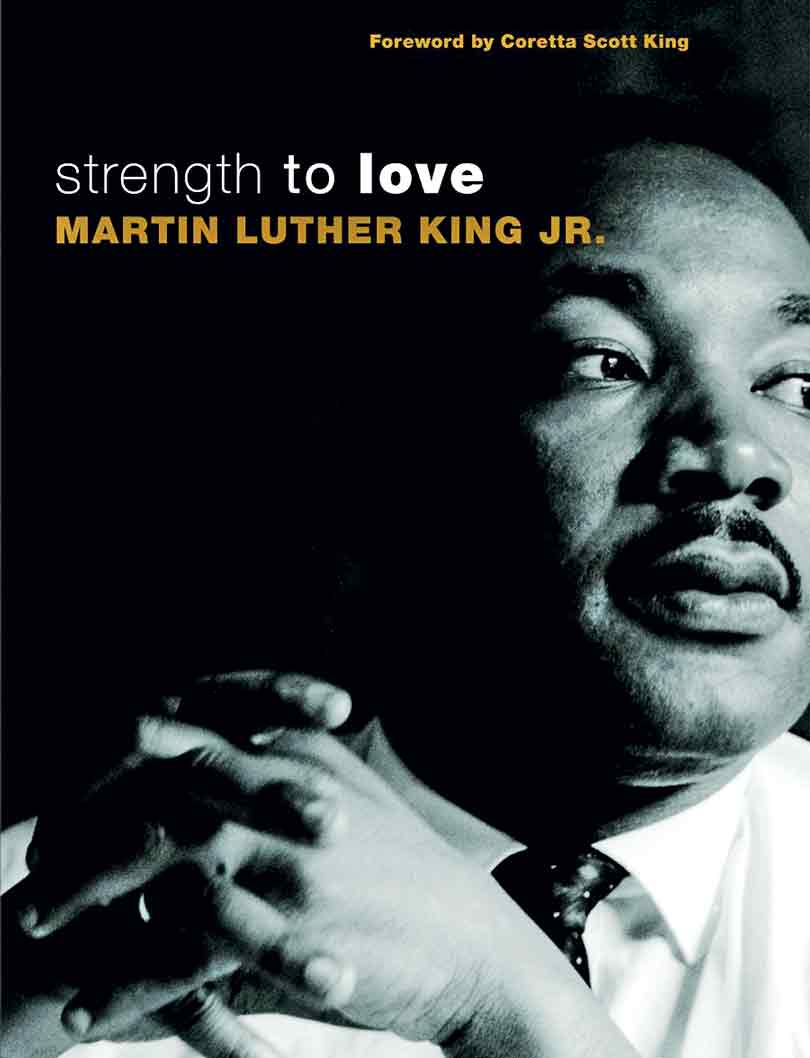
The book Strength to Love by Martin Luther King was first printed in Great Britain by Hodder and Stoughton in 1964, first issued in Fontana Books in 1969, and reprinted in Fount Paperbacks in March 1977. The thirteenth impression was in October 1980. Copyright 1963 by Martin Luther King Jr. The book was made and printed in Great Britain by William Collins Sons & Co. Ltd., Glasgow. The book comprises a collection of sermons by Dr. Martin Luther King, who was co-pastor of the Ebenezer Baptist Church in Atlanta, Georgia, in the United States. We continue from last week in appreciating this book.
Chapter three of Strength to Love is titled “On Being a Good Neighbour.” It examines the teachings of Jesus Christ, where a lawyer, purportedly keen to learn how to obtain ‘eternal life,’ was told to love God and love his neighbour as himself, and was confused as to who his neighbour was.
Martin Luther King states as follows in explaining how Christ answered the lawyer: “Jesus told the story of a certain man who went from Jerusalem to Jericho and fell among robbers who stripped him, beat him and, departing, left him half-dead. By chance a certain priest appeared, but he passed by on the other side, and later a Levite also passed by. (Levites were part of the upper echelons of the religious hierarchy, assisting in the worship of God in the Tabernacle).
Finally, a certain Samaritan, a half-breed, from a people with whom the Jews had no dealings, appeared.”
Martin Luther King continues, quoting from the parable:
“When he saw the wounded man, he was moved with compassion, administered first aid, placed him on his beast, brought him to an inn and took care of him.”
Martin Luther King explains that the Samaritan was such a repudiated outcast that the ancient Jews would immediately distance themselves in a public space if they were to meet one.
“Who is my neighbour?”
“I do not know his name,” says Jesus in essence. “He is anyone toward whom you are neighbourly. He is anyone who lies at life’s road. He is neither Jew nor Gentile; he is neither Russian nor American; he is neither Negro nor white. He is a ‘certain man’—any needy man—on one of the numerous Jericho roads of life.”
“So Jesus defines a neighbour, not in a theological definition, but in a life situation,” the book states.
It further emphasises that the Samaritan had the capacity for ‘universal altruism,’ beyond ‘external accidents of race, religion and nationality.’
‘The Good Samaritan,’ continues the author, ‘represented the conscience of mankind because he also was obedient to that which could not be enforced.’ “No law in the world could have produced such unalloyed compassion, such genuine love, such thorough altruism,” he points out, and as we follow how the author brings to life the teachings of the religious and social reformer Jesus, we have to grasp the reality that both Jesus and Martin Luther King were killed for the principles they lived by. This also displays to us the metaphysical ‘eternal life’ of courage.
As we read this book, we can almost hear Martin Luther King preaching in a country that, not so long ago—just over seven decades ago—claimed to be followers of Jesus Christ but did the exact opposite of what He taught. As a result of Martin Luther King relentlessly using the wisdom of Jesus at a time his country needed it most, the United States did away with racial segregation. Martin Luther King, as a leader of the civil rights movement, campaigned for equal rights, and the subsequent result was the Civil Rights Act of 1964 ending public racial segregation, followed by the Voting Rights Act of 1965. Martin Luther King ends this book chapter with the following sentence on the ultimate sacrifice of Christ:
“His altruism was excessive, for he chose to die on Calvary, history’s most magnificent expression of obedience to the unenforceable.” (SV)
To be continued…




