Thursday Oct 15, 2026
Thursday Oct 15, 2026
Saturday, 4 July 2026 02:56 - - {{hitsCtrl.values.hits}}
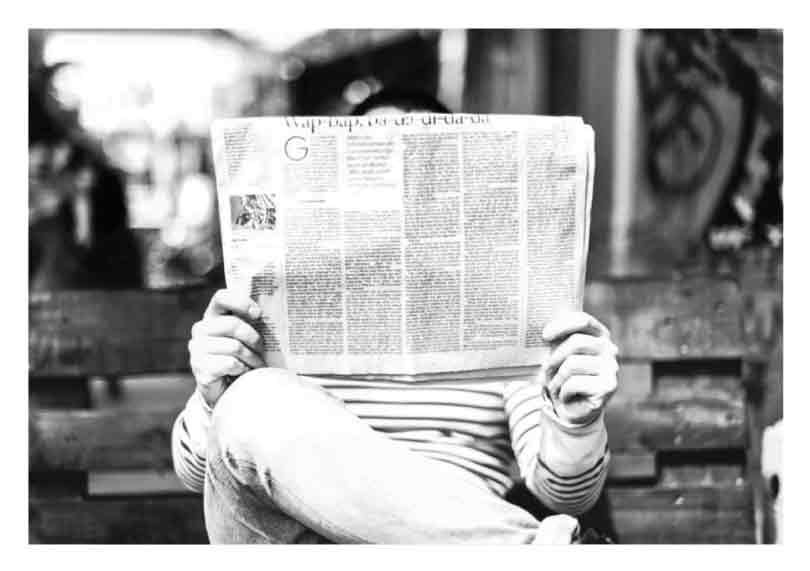
There was a time maybe seven decades ago when those who ruled the country actually read newspapers.
Sri Lanka has three official languages Sinhala, Tamil and English as the link language. Irrespective of whether Government officials are lesser or more fluent or not, in some of these languages there are media officers appointed for the specific task of reading and updating the policy makers of the nation as per the issues that are being written about in newspapers and following through also on what is featured on visual and audio media channels. The media of any nation carries the voice of the people. Informing, educating and providing a public platform for action are some of its salient duties.
Official responsibility
The task of monitoring the media is an official responsibility carrying on its shoulders the weight of the country and the wellbeing of its people. There are many appellations that such a duty gets wrapped in, including media officers, media monitoring officers, communication officers, information officers, press secretaries or media secretaries.
Apart from these there are scores of development officers affiliated to the State machinery. Are they attuned to a nations’ media? Are they attuned to the grass roots of Sri Lanka? Sri Lanka cannot boast of an explicit interest in rural poverty changing, entrepreneurship creating, development or wellbeing centered journalism but nevertheless it does have many socially representative reports whether in print media or in television and radio. However while television and radio could be seen as more entertainment driven, newspapers, published daily, in all three languages do have many accounts that a responsible Government should ideally have a full grasp on. Often mainstream media is merged with social media and social media has emerged as a branch of citizens representing media cutting through language barriers. Do those who hold the earlier mentioned positions keep track of what is going on in their country and of the writings of journalists who go the extra mile to bring the voices of citizens to the mass media forefront ?
Grass root voices
This writer has some very interesting experiences where some media reports sent to several State officials, including a coordinating officer/PA of a mayor and the media secretary of a governor, as well as the coordinating officer of a Government ministry not even been acknowledged to date. These were stories strongly representing grass root voices that a committed media monitoring officer could find very useful. Some of the reports were on the cleanliness of a district which relies highly on tourism. So what on earth do these officers do? Are they there only as public relation icons for politicians and political projects? Are they there to merely walk around the building, do some cursory looking at newspapers, and to be preoccupied with taking fancy photos for social media so their families can be proud of their ‘stable’ jobs?
We speak volumes of rhetoric on the need of developing the country but are we looking at what stares us in the face?
Have we pushed ourselves into being flag bearers of sensationalism but opt out into the hall of lethargy and dismissive uncaring when it falls on us to really make a concrete and authentic change?
It is possibly time to ask ourselves if we changed the system or if the ‘system’ changed us?
Each human being carries a wealth of energy. If this energy is put to maximum use in State departments, many of which seem over-staffed, can we not change Sri Lanka for the better?
Investment into people
Is working for a State institution merely going about well dressed in shirt and trousers or saree? What about authentically representing the people and working to transform words such as investment and development into things that show up as changes that directly involve human beings. Investing millions in infrastructure is only one aspect of the progress of a country. What Sri Lanka needs right now is investment into people – where development officers go to rural locales – not in their official vehicles but in public transport. There are areas in Sri Lanka such as agrarian areas where poverty can be linked to lack of transport. It is only if a State representative languishes on the road for hours on end waiting for just one bus a day that he or she will know what to change. There are rural areas where crime is linked to lack of electricity on road ways. There are stories of rural entrepreneurship that if got into the right hands could change our psyche in how we see ‘development’ and the prosperity of the nation. The link to this transformation is the media. There are scores of stories per week in the national media where few dedicated media monitoring officials and similarly dedicated higher ranking officers and State Ministers can change how we push forward our country; one human at a time. (SV)




