Thursday Oct 15, 2026
Thursday Oct 15, 2026
Friday, 26 June 2026 03:30 - - {{hitsCtrl.values.hits}}
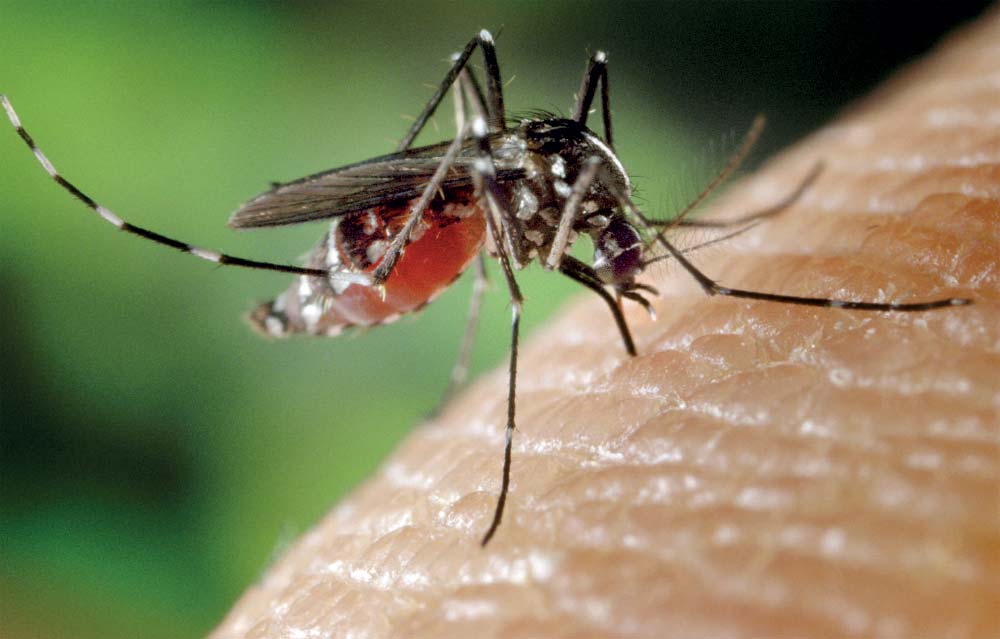
Dengue does not respect borders, so Wolbachia isn’t just a national intervention—it’s a regional public good. Photo by US CDC
 Scaling Wolbachia requires countries to make clear decisions about ownership and supply. While implementation varies, success depends on well-defined roles between governments and partners—whether nonprofits, suppliers, or research institutions. Two main choices matter most: how mosquitoes are released (as adults or as eggs) and where they come from (produced locally or imported). The best option depends on the country’s capacity, regulations, and funding, as well as on strong baseline mosquito monitoring and steady community involvement
 blogs.adb.org: Dengue fever is the world’s fastest-spreading mosquito-borne viral disease, endemic in over 120 countries across Asia and the Pacific, Latin America, and Africa. It has no specific antiviral treatment—making prevention and transmission control critical. Escalating outbreaks driven by urbanisation, a changing climate, and overstretched public health systems, risk a broader global health crisis.
Almost half the world lives in areas at risk of dengue, which is spread by Aedes aegypti and Aedes albopictus mosquitoes. Reported cases soared almost 30-fold to 14.6 million between 2000 and 2024, yet this likely underestimates the true burden as many cases with mild or no symptoms go undetected. The World Health Organisation, which classified dengue as a Grade 3 emergency in 2023, estimates 100 million–400 million infections annually.
Although recent surveillance shows a shift in reported cases toward Latin America, dengue remains highly endemic across Asia, with countries from India to Indonesia experiencing high and recurrent transmission. Pacific Island countries including Samoa and Fiji face repeated outbreaks. Globally, dengue’s estimated annual healthcare cost exceeds $8.9 billion, though this likely understates the burden as most countries simply don’t know. Where national health insurance systems do track claims, the numbers are striking: annual spending by Indonesia’s BPJS Kesehatan quadrupled to $179.4 million between 2021 and 2024.
For other at-risk countries the burden is likely just as large, but invisible. Most rely on reactive outbreak responses—fogging, outdoor residual spraying, and source reduction—that are labor-intensive, costly, and often only partially effective. Long-term dengue control requires innovative, durable strategies that reduce transmission risk at scale.
Wolbachia, when introduced into Aedes aegypti, reduces their ability to transmit dengue. By lowering transmission risk at the population level, Wolbachia can provide sustained protection and complement vaccination and other interventions.
Wolbachia presents a real opportunity to reduce long-term pressure on health budgets.
After decades of “firefighting” dengue outbreaks, Wolbachia represents a shift from reactive, episodic vector control to sustained biological suppression of transmission. More than just a national intervention, Wolbachia is a regional public good
Two deployment approaches exist, driven by a reproductive quirk: when Wolbachia-infected males mate with uninfected females, the eggs fail to hatch, while Wolbachia-infected females can produce healthy offspring that inherit the bacteria. The replacement method releases both male and female Wolbachia-carrying mosquitoes that breed and spread the bacteria in the wild population until the bacteria sustains itself without further intervention, providing durable dengue control.
The suppression method releases only Wolbachia-infected males that produce no viable offspring, reducing mosquito populations—but requiring continuous releases to maintain effect, making it more resource-intensive over time. Evidence from population replacement is growing. In Yogyakarta, Indonesia, the first cluster randomised controlled trial on Wolbachia showed a 77% reduction in dengue incidence with rollouts targeted in 100 cities. Malaysia reported a 62% reduction; Australia 96%. In the Americas, deployments in Brazil and Colombia achieved 63%–97% reductions, with Brazil now scaling nationally.
In the Pacific, pilots have been implemented in Vanuatu, Fiji, and Kiribati. New Caledonia scaled nationally and has reported no outbreaks since 2019. Lao PDR is aiming to scale up nationwide by 2028. Cambodia and the Philippines are considering introducing Wolbachia, reflecting growing regional confidence. Population suppression results are similarly encouraging—Singapore reported over 70% reduction in dengue risk alongside an 80%–90% decline in mosquito populations.
Wolbachia is cost-effective, too. Per-capita costs in dense urban settings were estimated at $8.56 in Viet Nam, $12–$15 in Indonesia, and $4–$5 in Colombia. Economic returns from avoided hospitalisations, reduced productivity losses, and lower outbreak response costs outweighed delivery costs. Given the rising fiscal burden of dengue, Wolbachia presents a real opportunity to reduce long-term pressure on health budgets.
Scaling Wolbachia requires countries to make clear decisions about ownership and supply. While implementation varies, success depends on well-defined roles between governments and partners—whether nonprofits, suppliers, or research institutions. In a sign that the field is maturing beyond pilot programs, the landscape now includes actors like the World Mosquito Program, Oxitec, Debug, Wolbaki, and government-led models such as Singapore’s National Environment Agency.
Two main choices matter most: how mosquitoes are released (as adults or as eggs) and where they come from (produced locally or imported). The best option depends on the country’s capacity, regulations, and funding, as well as on strong baseline mosquito monitoring and steady community involvement.
To give ministries of health and finance the confidence to commit to sustained national financing, governments need clear evidence linking epidemiological impact to fiscal savings and long-term productivity gains, quantifying avoided hospitalisations, reduced outbreak response costs, and economic returns that justify costs. After decades of “firefighting” dengue outbreaks, Wolbachia represents a shift from reactive, episodic vector control to sustained biological suppression of transmission. More than just a national intervention, Wolbachia is a regional public good. Dengue does not respect borders: suppressing transmission in one country reduces risk for neighbours. The region already has the evidence, infrastructure, technical capacity, and a growing regional supplier base to scale effectively.
The World Health Organisation, which classified dengue as a Grade 3 emergency in 2023, estimates 100 million–400 million infections annually. Globally, dengue’s estimated annual healthcare cost exceeds $8.9 billion, though this likely understates the burden as most countries simply don’t know
Done systematically and ambitiously, Wolbachia deployment across Asia and the Pacific can show how innovation and regional cooperation deliver durable health, economic, and social gains.
Sebastian Salvador, Caroline Soyars-Tetarbe, and Ryan Fu, Clinton Health Access Initiative (CHAI) contributed to this blog post.
(Amandeep Singh is Senior Social Sector Specialist, ADB’s Health Practice Team, Human and Social Development Sector Office; Blaire Ng is Health Specialist, Human and Social Development Office, ADB Sectors Department and Jenny Zhang is Senior Associate, Dengue, Southeast Asia, Clinton Health Access Initiative)




