Sunday Oct 18, 2026
Sunday Oct 18, 2026
Saturday, 23 May 2026 04:52 - - {{hitsCtrl.values.hits}}
By Ubaya Medawela
 In a world quick to blame environmental destruction, a different path was chosen. Rather than simply lamenting the loss of Sri Lanka’s forests, action was taken to create, even if modestly, a space where birds and biodiversity could thrive. This personal conviction gave rise to the U Strategy Initiative – “Prevent Disasters Through Greenery.” Through this initiative, the goal was to lead by example and demonstrate that conservation is not solely the responsibility of governments or organisations, but can begin with each individual.
In 2012, focus was placed on a 3.5-acre parcel of semi-arid land in Mailagama, Kataragama, with the ambitious aim of transforming it into a living, breathing ecosystem, a refuge for wildlife facing shrinking habitats across Sri Lanka. From seeds and nurseries, Avian Arcadia took root.
Rather than planting exotic or ornamental trees, the project prioritised creating an analog forest using primarily native species, interspersed with fruit-bearing trees to foster a welcoming habitat for birds over time. The vision was to mimic the dry-zone forests that once flourished in the region. Over time, this green oasis has provided food, shelter, and safe nesting sites for a remarkable diversity of life.
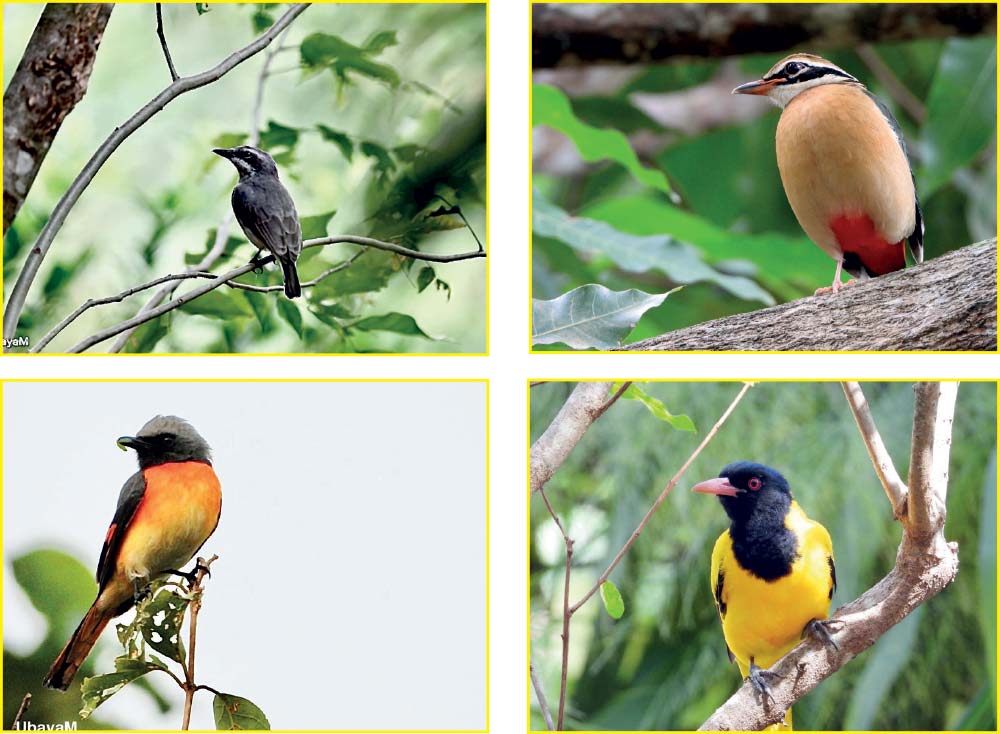
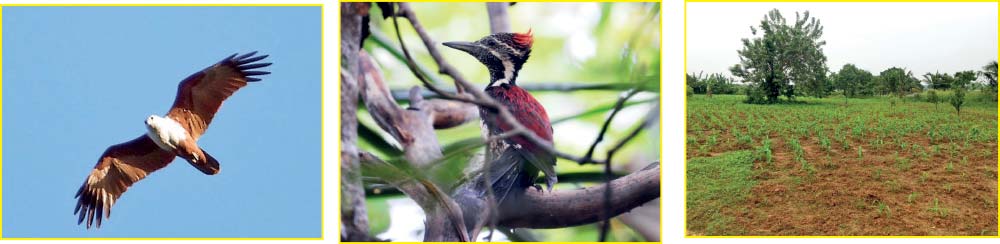
Today, Avian Arcadia is home to over 135 bird species, including several of Sri Lanka’s precious endemics like Sri Lanka Woodshrike (Tephrodornis affinis), Red-backed Flameback (Dinopium psarodes), Crimson-fronted Barbet (Psilopogon rubricapillus), Sri Lanka Swallow (Cecropis hyperythra), Sri Lanka Green Pigeon (Treron pompadora) and around 23 species have chosen to nest and raise their young within its boundaries. One of the most fascinating stories comes from the Asian Paradise Flycatcher (Terpsiphone paradisi), which has returned to the same nest location for up to three successive breeding seasons, a sign of habitat stability and safety.
The sanctuary also shelters a wide variety of dry-zone resident birds, ranging from large-billed species like the Malabar Pied Hornbill (Anthracoceros coronatus) to smaller finches of the munia family (Estrildidae). Warblers and prinias from the cisticola family (Cisticolidae) are frequently seen flitting through the undergrowth. Raptors from the hawk and eagle family (Accipitridae), elusive members of the cuckoo family (Cuculidae), and the noisy bulbuls of the Pycnonotidae family add their lively calls to the soundscape. Nocturnal birds from the owl family (Strigidae) are also present, just a few among a long and growing list of species. The wooded areas and forest edges further support birds from the barbet (Megalaimidae), flycatcher (Muscicapidae), and kingfisher (Alcedinidae) families, enriching the site’s remarkable avifaunal diversity.
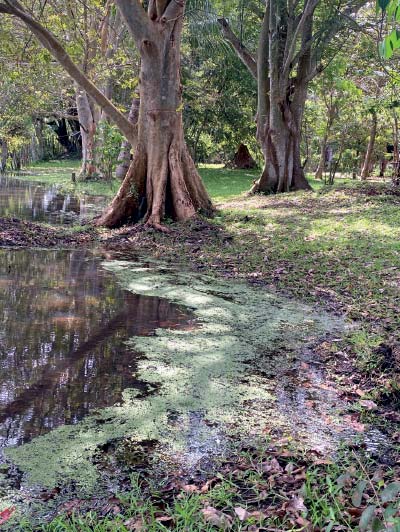
Equally significant are its migratory visitors, such as the Indian Pitta (Pitta brachyura), Orange-headed Thrush (Geokichla citrina), and Grey-bellied Cuckoo (Cacomantis passerinus), along with many others. An adjacent natural water body attracts various wader species and large aquatic birds, including members of the heron and egret family (Ardeidae), stilt and avocet family (Recurvirostridae), plover and lapwing family (Charadriidae), ibis and spoonbill family (Threskiornithidae), stork family (Ciconiidae), and cormorant and darter family (Phalacrocoracidae), further enriching the site’s avian diversity.
But Avian Arcadia’s wonders extend beyond birds. Butterflies, dragonflies, fireflies, moths, and bees abound, adding flashes of colour and light. Small mammals like rabbits and mongooses, along with reptiles such as iguanas and tortoises, also inhabit the property. Even some venomous reptile species adapted to dry environments thrive here, all amid the daily symphony of birdsong that fills the air. Together, they paint a vivid picture of how a carefully restored habitat can support a truly diverse ecosystem. In the sky, raptors glide in search of their prey, adding a dramatic dimension to the green canopy that stretches over the land.
Yet maintaining this sanctuary is not without challenges. Dry spells often test the resilience of both plants and wildlife, and water sources sometimes dwindle. However, dedication to native planting and habitat management has helped ensure that the site remains a refuge for all who call it home.
More than just a sanctuary, Avian Arcadia has become a place for learning and sharing. It serves as an awareness and research center, welcoming students, researchers, and bird enthusiasts to observe wildlife in natural behaviours, both by day and at night. Looking ahead, I hope to establish Avian Arcadia as a hub for conservation and research, introducing excursions to nearby forest patches to study the behavioural patterns of resident and migratory birds within this ecosystem, similar to that of an ‘Ellangawa’ Tank Cascade System, thereby creating a broader network for ecological study and protection.
Although restoration efforts have focused on rebuilding lost greenery, it is firmly believed that the most effective way to preserve nature is through the conservation and protection of existing habitats. While restoration can repair damaged ecosystems, safeguarding what remains intact is the true foundation of enduring conservation.
At its heart, Avian Arcadia stands as a reminder that conservation begins with action. Even small patches of restored habitat can become beacons of hope for Sri Lanka’s rich avian and indeed, entire natural heritage.
It stands as a testament to how one person’s vision can transform a patch of dry land into a thriving sanctuary for birds and biodiversity.
(Note: All photographs appearing in this article were taken at Avian Arcadia.)




