Sunday Oct 18, 2026
Sunday Oct 18, 2026
Saturday, 31 January 2026 00:00 - - {{hitsCtrl.values.hits}}
In Sri Lanka, the tuk-tuk is an everyday necessity: colourful, noisy, quick, sometimes too quick, and indispensable. They are the vehicles people rely on for school runs, office commutes, general errands, and tourist transport. They are also a source of pride for many drivers, who customise their tuks with the same care others invest in maintaining a personal car — new paint jobs, plastered with amusing stickered wisdom, bright and bombastic interiors, sizable speakers, and other upgrades that make their vehicle stand out.
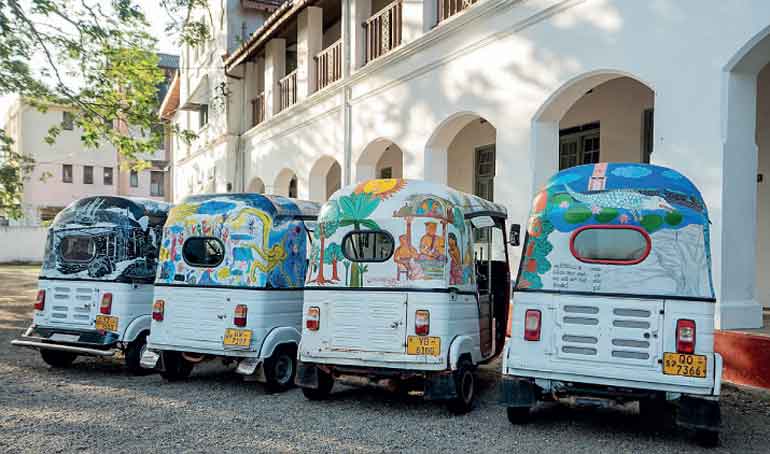
From 20-23 February, at the 2026 Matara Festival for the Arts (MFA), four of these familiar machines will take on an unexpected role. They will be transformed into mobile artworks, created in collaboration between Sri Lankan contemporary artists, a regional artist from India, youth from Matara, and local tuk drivers.
The project, supported by Festival Patron and Art Patron John Keells Foundation (JKF) in collaboration with the India-Sri Lanka Foundation (ISLF), is one of the festival’s central exhibits this year, and part of a broader attempt to explore how art can support new forms of community empowerment and economic opportunity.
A sri lankan artist-led project with community at its centre
the tuk-tuk mobile art initiative is led by some of the country’s most respected names in contemporary art: MFA Curator Prof. Jagath Weerasinghe, Bandu Manamperi, and Anura Krishantha, along with Bengaluru-based artist and assistant art professor Dushyantha HP. They will work side by side with the MFA’s talented youth cohort — Dinithi Bogahawattha, Kethmin Dilshan, Thenuka Vithanage, also joined thus far by Matara youth – 13-year-old Kavishka Siribaddana, 10-year-olds Pansilu Nanayakkkara and Bisadi Galhena, and 8-year-old Kithupa Nanayakkara.
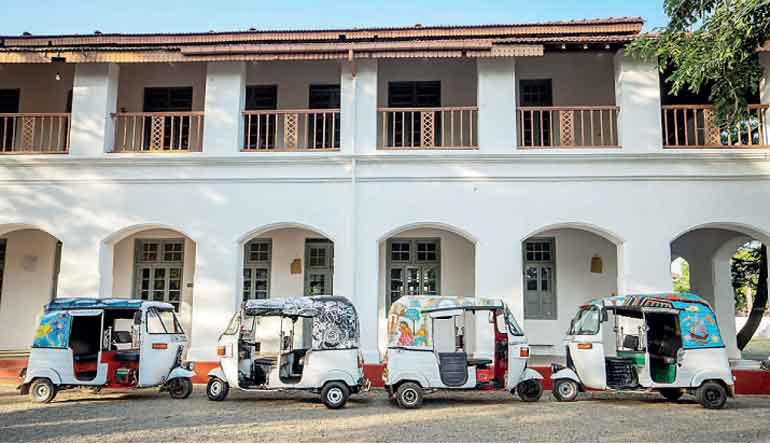
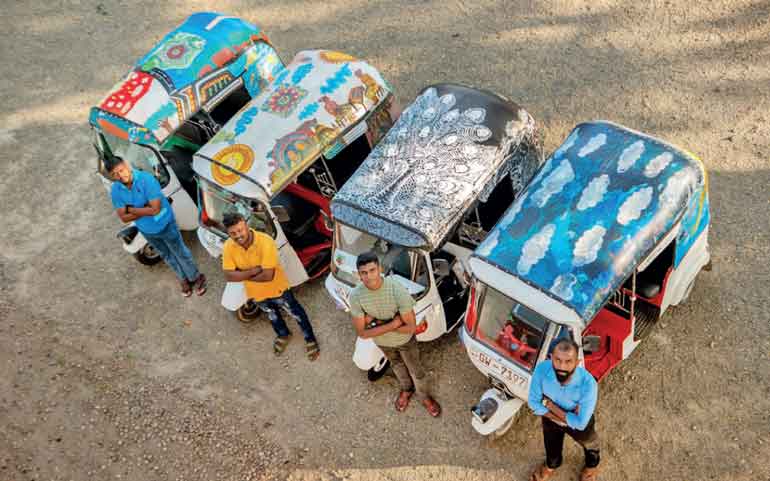
Together, they have converted the exteriors of four tuk-tuks into public artworks. The concept is intentionally simple: take something that already moves through the daily lives of thousands of people in Matara and use it as a platform for contemporary artistic expression and community/national storytelling.
Prof. Weerasinghe describes it as a way of “bringing art back into the public sphere,” an approach that reflects the MFA’s overall aim to decentralise and make art and its opportunities more widely accessible.
Drivers as partners, not just operators
Tuk owner-drivers Sithum, Tharindu, Priyantha, and Kasun are not being treated as passive vehicle owners in this project. They are co-creators and active partners. This idea grew from observations of how drivers already present themselves: proud of their tuks, invested in maintaining a distinctive identity, and eager to offer stories about their city — sometimes factually accurate, sometimes more colourful than true, but always with personality.
The festival aims to build on that instinct by first building a creative rapport with the drivers, and in the longer-term looking potentially to (should onward public-private support materialise) scale the project and add in workshops designed to strengthen drivers’ knowledge of Matara’s history, cultural sites, and community stories. The ultimate vision is to equip them to act as local narrators and micro-tourism guides, using the artwork on their vehicles as starting points for conversation.
The project also acknowledges the complexity of the tuk-tuk sector. While these vehicles are vital to daily life, public perceptions are mixed. Passengers often praise the convenience but complain about reckless driving, fare disputes, and inconsistent standards. At the same time, drivers face their own challenges: coming out of a slew of national crises, drivers still feel insecure about fuel costs, maintenance burdens, growing competition, and fluctuating regulatory environment.
There are differing attempts to formalise, improve conditions, and create a pathway to climb the ownership ladder — through unions, ride-hailing platforms, and rental companies who lease tuks from local owners through monthly fee structures so they may be rented by licenced tourists. The MFA project offers an additional angle: a creative, pride-based approach that values drivers’ identities, skills, and role in the region’s tourism ecosystem.
A festival built on strategic partnerships
The MFA has, since its launch in 2024, been powered by a coalition of partners committed to strengthening cultural life in the South. At the forefront is JKF — the Corporate Social Responsibility (CSR) entity of the John Keells Group — which returns as festival patron and art patron for the second consecutive year.
JKF’s focus on combatting social barriers and advancing creative industries aligns closely with the MFA’s mission. Their support has been critical in ensuring that the festival is not just an annual showcase but a platform for training and exposure, community engagement, and long-term cultural capacity-building.
Alongside JKF, the project also reconnects a longstanding Sri Lanka-India artistic relationship. Supported by the ISLF — an initiative established by both governments to support, amongst other projects, cultural initiatives — the MFA hosted Indian artist Dushyantha HP from Bengaluru’s 1Shanthiroad Studio in December.
Dushyantha, who arrived amidst Cyclone Ditwah, not only completed his tuk beautifully to support the goals of its small business owners, but in his free time supported cyclone relief efforts in Colombo and Matara.
This Sri Lanka-India art collaboration is also not new; in 2010, 1Shanthiroad worked with Sri Lanka’s Theertha Artists Collective (of which Jagath, Bandu, and Anura are leading members) on the Sethusamudram Project. The tuk-tuk exhibit continues this spirit of regional exchange, but with a different kind of public impact: art that moves through the streets telling new stories, and can craft new market opportunities for its owners.
The MFA is also supported by artist patron NTPC Mining Ltd., Freelan Enterprises Matara, Sri Lanka Tourism, Community Partner The Doctor’s House Madiha, opening event partners Lanka Ashok Leyland and the India CEO Forum, and exclusive print and digital media sponsors Daily FT, Sunday Times, Daily Mirror, and HI! Magazine.