Saturday Oct 17, 2026
Saturday Oct 17, 2026
Saturday, 4 July 2026 04:48 - - {{hitsCtrl.values.hits}}
|
Jagath Weerasinghe |
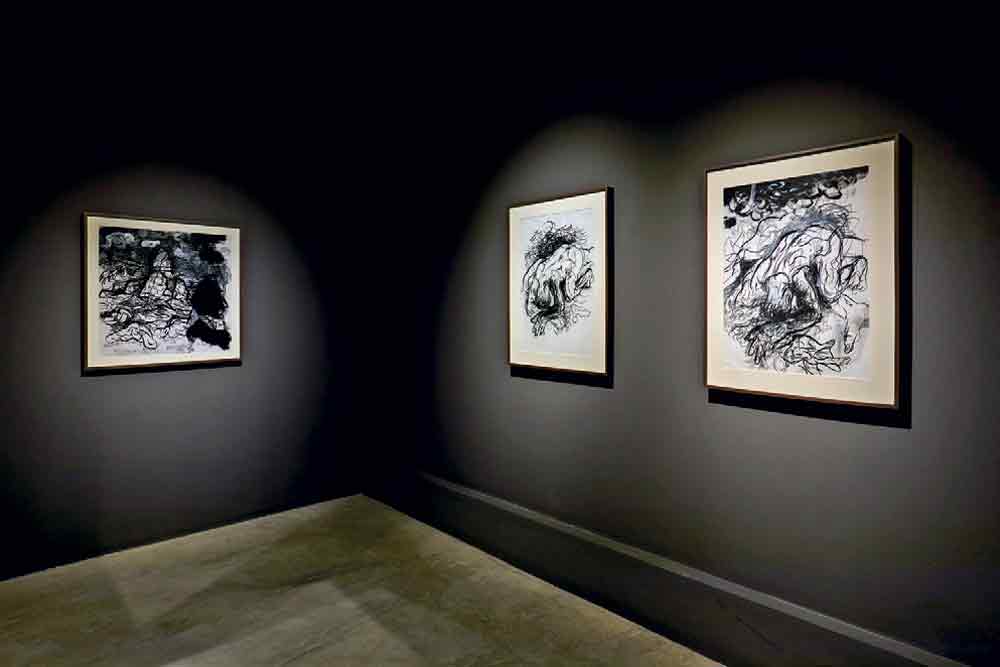
Saskia Fernando Gallery is presenting Jagath Weerasinghe’s solo exhibition titled “Trapped in a Broken Dream, I Still Think of You” until 19 July at 41, Horton Place, Colombo 7.
The exhibition carries the weight of an artist’s disillusionment. It is resonant with the disaffection that occupied Jagath Weerasinghe’s intellectual life, as he became acutely aware of the labyrinthine structures that create the conditions for violence in our contemporary world. Presenting a critical and philosophical engagement with systemic issues that shape global conflicts, the exhibition reveals the emotional undercurrents that lie beneath the artist’s intellectual inquiry. The presentation examines the manner in which the texture and tonality of visual language has shifted in the subjects the artist recurrently engages with.
Weerasinghe is a pivotal figure in contemporary Sri Lankan art and has been a significant driving force in its development since the early 1990s. His work belongs to collections at the Los Angeles County Museum of Art (LACMA), Los Angeles, the Fukuoka Art Museum, Fukuoka, and Devi Art Foundation, Delhi, and has been most recently featured at Nature Morte, Delhi (2025); Grosvenor Gallery, London (2025); KALĀ, Colombo (2025); Museum of Modern and Contemporary Art, Colombo (2024); Colomboscope, Colombo (2022).
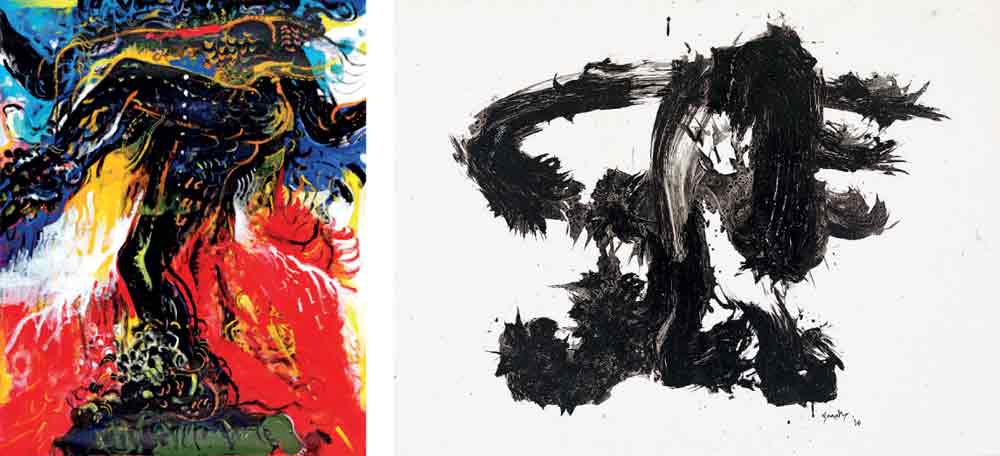
Weerasinghe returns to the subject of the mothers of the disappeared in the series, Fury, committing to paper a flurry of gestures that leaps on the surface like uncontrolled fire. The angst of women whose wait for their loved ones is stretching into two decades since the end of the civil war dissolves into the fluid movement of ink carrying the gravitas of a plea that has morphed into rage. The same black fire, becomes short and hurried like wisps in Insistent Threat, as the political climate in the island, for a brief period, carried the echo of terror that was characteristic of the violence in Sri Lanka in the 1980s. While the series Shiva from the artist’s early practice were isolated responses to events in Sri Lanka’s sociocultural environment, the current version of the God of Dance and Destruction embodies a righteousness that justifies the violence across the globe as moral and ideological necessity. Shiva embodies a rage that is directed inwards as much as it is directed outwards. The rage and injustice the artist feels seeps through the form of Shiva, and colours the ocean red.
Contending with the grim atmosphere of unreason that pervades the current moment, Weerasighe’s body prostrates like a boulder in Sleep of Reason, carrying an impossible burden. In a slightly more poetic treatment of the theme, Weerasinghe’s figure inhabits a garden populated simultaneously by monsters and inflorescence. The deliberate lines twist and writhe to become a disquieting landscape of inbetween worlds within which the figure is caught in an inertia rife with the awareness that the flawed structures are too embedded into our existence and any attempt to change the status quo will be met with resistance.
Throughout the exhibition, moments of fury, grief, longing, and anxiety unfold through a visual language that is at once deeply personal and profoundly political, offering a poignant meditation on what it means to endure amid systems that seem impossible to escape.