Saturday Oct 24, 2026
Saturday Oct 24, 2026
Saturday, 24 October 2026 00:00 - - {{hitsCtrl.values.hits}}
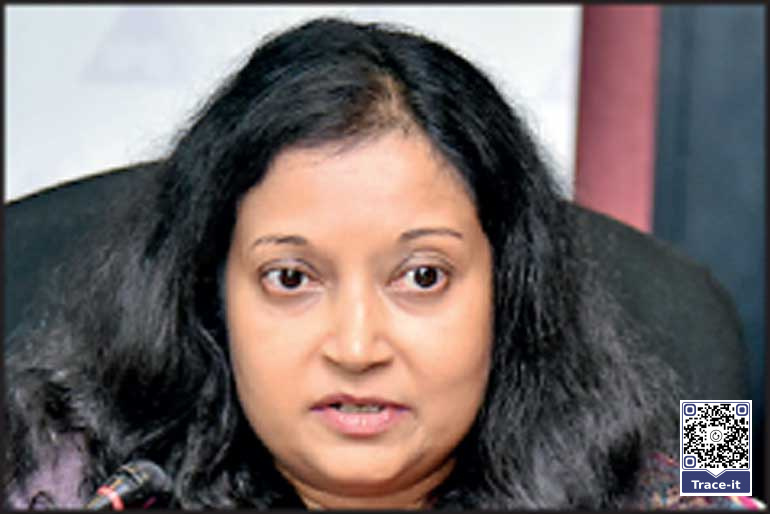
IPS Research Fellow Dr. Ganga Tilakaratna – Pic by Ruwan Walpola
Sri Lanka’s social protection system reaches households regardless of how exposed they are to shocks, the Institute of Policy Studies (IPS) said. This leaves many of the poorest and most shock-hit households without support.
IPS Research Fellow Dr. Ganga Tilakaratna presented the findings at a roundtable yesterday on the IPS flagship report, Sri Lanka State of the Economy 2026. She drew on two chapters, one on shock-responsive social protection and one on a health-centred silver economy (economic activity built around the needs and capacities of an ageing population). She said both were relevant to building the resilience needed for durable growth.
Dr. Tilakaratna said the COVID-19 pandemic, the 2022 economic crisis and repeated climate disasters had exposed many households to multiple, overlapping shocks.
To measure this, the IPS built a household shock exposure index from an integrated household survey of about 6,850 households. The index captures cumulative exposure to 13 types of shock, weighted by severity. It classifies households as facing low, medium or high exposure. About 11.4% of households, or one in nine, fell into the high exposure group, and more than half faced moderate exposure.
Close to 30% of households received Aswesuma welfare benefits, and about 50% received benefits from at least one social protection program. In the estate sector, which has historically had the highest poverty, 54% of households received Aswesuma benefits. Dr. Tilakaratna described this as a notable improvement on the coverage of the previous Samurdhi program.
However, coverage did not rise with shock exposure. At national level, Aswesuma coverage was broadly the same across all three exposure groups. The rural sector followed the national pattern, and the urban sector showed no clear pattern. In the estate sector, coverage was lower among high-exposure households than among low-exposure ones, although still above rural and urban levels. “Overall, we don’t find any consistent relationship between household shock exposure and coverage,” Dr. Tilakaratna said. This applied both to Aswesuma and to the wider system.
By income, coverage was broadly pro-poor, with poorer households more likely to receive support. Still, only 62.5% of households in the bottom expenditure quintile received social protection, leaving over a third uncovered. Among bottom-quintile households facing high shock exposure, coverage fell to 55%. This was below the rate for their less-exposed peers in the same quintile, leaving about 45% without support.
Dr. Tilakaratna said this showed the need to widen coverage and strengthen the system’s capacity to respond to shocks, so that vulnerable households do not fall into poverty or lose income. She suggested exploring whether Aswesuma eligibility could better reflect household exposure to shocks, including climate shocks.
The IPS set out five priorities. The first is to bring all social protection programs into the Integrated Welfare Management System, whose social registry covers about 3.4 million households. That registry should expand to cover vulnerable households currently outside the system. The second is to link social protection with disaster management and climate information, to identify vulnerable households in disaster-prone areas. The third is to create mechanisms for rapid expansion during crises, such as predefined expansion protocols and financing arrangements. The fourth is to strengthen digital payments for timely delivery. The fifth is to invest more in labour market and productive inclusion programs, which build long-term resilience.
On ageing, Dr. Tilakaratna said rapid population ageing poses challenges for social protection and healthcare. It also creates an opportunity to develop a silver economy that supports healthy and productive ageing. The IPS assessed the health system across six building blocks and found gaps, including [a shortage of age-disaggregated health information], supply disruptions and no mechanism for financing long-term care.
The IPS proposed three responses. The first is stronger primary healthcare, with better integration of chronic disease and elderly care and better referral pathways. The second is wider use of telemedicine, electronic health records and remote monitoring, alongside efforts to close digital literacy gaps among vulnerable groups. The third is financial protection for older people, by cutting out-of-pocket spending through better access to essential medicines and targeted subsidies.




