Wednesday Jun 03, 2026
Wednesday Jun 03, 2026
Monday, 1 June 2026 00:08 - - {{hitsCtrl.values.hits}}
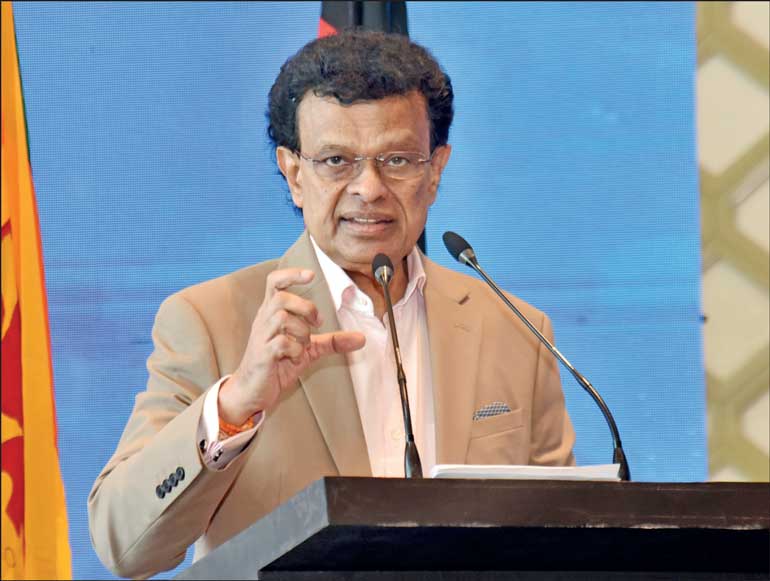
SLPA Chairman Dr. Parakrama Dissanayake
By Charumini de Silva
Sri Lanka Ports Authority (SLPA) Chairman Dr. Parakrama Dissanayake last week cautioned against pursuing large-scale port investments in Trincomalee without proven commercial demand, stressing that future developments must be financially viable and supported by strong logistics connectivity.
Responding to concerns raised over the pace of development at Trincomalee Port, Dr. Dissanayake said the existing National Port Master Plan identified several potential projects, but many had yet to undergo rigorous financial feasibility assessments.
Speaking at the Sri Lanka-German Business Forum 2026 on Thursday, he revealed that the Asian Development Bank (ADB), which prepared the original master plan, is expected to revise it with a greater emphasis on financial viability.
“There is a National Ports Master Plan developed by the ADB. It identifies various projects that can be undertaken, but many of them have not been backed by proper financial feasibility studies,” he said.
Drawing lessons from the development of Hambantota Port, Dr. Dissanayake argued that port investments should be driven by demand rather than infrastructure ambitions.
“Ports have to be demand-driven because constructing a port is extremely expensive,” he said.
The SLPA Chairman said discussions were underway with several organisations to explore opportunities to generate cargo demand and economic activity in Trincomalee before embarking on major infrastructure projects.
He pointed to plans being explored by the Board of Investment (BOI) to establish a logistics hub in Trincomalee, with the possibility of releasing around 300 acres of land in the Kappalturai area for investment.
However, he questioned whether such ambitions could succeed without first addressing transport and logistics bottlenecks.
“If you want to create a logistics hub, you must first get the connectivity right. Without proper connectivity, it will be difficult to make it a reality,” he said.
Dr. Dissanayake also highlighted the structural challenges facing smaller ports in attracting global shipping traffic, noting that international container shipping remains heavily concentrated among a handful of major operators.
He said the world’s top 10 shipping lines currently control nearly 84% of global shipboard container capacity, giving them enormous influence over port selection and shipping routes.
“We are at the mercy of 10 shipping lines,” he said.
He outlined the growing focus within Sri Lanka’s port sector on ensuring that future investments are aligned with commercial demand, shipping connectivity and broader logistics competitiveness rather than infrastructure expansion alone.
“We can have plans and plans and plans. But at the end of the day, the challenge is whether you attract them,” he said.




