Friday Sep 25, 2026
Friday Sep 25, 2026
Friday, 19 December 2025 00:22 - - {{hitsCtrl.values.hits}}
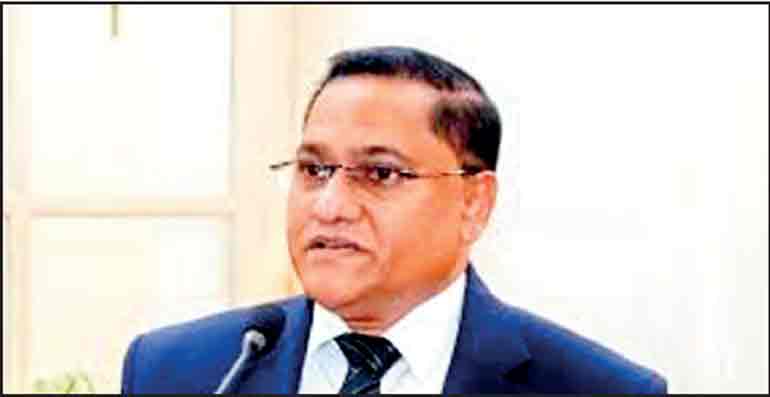
Tourism Minister Vijitha Herath
Sri Lanka’s tourism sector is being steered towards a more integrated, community-focused, and strategically branded future, with revenues from the Tourism Development Levy (TDL) continuing to rise and a renewed policy emphasis on positioning the country under a single national brand, Foreign Affairs, Foreign Employment and Tourism Minister Vijitha Herath told Parliament.
Responding to questions raised by the Opposition, the Minister revealed that the TDL generated Rs. 2.58 billion in 2024, while collections for the period from January to September 2025 have already reached nearly Rs. 2.93 billion, reflecting a steady recovery and expansion of the sector.
He said the Government recognises that while Sri Lanka is already branded internationally as a tourist destination, the branding has evolved in an ad hoc manner across different sectors and now requires revision through a formal and unified methodology.
Accordingly, under the leadership of the Sri Lanka Tourism Promotion Bureau (SLTPB), work has commenced to introduce a common “Nation Branding” framework that can be used across institutions linked to tourism.
“The objective is to consolidate Sri Lanka under one coherent identity rather than allowing fragmented, sector-based branding, adding that the necessary investments to support this initiative will be made in the future,” he explained.
Providing insights into tourist spending patterns, Minister Herath said the average daily expenditure of a tourist stood at $ 181.15 during 2024, a year in which total tourism revenue reached $ 3 billion. For the period from January to October 2025, total tourism earnings amounted to $ 2.66 billion, indicating sustained inflows despite global uncertainties.
“Based on market analysis, the average daily spending varies by source market, ranging broadly from mid-$ 150 levels to well over $ 200 for visitors from countries such as the UK, Germany, Russia, China, and India,” he said.
Addressing concerns over so-called “low-cost tourists,” the Minister argued that such visitors should not be viewed negatively, stressing that tourist segments are diverse and dynamic.
He said a young traveller visiting Sri Lanka on a limited budget today could return in the future as a high-spending visitor with family, effectively acting as a long-term ambassador for the country.
In addition, spending by budget travellers tends to flow directly into local economies through homestays, small shops, and local restaurants, supporting community-level development rather than concentrating benefits in large corporations.
He also pointed out that high-end tourists do not necessarily confine themselves to luxury consumption.
“Many deliberately use public transport and eat local food to experience the country authentically, while purchasing goods from roadside vendors and small businesses. Such behaviour ensures that tourism income reaches communities directly, without intermediaries, strengthening inclusive growth,” he added.
On accommodation pricing, Minister Herath acknowledged that daily room rates in Sri Lanka remain relatively low compared to demand, noting that even during the period following the Easter Sunday attacks, average room rates were about 20% lower than those charged by star-class hotels elsewhere. Since then, the country’s total room capacity has increased by around 90,000 rooms, contributing to pricing pressures.
He emphasised, however, that tourism should not be narrowly defined by hotel room spending alone, arguing that modern tourists tend to spend less on accommodation and more on experiences, activities, and local consumption.
Responding to questions on coordination and policy coherence, the Minister confirmed that a high-level discussion mechanism has already been institutionalised.
A Presidential Task Force on tourism development was established by President Anura Kumara Dissanayake under Article 33 of the Constitution through an Extraordinary Gazette issued on 20 August 2025. The Task Force has since held three sessions, in September, October, and December 2025, to drive tourism development programs and address sector-wide challenges.
Addressing criticism over holding multiple portfolios, Minister Herath said the combination of foreign affairs, foreign employment, and tourism should be seen not as a constraint but as a strategic advantage.
He argued that this structure helps remove bureaucratic bottlenecks, enabling faster and more integrated decision-making.
“Over recent months, a series of strategic sessions have been held with the Sri Lanka Tourism Development Authority (SLTDA) and the SLTPB, alongside rapid task force meetings with industry stakeholders including The Hotels Association of Sri Lanka (THASL) and the Sri Lanka Association of Inbound Tour Operators (SLAITO). Practical ideas from these consultations have been directly incorporated into policy formulation,” he said.
Under this joint mechanism, the Government has been able to issue direct instructions for tourism promotion through Sri Lankan foreign missions and to move ahead with plans to build a skilled workforce for the hospitality sector.
Minister Herath said this integrated approach has allowed decisions to be taken quickly, without delays, as Sri Lanka seeks to reposition its tourism industry for sustainable, inclusive, and globally competitive growth.




