Tuesday Oct 06, 2026
Tuesday Oct 06, 2026
Thursday, 20 August 2026 00:28 - - {{hitsCtrl.values.hits}}
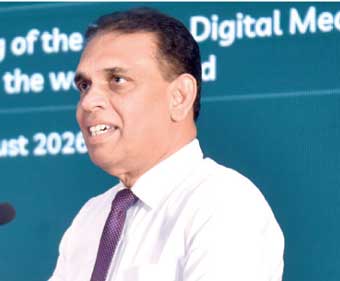 |
| SLAITO President Nalin Jayasundera |
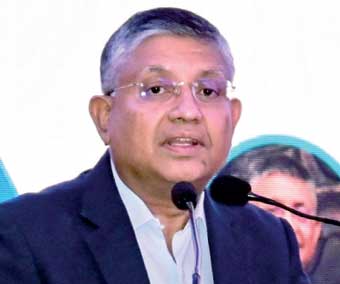 |
| THASL President Asoka Hettigoda |
The private sector yesterday welcomed the launch of Sri Lanka’s new interim tourism promotion, but called for rapid expansion to more source markets, stronger partnerships with tour operators and airlines, and rigorous monitoring of campaign performance.
Speaking at the launch event yesterday, Sri Lanka Association of Inbound Tour Operators (SLAITO) President Nalin Jayasundera described the initiative as “the need of the hour,” noting the industry had waited too long for a coordinated international marketing campaign.
“Of course, there was a slight delay, but finally it’s happening and we are in the right direction,” he said.
Jayasundera urged the Government to expand the campaign from its initial six markets to at least 10 key source markets without waiting until next year, arguing that Sri Lanka needed to maintain momentum across its major tourism-generating countries.
He also stressed the need for joint marketing with international tour operators, particularly major European operators that promote multiple destinations and therefore require stronger incentives to position Sri Lanka in their programs.
“Sri Lanka is not the only destination. We need to find a mechanism to work together with tour operators and carry out joint marketing,” Jayasundera said.
Airlines, he added, would be equally critical to the success of the campaign. With several new carriers expected to begin operations to Sri Lanka, he called for the Government and industry to support their marketing efforts, while encouraging them to increase frequencies and capacity over time.
He said Sri Lanka should aim for 5 million tourist arrivals by 2030 and establish itself as a year-round destination, while targeting tourism revenue of at least $ 8 billion by then, with the potential to reach $ 10 billion if the right policies and coordinated marketing were implemented.
“The unity is the key to achieve any goal,” Jayasundera said, calling for close coordination between the Tourism Ministry, Sri Lanka Tourism Promotion Bureau (SLTPB), and the private sector.
The Hotels Association of Sri Lanka (THASL) President Asoka Hettigoda similarly welcomed the campaign, insisting the private sector had invested heavily in tourism but had long faced uncertainty over the country’s international marketing efforts.
He said THASL members had invested more than $ 1.5 billion in the sector and developed properties that had secured major international recognition.
“Today, we are living a dream, because for the last few years, this dream has been so elusive,” Hettigoda said, noting that investors needed stronger tourist spending, longer stays, and higher returns to sustain further investment.
Hettigoda said Sri Lanka’s wide geographical spread of tourism businesses could help distribute economic benefits more equitably, with THASL members ranging from large hotel groups to small boutique properties across the country.
He backed the campaign’s emphasis on digital marketing and the subsequent global campaign, saying Sri Lanka had a vast range of attractions and experiences to promote.
However, he cautioned that no campaign could effectively market every attraction at once and urged authorities to make strategic choices on what to promote in each market.
Hettigoda also called for greater transparency in the use of campaign funds, including regular public updates on performance.
“It is one thing to embark on something. It is something else how to do it best,” he said, proposing regular performance reviews showing the campaign’s impact in each market.
He suggested that authorities publish updates comparing the position of Sri Lanka before and after the campaign, assessing whether it was delivering the expected results and identifying adjustments required.
With around Rs. 5 billion earmarked for the planned global campaign, Hettigoda said close monitoring would be essential to ensure that expenditure produced measurable results.
“We have waited all these years. We want the best outcome,” he said.
He also urged authorities to maintain the announced timelines for the global campaign and provide greater clarity on procurement, performance monitoring, and implementation milestones.
Hettigoda said the private sector was prepared to support the initiative while providing constructive feedback to strengthen its effectiveness.
Both industry leaders stressed that the success of the campaign would ultimately depend on close cooperation between Government agencies, tourism authorities, airlines, tour operators, and the wider private sector.



