Saturday Sep 26, 2026
Saturday Sep 26, 2026
Saturday, 21 February 2026 00:42 - - {{hitsCtrl.values.hits}}
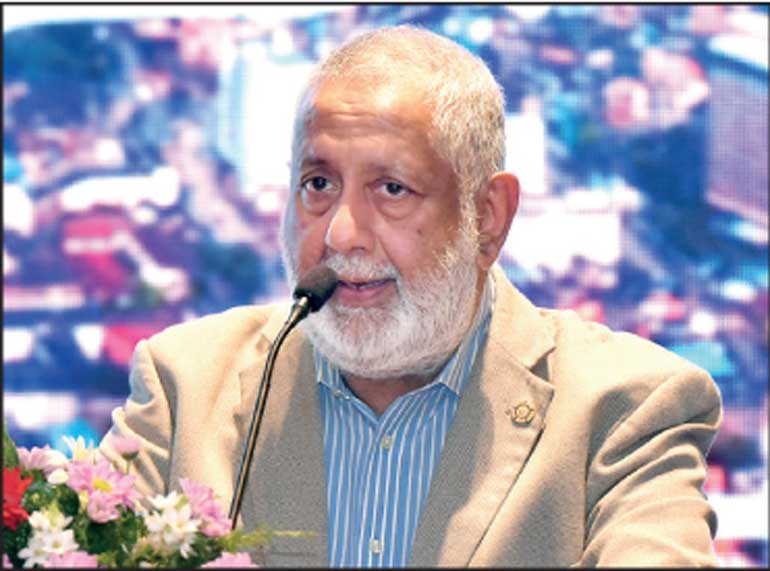
Rajendra Theagarajah
Veteran banker and Impact investor Rajendra Theagarajah recently outlined a patient-capital model aimed at rebuilding Sri Lanka’s Northern Province, arguing that sustainable wealth creation—not charity, was key to reversing decades of underdevelopment.
Speaking at the inaugural Lanka Impact Investment Summit 2026 (LIIS), organised by the Lanka Impact Investing Network and the Global Steering Group for Impact Investment Sri Lanka, Theagarajah said his fund, Cinnamon Global, had deployed around $ 5 million over the past four years into growth-stage enterprises in the North.
“Instead of giving charity, why don’t we create a fund to look at sectors relevant to the province and champion micro and SME development, while creating and retaining wealth within the province?” he said.
The Northern Province, he noted, remains the least developed among Sri Lanka’s nine provinces, still recovering from three decades of conflict. The objective, he said, is to prevent outward migration to Colombo and other urban centres by building prosperity locally.
Cinnamon Global focuses on growth capital rather than start-ups or seed funding. “This is not a VC. We don’t look at startups. This is entirely focusing on growth—growth and patience,” he stressed.
The fund typically invests between $ 25,000 and $ 50,000 per enterprise, with its largest investment reaching $ 700,000. It reviews around five investments annually from a pipeline 15 to 20 times larger. Theagarajah said the model avoids collateral and traditional interest structures, instead tying returns to revenue growth generated through capital infusion.
“We don’t take security. There’s no collateral. The compensation is linked to growth in revenue,” he explained.
The fund’s current focus spans four verticals: agriculture value addition, aquaculture and fisheries, innovative ICT ventures, and logistics services supporting the broader ecosystem. Enterprises must demonstrate near-EBITDA positivity and clear growth potential.
Beyond capital, he said the fund provides governance, compliance and accounting support to help small businesses transition from informal cash-based systems into formal banking channels. “You continue to grow your business. Plug your data into a common service. We will fund it, but you must move into the formal system,” he said, noting that bankability is central to long-term scaling.
Theagarajah also detailed a parallel $ 500,000 allocation toward revitalising heritage rice cultivation in the North, once considered Sri Lanka’s rice bowl. Starting with 127 farmers four years ago, he said the program has expanded to over 350 farmers in a single district, with no loan defaults so far.
“Impact is patience,” he said, describing four harvest cycles that gradually introduced soil mapping and AI-driven crop advisory to improve yields and quality. The fund recently financed a large-scale agri symposium in Kilinochchi, bringing together farmers, academics, banks and technology providers to bridge knowledge gaps, particularly through Tamil-language engagement.
“If you speak in the language they understand, they open up,” he observed, underscoring the importance of trust-building at grassroots level.
Noting that market access remains a key priority, Theagarajah said UK and US demand exists for low glycaemic heritage rice varieties, but consistent quality and supply have historically hindered exports. Through data-driven cultivation and ecosystem support, the fund aims to position Northern rice as a branded export over the long term.
“Will we see that brand fully evolve in our lifetime? No. But we have set the tone,” he said.
Reflecting on lessons learned, he acknowledged governance challenges and two advisory dropouts over the years, as well as early misconceptions that growth capital was equivalent to grant funding. “It needs a particular type of commitment to sustain this,” he noted.
Theagarajah also stated that the initiative works closely with private sector commercial banks, ensuring ventures eventually integrate into the formal financial system.
He cautioned against fragmented capital structures driven by conflicting investor expectations. “Here, the vision is aligned. It is long term. It is patient,” he said, positioning the model as a differentiated approach within Sri Lanka’s emerging impact investment landscape.




