Tuesday Sep 29, 2026
Tuesday Sep 29, 2026
Friday, 23 January 2026 00:28 - - {{hitsCtrl.values.hits}}
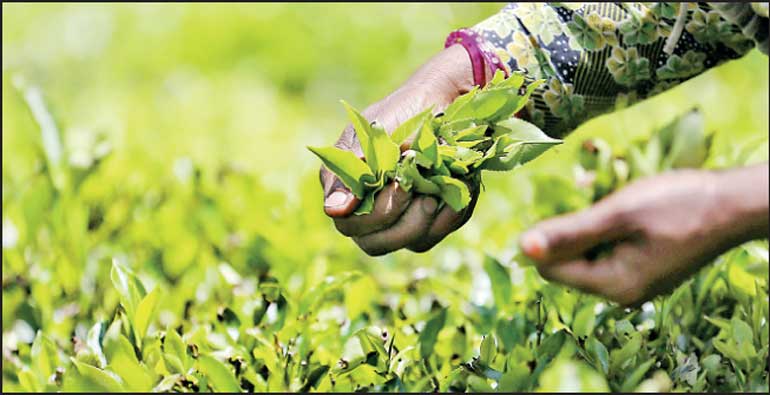
Sri Lanka’s tea industry delivered a stronger overall export performance in 2025, with volumes and earnings recording year-on-year (YoY) growth despite mixed results across product segments and pressure on average prices.
According to data analysed by Forbes & Walker Research, total tea export earnings increased by 6% YoY to $ 1.51 billion, underscoring the resilience of Ceylon Tea in global markets amid shifting demand patterns and competitive pressures.
Cumulative tea exports for January-December 2025 reached 257.44 million kilograms (Mnkg), an increase of 11.65 Mnkg compared to 245.79 Mnkg in 2024. Growth was driven primarily by Packeted Tea, Tea Bags, Instant Tea, and Green Tea, while Bulk Tea recorded a contraction over the year.
Bulk Tea exports declined by 4.27 Mnkg YoY to 106.8 Mnkg, reflecting continued challenges in the lower-margin segment. In contrast, Tea Packets expanded by 14.43 Mnkg to 116.25 Mnkg, reinforcing the industry’s gradual shift towards branded and value-added exports.
Tea Bags, Instant Tea and Green Tea also posted positive volume growth, highlighting diversification within the export basket. In USD terms, all categories except Bulk Tea and Tea Packets recorded improvements compared to 2024.
However, average prices showed marginal weakness. The cumulative Free On Board (FOB) value averaged Rs. 1,760.70 per kilo, a slight decline of Rs. 2.91 from 2024 levels, while the USD-denominated FOB value edged up marginally by $ 0.01 to $ 5.85 per kilo. This indicates that higher export volumes rather than price gains were the key driver of improved earnings in 2025.
In contrast to the annual performance, December 2025 saw a sharp contraction in export volumes. Tea exports for the month totalled 17.87 Mnkg, down 4.70 Mnkg from 22.57 Mnkg exported in December 2024.
The product categories revealed divergent performance trends. Bulk Tea and Packeted Tea recorded negative variances in FOB value, while Tea Bags, Instant Tea, and Green Tea posted gains in rupee terms, reinforcing the importance of value-added exports.
Despite a decline in average FOB value per kilo, Tea Packets’ strong volume growth supported earnings, reinforcing the importance of branded exports. Tea Bags registered gains in both volume and FOB value, reflecting steady demand for convenience-oriented products. Instant Tea also emerged as one of the strongest performers, posting significant increases in volume and FOB value, particularly in USD terms. Green Tea continued its gradual expansion, with higher volumes and improved prices compared to 2024.
In December 2025 alone, tea exports totalled 17.87 Mnkg, a decline of 4.70 Mnkg YoY. All categories recorded lower volumes compared to December 2024. However, the average FOB value improved to Rs. 1,831.11 per kilo, up Rs. 130.06 YoY, while the USD FOB value increased to $ 5.92 per kilo, partially offsetting the volume decline.
Data analysed by Asia Siyaka noted that a review of value-added segments had 2025 record an 11-year high of 59% of the total, driven by a surge in Packet Tea exports from 101 Mnkg to 116 Mnkg, which comprise 45% of total exports in that year. Tea Bag shipments have increased from 25.4 Mnkg to 26.4 Mnkg and accounted for 10% of the total.
“These key performances saw the Bulk Tea component decline to 106.8 Mnkg (41%) from 111 Mnkg (45%) the year before. Instant Tea did well to rise 15% to 3 Mnkg, with Green Tea also growing 5% to 4.9 Mnkg,” it added.
Iraq emerged as the top importer of Ceylon Tea in 2025, absorbing 39.36 Mnkg, a 14.9% YoY increase from 34.26 Mnkg in 2024. Russia ranked second with 21.59 Mnkg, though volumes declined by 13.6% YoY, reflecting geopolitical and economic headwinds.
Türkiye secured third place with 21.27 Mnkg, recording a strong 20% growth, while Libya climbed to fourth position with a dramatic 83.9% YoY surge to 18.93 Mnkg, compared to 10.29 Mnkg in 2024. The United Arab Emirates ranked fifth with 18.32 Mnkg, despite a 13% decline YoY.
Further down the ranking, Chile recorded robust growth, importing 11.09 Mnkg, a 28.5% increase YoY, overtaking China, which imported 10.42 Mnkg, down 9.9% YoY. Iran followed closely in eighth place with 10.39 Mnkg, while Azerbaijan and Saudi Arabia rounded out the top 10 with 8.91 Mnkg and 8.73 Mnkg, respectively.



