Thursday Oct 22, 2026
Thursday Oct 22, 2026
Wednesday, 26 August 2026 00:25 - - {{hitsCtrl.values.hits}}
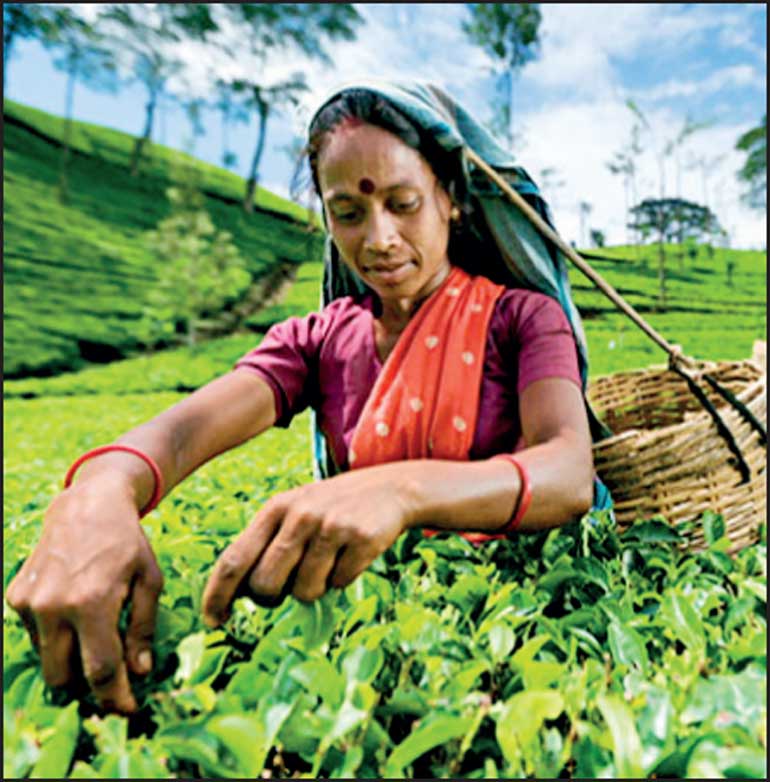
Sri Lanka’s tea exports fell sharply in the first seven months of 2026, with Middle East shipping disruptions compounding weaker shipments to several key markets and contributing to a $ 67 million decline in export earnings.
Tea exports during January-July dropped 4.9% to 143.51 million kg, from 150.85 million kilograms (Mn/Kg) in the corresponding period last year, according to data from Forbes and Walker Research and Customs figures analysed by Siyaka Research.
The contraction accelerated in July, when exports fell to 20.41 Mn/Kg, down 3.63 Mn/Kg, or about 15%, from 24.04 Mn/Kg a year earlier.
They attributed the renewed pressure in July partly to continued disruptions to shipping routes in the Middle East, which affected export flows and market access.
The decline in volumes has been accompanied by weaker dollar realisations. Tea export earnings for the first seven months were approximately $ 817 million, compared with $ 884 million a year earlier.
The average FOB value declined to $ 5.70 per kg from $ 5.86, despite a substantial increase in the rupee-denominated FOB value.
The average FOB value in July rose to Rs. 1,921.95 per kg, up Rs. 155.44 from Rs. 1,766.51 a year earlier. However, the stronger rupee-denominated price was not sufficient to offset the decline in export volumes and the lower dollar realisation.
For the January-July period, the average FOB value increased by Rs.77.65 to Rs.1,826.16 per kg from Rs. 1,748.51. In dollar terms, however, it declined by $ 0.16 per kg to $ 5.70.
The divergence highlights the pressure on Sri Lanka’s tea export sector: higher local-currency prices are masking a deterioration in the underlying dollar value of shipments, which remains the more relevant measure for export earnings and foreign-exchange generation.
The impact has been particularly pronounced across several Middle Eastern and adjacent markets.
Exports to Libya fell by around 58% to 5.4 Mn/Kg from 13 million kg, while shipments to the United Arab Emirates declined by a similar magnitude to 4.4 Mn/Kg from 10.6 million kg, according to Siyaka.
Saudi Arabia proved more resilient, with imports broadly stable at around 4.8 Mn/Kg compared with 4.7 Mn/Kg previously. Syria also recorded a modest increase, with imports rising to 4.7 Mn/Kg from 4.5 Mn/Kg.
Beyond the region, exports to Chile declined by approximately 24% to 4.9 Mn/Kg, while China recorded an 8% decline to 5.5 Mn/Kg.
The market performance nevertheless contained some bright spots. Türkiye emerged as the largest individual importer of Ceylon Tea during the January-July period, with imports reaching 24.76 Mn/Kg, up 138% from 10.40 Mn/Kg a year earlier.
Iraq, however, saw imports fall 36% to 14.42 Mn/Kg, while Russia recorded a 2.6% increase to 13.35 Mn/Kg. Azerbaijan also posted strong growth, with imports rising 49% to 7.14 Mn/Kg.
The category breakdown provides little comfort, with Instant Tea the only segment to record a positive volume variance during the first seven months. All other categories recorded declines compared with the same period in 2025.
In value terms, all categories except Instant Tea recorded gains in rupee terms, but the picture was weaker in dollars. Green Tea was the only category to record a positive dollar variance, while the other categories declined.
The latest figures underline the increasing exposure of Sri Lanka’s tea trade to geopolitical and logistical disruptions along its traditional markets and shipping routes.
With volumes contracting, the average dollar FOB value declining and several important Middle Eastern markets recording steep falls, the industry faces a challenge that cannot be addressed through higher rupee prices alone.
Industry analysts say resilience of markets such as Türkiye, Russia and Saudi Arabia could provide some cushioning, but the first seven months of the year suggest that Sri Lanka’s tea sector is facing both a volume problem and a dollar-value problem at a time when export earnings remain critical to the country’s external position.




