Saturday Aug 08, 2026
Saturday Aug 08, 2026
Friday, 20 February 2026 00:28 - - {{hitsCtrl.values.hits}}
By Charumini de Silva
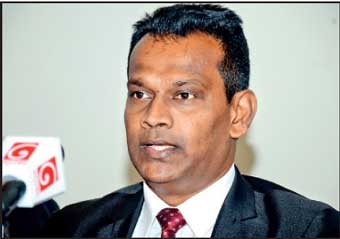 |
| Deputy Tourism Minister Prof. Ruwan Ranasinghe |
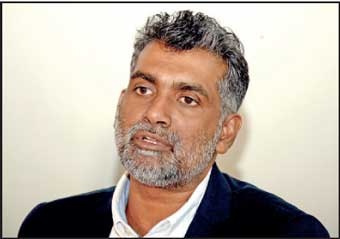 |
| Sri Lanka Tourism Chairman Buddhika Hewawasam |
Sri Lanka’s tourism industry is entering a new phase, one driven not by record-breaking arrivals alone, but by a sharper focus on revenue, yield, and high-value markets, as authorities set their sights on surpassing $ 4 billion in earnings this year.
Addressing the media, Tourism Deputy Minister Prof. Ruwan Ranasinghe said the country has successfully regained and surpassed its pre-crisis visitor volumes and is now “switching gears” to strengthen value capture and product quality.
“We have achieved the volume as planned. Now the target is to go beyond that by improving products, targeting high-value segments, and increasing revenue,” he said.
Sri Lanka welcomed 2.36 million tourists in 2025, overtaking the previous high of 2.33 million recorded in 2018. As of 15 February this year, arrivals had reached 436,666 — a growth of over 13% compared to the same period last year.
“With stability restored and targeted marketing underway, we are confident tourism will make a stronger contribution to economic growth,” the Deputy Minister said.
He said with the ongoing ICC World Cup T20 tournament in Colombo, city hotels are reporting 100% occupancy during, with five-star room rates climbing from around $ 300 to nearly $ 500, a sign that Sri Lanka is beginning to command stronger pricing power.
Prof. Ranasinghe also attributed renewed international confidence to improved political and economic stability indicators, as well as swift recovery measures following Cyclone Ditwah.
“Until a full-scale global campaign is rolled out, Sri Lanka will launch a Rs. 2 billion interim PR and digital campaign in April, targeting between 12 and 15 key source markets,” he added.
These include India — along with Bangladesh and Pakistan, the UK, Germany, Benelux countries, Austria, Russia, China, Japan, South Korea, Australia, New Zealand, and Middle Eastern markets.
The Deputy Minister said the eight-month campaign will serve as a bridge, whilst a larger global strategy, currently being prepared with consultancy support from the Asian Development Bank (ADB), is finalised.
“Sri Lanka Tourism doesn’t have the capacity to run such a vast project,” he added.
The shift towards value is particularly critical given that the current average daily spend stands at around $ 148. Prof. Ranasinghe said the strategy to lift revenue per visitor includes expanding the Meetings, Incentives, Conferences, and Exhibitions (MICE) segment, promoting wedding tourism, especially from India, and strengthening sports, wildlife, wellness, and luxury offerings.
Authorities are also encouraging high-end investments with room rates in the $ 300–500 range, alongside tighter product development, regulation, and standardisation.
“The objective is to improve yield rather than simply increase numbers,” he said, adding that high-end accommodation is no longer limited to Colombo, with premium properties emerging in destinations such as Yala, Badulla, and other regional hubs.
He also noted that the MICE segment alone has grown from around 5% to nearly 9% of total arrivals, reflecting the success of targeted positioning efforts.
Prof. Ranasinghe also disclosed that nearly 300 investment proposals have been received following the release of tourism lands, many of them sustainability-focused and positioned for the upmarket segment.
Sri Lanka Tourism Chairman Buddhika Hewawasam said digital and PR agencies are being appointed in major source markets to maintain consistent visibility and consumer engagement.
“We are targeting high-value markets and segments. The focus is not only on increasing arrivals but on achieving higher revenue per visitor,” he added.
Hewawasam noted that Sri Lanka is also ramping up participation at major international travel exhibitions, including ITB Berlin next month, while organising roadshows across Asia, Europe, and Oceania to ensure steady year-round arrivals and mitigate the seasonal dip typically seen after April.
In addition, he said specialised segments are receiving renewed attention, particularly the promotion of nautical and marine tourism, including diving, whale watching, and yacht tourism, as well as spiritual and heritage tourism centred on Anuradhapura and other cultural destinations. Health and wellness tourism and sports tourism are also gaining traction.
Pix by Lasantha Kumara




