Tuesday Oct 27, 2026
Tuesday Oct 27, 2026
Saturday, 18 October 2025 00:12 - - {{hitsCtrl.values.hits}}
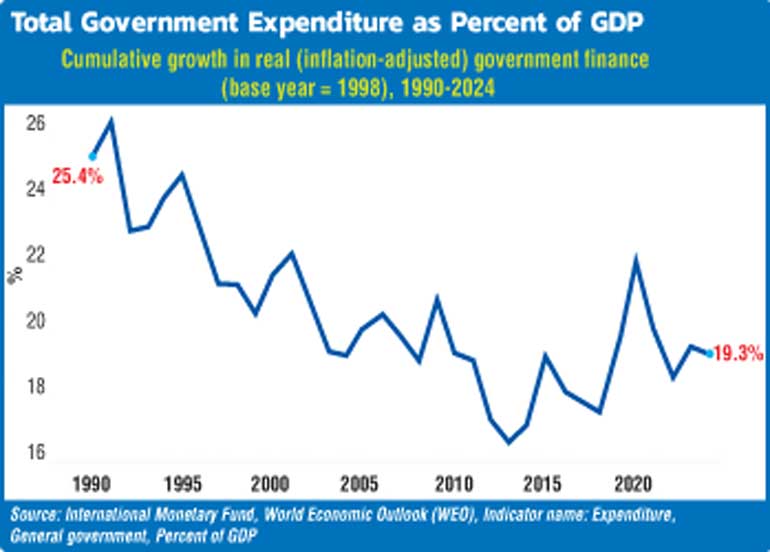
Sri Lanka’s public spending on education remains among the lowest in its income group, lagging far behind comparable developing economies, according to Tax Giveaways, Struggling Schools – a new report by Human Rights Watch (HRW).
Citing data from the World Bank and UNESCO, the report said Sri Lanka spends around 2% of its GDP on education, less than half the average for low- and middle-income countries, which stands at 4.5%. In 2010, the country allocated just 1.7% of GDP to education, while countries such as Morocco, Kyrgyzstan, Senegal, and Tajikistan consistently spent above 5%.
In terms of total budget allocation, Sri Lanka dedicated 11.7% of Government spending to education between 1998 and 2000, compared with 18.5% in Benin, 18.8% in Côte d’Ivoire, and over 25% in Morocco and Tunisia. By 2009, Sri Lanka’s ranking had fallen to among the lowest for lower-middle-income countries, Human Rights Watch said.
The disparity is even more visible in per capita spending. In 2010, Sri Lanka spent only $ 516 (PPP) per primary student, while Morocco spent $ 1,278, Namibia $ 1,711, and Bolivia $ 2,121. In comparison, the United Kingdom allocated $ 11,192 per student, more than 21 times Sri Lanka’s level.
Human Rights Watch said the chronic underfunding is tied to Sri Lanka’s weak tax revenues. “Had Sri Lanka’s tax revenues as a share of GDP been on par with the average for other countries, it could have brought significantly more resources to fund rights such as education,” the report said.
It added that inadequate revenue mobilisation has forced the Government to rely on debt to finance education, including loans from the World Bank and other development lenders.
The report called on the Government to raise tax revenues, reduce wasteful exemptions, and increase education spending to meet international benchmarks.




