Saturday Oct 24, 2026
Saturday Oct 24, 2026
Monday, 16 February 2026 02:54 - - {{hitsCtrl.values.hits}}
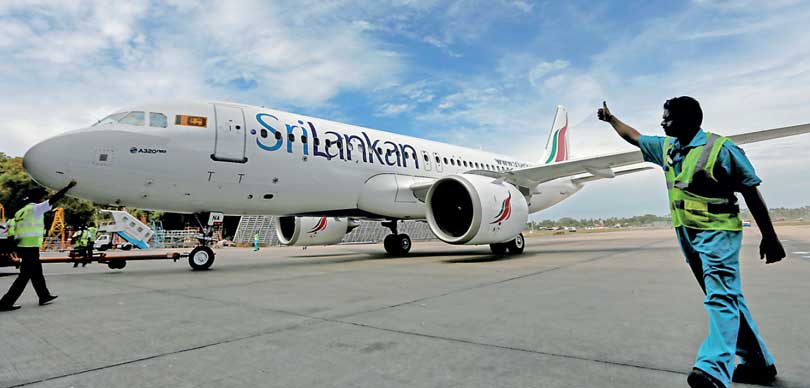
Bandaranaike International Airport, Colombo
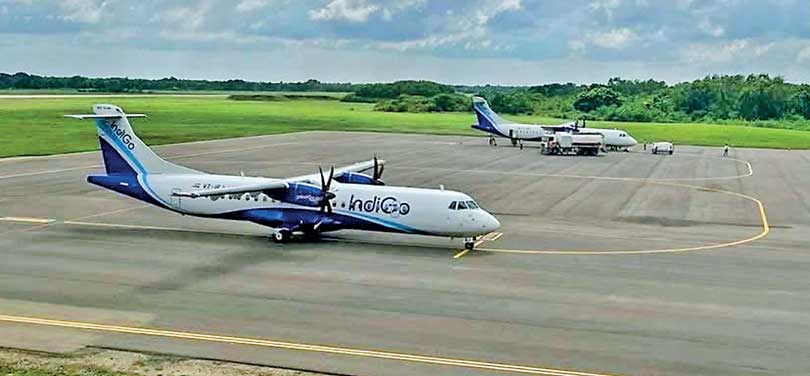
Jaffna International Airport
Sri Lanka’s aviation sector delivered its strongest performance in years in 2025, signalling a broad-based recovery in passenger traffic, airline connectivity, and regional airport utilisation as the country continued to emerge from its economic crisis.
Airport and Aviation Services (Sri Lanka) Ltd., (AASL) said the country’s airports handled 10.2 million passengers during the year, supported by operations from 46 airlines linking Sri Lanka to 72 destinations across 34 countries.
International passenger movements reached 10,202,109, while international aircraft movements totalled 64,340. Cargo throughput stood at 190,280 tons, underscoring the sector’s growing contribution to trade and logistics.
It added that tourism-related traffic remained the primary driver of growth, with 2,335,076 tourist arrivals recorded by air during the year. Transit passenger movements also rose sharply to 946,811, reflecting Sri Lanka’s gradual re-emergence as a regional aviation node after several years of disruption caused by security shocks, the COVID-19 pandemic, and the 2022 economic collapse.
The overall performance marked a significant improvement in confidence among international airlines and travellers, supported by stabilising macroeconomic conditions and renewed policy focus on restoring connectivity.
AASL credited its workforce across all five airports, airline partners, and sector stakeholders for sustaining operations and service quality during a year of rising volumes.
A notable turnaround was recorded at Mattala Rajapaksa International Airport (MRIA), which posted its highest-ever passenger movements since opening in 2013.
The airport handled 140,614 passengers in 2025 and accommodated 703 international flights, according to the Ports and Civil Aviation Ministry.
Officials said passenger numbers at Mattala have increased steadily over the past three years, with renewed attention following the appointment of the new Government playing a decisive role.
Previously, airlines had been reluctant to operate at Mattala due to safety concerns linked to wildlife in the surrounding area. Measures introduced to address these risks have helped restore confidence, resulting in a sharp rise in flight operations.
Several international carriers launched services to Mattala during the year, expanding links with Europe, the Middle East, and South Asia. These included Red Wings from Russia, SkyUp operating routes linked to Bahrain and Pakistan, Fly One from Dubai, Centrum Air and Uzbekistan Airways from Uzbekistan, and Bulgaria Air. Belavia Airlines of Belarus is also scheduled to commence flights, marking the first direct connection between Minsk and southern Sri Lanka.
Located close to major domestic tourist destinations, Mattala is increasingly positioned as a complementary gateway supporting the tourism sector while easing pressure on the congested Bandaranaike International Airport. Once criticised for chronic underutilisation despite heavy capital investment, the Airport’s record passenger figures in 2025 represent a turning point, raising expectations of a more sustained economic role.
In addition, Jaffna International Airport recorded its strongest year since commencing operations in 2019, reinforcing its importance to regional connectivity and economic integration in the Northern Province.
AASL said the airport handled 53,443 international passenger movements and 1,138 international aircraft movements in 2025, the highest annual totals since inception.
The year was marked by several milestones, including three international charter flights from Malaysia and from the Indian cities of Hyderabad and Chennai, broadening Jaffna’s regional reach.
The Airport also operated its first international medical evacuation charter flight from Hyderabad, highlighting expanding operational capacity and emergency response capability.
Infrastructure development gathered pace with the formal launch of the Jaffna International Airport Terminal Expansion Project. The foundation-laying ceremony marked the start of works aimed at increasing passenger handling capacity and improving service standards as traffic volumes grow.
Jaffna Airport also assumed a humanitarian role during the year, facilitating relief flights carrying emergency consignments for communities affected by Cyclone Ditwah. These operations, conducted with international and local partners including the US Air Force, underscored the Airport’s strategic value in disaster response for the Northern region.
Taken together, the 2025 performance across Sri Lanka’s airport network points to a sector regaining relevance as a driver of tourism, trade, and regional development.
With passenger volumes rising, airline confidence improving, and secondary airports gaining traction, aviation authorities stated the focus in 2026 will be on sustaining growth, improving efficiency, and ensuring infrastructure keeps pace with renewed demand.




