Thursday Mar 12, 2026
Thursday Mar 12, 2026
Monday, 16 February 2026 02:03 - - {{hitsCtrl.values.hits}}

Bank of Ceylon Chairman Kavinda De Soyza
Ceylon Federation of MSMEs Chairman Mahendra Perera
Sri Lanka Tourism Advisory Council Chairman Dileep Mudadeniya

Asian Council on Tourism Chairman Anura Lokuhetty
Tudawe Brothers CEO Romali Tudawe
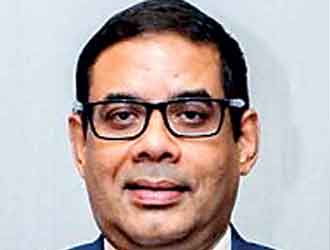
SLID Chairman Dinesh Weerakkody
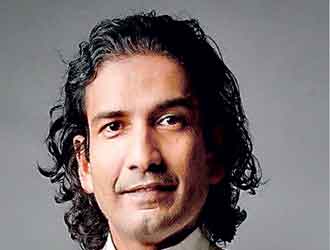
LOVI Ceylon CEO Asanka de Mel
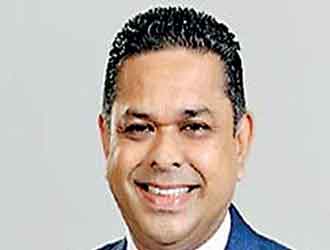
HNB Insurance CEO and Executive Director Sithumina Jayasundara

Ceylon United Business Alliance Chair Tania Abeysundara

HNB Managing Director and CEO Damith Pallewatte

Plus94 Senior Adviser and Commonwealth Enterprise and Investment Council Board Member Niro Cooke

Commercial Bank Chief Manager – SME Banking Mohan Fernando
|
Indian CEO Forum President
|
Sri Lanka’s small and medium enterprises (SMEs) have taken repeated blows over the past six years. A high-level webinar hosted on 31 January by the International Chamber of Commerce Sri Lanka, together with partners including the Sri Lanka Institute of Directors (SLID), Daily FT, Women in Management, the MBA Alumni Association, and the Employers’ Federation of Ceylon, sent a clear message: if we stop at relief and ignore reform, safety nets, and purchasing power, we risk losing far more than businesses.
Moderated by SLID Chairman Dinesh Weerakkody and Tudawe Brothers CEO Romali Tudawe, the discussion brought together ten leaders from banking, tourism and insurance, alongside SME advocates, chamber representatives, regional business leaders and entrepreneurs, to map what it will take for SMEs to move from mere survival to sustainable growth in the aftermath of Cyclone Ditwah.
The backbone of the economy – and of the crisis
 Bank of Ceylon Chairman Kavinda De Soyza reminded the audience that around 90% of Sri Lankan enterprises are MSMEs, generating roughly 52% of GDP (directly and indirectly) and around 45% of total employment. When these firms stall, it is not only output that halts; rent, school fees, medical expenses and daily livelihoods tied to fragile cash flows also come to a standstill.
Cyclone Ditwah affected approximately 10% of the population, damaging assets, disrupting supply chains and wiping out already thin cash buffers. De Soyza stressed that “speed in execution” of relief is now critical. He pointed to Central Bank circulars on moratoria, working capital facilities of up to three years at concessionary rates, and the SME credit guarantee scheme. Yet many micro and small borrowers still lack credit lines, insurance awareness and access to digital payments ecosystems.
Ceylon Federation of MSMEs Chairman Mahendra Perera reinforced the scale of the shock. Since 2019, over 250,000 MSMEs have shut down and approximately 245,000 jobs have been lost following a chain of crises — from Easter 2019 to COVID-19, the 2022–23 economic collapse and now Ditwah’s estimated $ 4–4.1 billion in damage affecting 30,000 businesses and 370,000 workers.
Relief exists on paper — through subsidies, concessional loans and IMF-linked support — but thousands of micro and informal enterprises remain excluded due to lack of registration, documentation, banking history, and slow assessments and disbursements.
Liquidity, not viability – and the case for cash-flow lending
HNB Managing Director and CEO Damith Pallewatte argued that most SMEs are viable businesses facing systemic climate risk, not failed enterprises needing write-offs. The real challenge is liquidity. Natural disasters and economic shocks disrupt cash flows and supply chains overnight — across agriculture, fisheries, logistics, tourism and the informal sector — leaving a cascading “queue of issues” from unpaid suppliers to bank obligations.
Traditional credit appraisal systems, he noted, are not built for the speed demanded by repeated shocks. He called for shared responsibility between banks and SMEs to manage climate risk as a long-term issue. This requires moving beyond one-off moratoria toward risk-sharing frameworks between banks, insurers and Government, improved data and early-warning systems, and innovations such as disaster-linked credit lines and seasonal repayment structures.
Commercial Bank Chief Manager – SME Banking, Mohan Fernando, reiterated that SMEs (defined by the Central Bank as enterprises with annual turnover below approximately Rs. 1 billion and exposure under Rs. 250 million) account for around 52% of GDP and 45% of employment.
Post-Ditwah, he emphasised identifying businesses that were viable before the shock and can recover with timely liquidity. “A fixed loan alone will not give any benefit” if cash flow is not restored. He called for a shift from collateral-based lending to cash-flow-based lending, supported by proactive outreach, AI-driven identification of affected customers, simplified documentation and faster approvals. “Debt relief is only the starting point, not the final destination,” he stressed.
From the business alliance perspective, Ceylon United Business Alliance Chair Tania Abeysundara welcomed banking efforts but warned that heavy reliance on CRIB-based evaluations has become a bottleneck for SMEs battered by multiple crises. Many firms now technically classified as non-performing have nevertheless preserved jobs and continued operations.
She urged banks to weigh recent performance and resilience more heavily than legacy CRIB scores, and called on regulators to simplify requirements and ensure information is accessible in Sinhala and Tamil. Rising inflation and tax changes, she added, have further squeezed margins, making forward-looking assessments critical.
Insurance as an essential safety net, not a formality
HNB Insurance CEO and Executive Director Sithumina Jayasundara presented stark figures: Ditwah’s total economic losses are estimated at around $ 4.1 billion, yet only about 4% were insured. Approximately Rs. 54 billion in insured damage was recorded across 24,325 claims; around 45% have been paid and 81% admitted so far. Most coverage sits with large corporates, leaving SMEs underinsured and highly vulnerable.
Even during the 2004 tsunami, insurance penetration was roughly 8%, compared to about 4% for Ditwah, of which only a small share relates to SMEs. To close this gap, Jayasundara advocated affordable, accessible solutions such as parametric insurance, where payouts are triggered by objective parameters rather than lengthy physical loss assessments. He cited the “Sayura” cover for fishery-dependent families, which uses historical data to define wind-speed thresholds and automatically compensate daily wage earners.
Insurance, he observed, is often taken only because lenders require it. He proposed a four-part agenda: building insurance literacy from school level; developing simple, affordable SME products distributed digitally and via chambers and microfinance networks; introducing innovative, sector-specific covers; and securing Government support through tax concessions, premium subsidies and possibly basic mandatory coverage at SME registration.
“Trust, awareness, simplified products and policy support” must align if insurance is to become a recovery tool rather than a bureaucratic burden.
Tourism, informality and regional bridges
Sri Lanka Tourism Advisory Council Chairman Dileep Mudadeniya placed SMEs within tourism’s “3A” framework — attractions, airlines and accommodation — noting that SMEs are heavily concentrated in accommodation and amenities.
While tourism has historically rebounded from shocks, he cautioned that the current growth cycle demands different support. Key constraints include infrastructure and image damage, high energy costs (including expensive transformer upgrades), and limited financial literacy to manage seasonal cash flows. Formalising informal tourism enterprises through transitional concessions, as seen in parts of East Asia, could unlock growth and improve access to structured relief.
From a regional lens, Indian CEO Forum President Kishore Reddy highlighted how Indian SMEs have built resilience through diversification, digital adoption and initiatives like Make in India and Startup India. He encouraged Sri Lankan SMEs to connect to this ecosystem through partnerships, market access, regulatory guidance and digital platforms — not only for exports, but for technology transfer and joint ventures.
Disposable income, productivity and disaster-tolerant infrastructure
Entrepreneur Asanka de Mel emphasised that “even in the best of times our SMEs are struggling,” operating without buffers in an economy with constrained wages. He pointed to data showing average wages around Rs. 65,000 in Colombo versus median household income near Rs. 77,000, with many citizens turning to ride-sharing or microbusinesses simply to supplement incomes.
He identified three core SME constraints: sales, talent and finance. Low disposable income limits demand; talent retention is difficult when founders cannot step away from daily firefighting; and finance must extend beyond lending to include data and education. He suggested banks share anonymised card data insights to help SMEs understand spending patterns and tax impacts, and incentivise financial literacy training.
“For SMEs to truly grow, disposable incomes must rise and salary scales must be tracked more transparently,” he argued.
Plus94 Senior Advisor and Commonwealth Enterprise and Investment Council Board Member Niro Cooke returned to structural reform. Sri Lankan SMEs, he observed, recover quickly — but revert to a low base because the system is not designed for scale. He advocated cash-flow-based and outcome-oriented finance that rewards productivity, especially for asset-light service enterprises that currently rely on costly informal credit.
On infrastructure, he referenced Japan’s approach to rebuilding in earthquake-prone zones — emphasising rapid recovery over indestructibility. Sri Lanka, he suggested, should design “disaster-tolerant” systems: microgrids, islandable power zones and improved drainage that anticipate recurring shocks.
Oversight, governance and trust
Asian Council on Tourism Chairman Anura Lokuhetty focused on governance in distressed situations. He warned that too many viable SMEs are left solely to individual bank enforcement processes and called for an independent statutory oversight mechanism to review parate execution cases, ensure fair restructuring and balance creditor rights with job preservation.
He also cautioned that rising utilities and taxation — including a proposed 18% VAT on daily turnover above modest thresholds — could threaten SME sustainability if not paired with reform.
From relief to reform – and from crisis to competitiveness
Across two hours of debate, the panel converged on a roadmap that extends beyond emergency relief:
1. Speed and simplicity: Relief must arrive quickly and restore cash flow, not merely restructure debt.
2. Shift in credit culture: Move from collateral- and CRIB-dominated models toward cash-flow-based, risk-sharing and performance-based evaluation.
3. Insurance integration: Build literacy, develop tailored products and embed insurance into standard SME practice.
4. Structural growth: Increase productivity and disposable income, improve data transparency, strengthen oversight and invest in disaster-tolerant infrastructure and regional integration.
Protecting SMEs is not about favouring a narrow segment. It is about safeguarding the country’s capacity to work, earn and hope.