Sunday Oct 25, 2026
Sunday Oct 25, 2026
Monday, 13 July 2026 03:14 - - {{hitsCtrl.values.hits}}
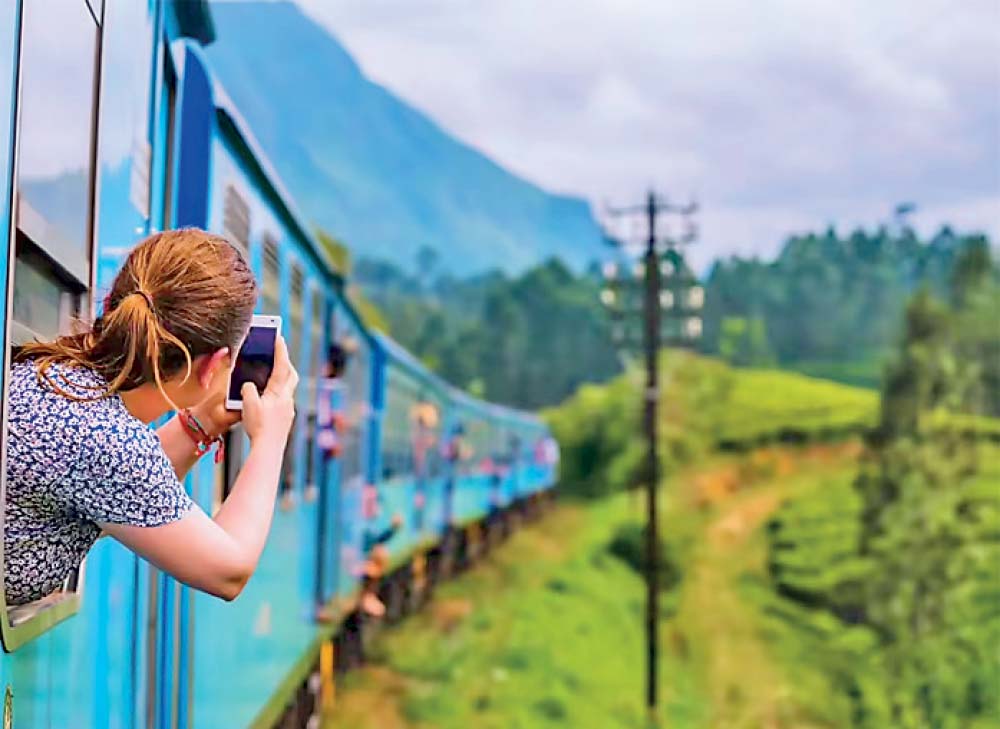
Sri Lanka’s tourism industry experienced a challenging first half of 2026, with earnings declining by 12% year-on-year (YoY) to over $ 1.51 billion, according to the latest data released by the Central Bank of Sri Lanka (CBSL), underscoring the mounting pressure to achieve the country’s revised tourism goals.
Tourism earnings in June 2026 amounted to $ 151.1 million, marking an 11% YoY decline and the lowest monthly revenue recorded so far this year. Despite the slowdown, January remained the strongest month of 2026, generating $ 413.78 million in tourism receipts. For comparison, Sri Lanka’s highest-ever June tourism earnings stand at $ 275.6 million, achieved in 2018.
The weaker-than-expected 1H performance has intensified the challenge of meeting the Government’s revised tourism targets. Sri Lanka now needs to generate more than $ 2 billion in tourism earnings during the second half of the year to reach the updated $ 3.5 billion target by the end of 2026.
The downward revision follows disruptions caused by the conflict in the Middle East, which affected regional air connectivity and reduced visitor arrivals. Announcing the revised outlook last week, Tourism Deputy Minister Prof. Ruwan Ranasinghe said the Government has lowered its 2026 targets to 2.5 million tourist arrivals and $ 3.5 billion in tourism earnings, down from the original goals of 3 million visitors and $ 4 billion in revenue.
Despite the revision, Prof. Ranasinghe expressed confidence that 2026 could still become a record year for tourist arrivals if momentum improves in the remaining months.
Meanwhile, Sri Lanka’s tourism sector is witnessing a shift in visitor spending patterns. According to Sri Lanka Tourism Promotion Bureau (SLTPB) Chairman Buddhika Hewawasam, travellers from the Asia-Pacific region, particularly Indians, are increasingly contributing higher daily spending than many traditional long-haul markets.
Hewawasam noted that the average daily expenditure of Indian tourists has risen to approximately $ 154, surpassing Sri Lanka’s overall average daily tourist spending of $ 148.
“Sometimes Indian travellers spend more than European tourists,” he said, adding that visitors seeking wildlife and marine tourism experiences spend between $ 160 and $ 170 per day.
Hewawasam said the trend highlights growing demand for high-value niche tourism products, presenting an opportunity for Sri Lanka to increase tourism revenue by diversifying its offerings rather than relying solely on higher visitor numbers.




