Thursday Mar 12, 2026
Thursday Mar 12, 2026
Monday, 12 January 2026 00:53 - - {{hitsCtrl.values.hits}}
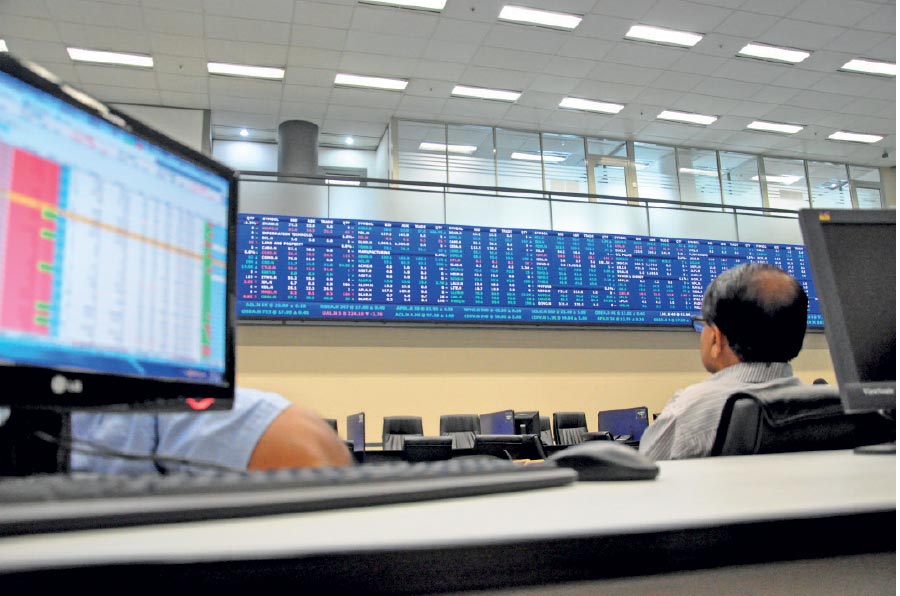
 Markets are not shaken by smart investors. They are shaken by weak systems, poor safeguards, and selective enforcement. If Sri Lanka wants deeper capital markets, the focus must shift from blaming participants to fixing structural flaws — before confidence erodes beyond repair
By A Special Correspondent
Initial Public Offerings (IPOs) are often celebrated as moments of opportunity. Yet, they also represent one of the most uncertain and fragile phases of price discovery in any stock market. What unfolded during the opening of the recent Wealth Trust IPO exposed not only investor behaviour, but more critically, structural inefficiencies in the pre-open mechanism of the Colombo Stock Exchange (CSE).
Understanding the pre-open: A blind price discovery process
From 9:00 a.m. to 9:30 a.m., the market operates in pre-open mode. During this period, investors may place buy and sell orders, but cannot see the order book. Prices, volumes, and counterparties remain hidden. It is effectively a blind auction, designed to discover a single opening price based on demand and supply.
This uncertainty is amplified in debut trading, where investors know only one reference point — the IPO price. Unlike normal trading hours (9:30 a.m. to 2:30 p.m.), where prices evolve continuously through multiple trades, pre-open must resolve many buyers and sellers into one opening price.
The system’s algorithm aggregates:
It then determines a single price at which the market will open.
Limit orders vs. market orders: Risk most investors ignore
In IPO pre-open trading, placing a limit order means instructing the system to buy a certain quantity up to a maximum price. If the opening price is higher than that limit, the investor receives nothing.
To avoid this disappointment, investors often resort to market orders, instructing the system to execute the order at any price. Market orders receive priority over limit orders.
However, this is where risk multiplies.
In an illiquid market, a market order does not mean “best available price” — it means any price required to fill the order.
How a single extreme order can distort the entire opening price
Consider this scenario:
Because pre-open opens at one price, the system clears all 900,000 shares at Rs. 100,000.
This is not unethical.
It is not illegal.
It is how the mechanism is designed.
Had the same market order been placed after 9:30 a.m., only the single share would have traded at Rs. 100,000, while the rest would execute at their respective prices.
The distortion exists only because pre-open enforces a single clearing price.
Risk controls that don't actually control risk
Broker systems apply buying limits based on the Portfolio value or preagreed limits. For example:
If the opening price unexpectedly jumps to Rs. 20 due to thin supply, settlement suddenly becomes Rs. 40 million — far exceeding approved limits.
There is no back-check mechanism at the moment of price discovery to verify whether the investor has the actual capacity to settle at the discovered price.
Price caps also do not apply to market orders.
These are systemic design flaws, not investor misconduct.
Illiquidity: The elephant in the room
A market that allows SME companies with equity as low as Rs. 25 million to list must accept the reality of extreme illiquidity.
In such conditions:
In developed markets, regulators encourage order book depth, often offering fee incentives for limit orders to build liquidity.
In Sri Lanka, placing orders itself is frequently questioned and investigated.
Surveillance systems that failed to act
Modern exchanges deploy advanced surveillance systems capable of detecting:
This situation did not occur in milliseconds.
Orders were placed over 30 minutes.
If properly monitored, the system could have:
nFlagged the imbalance
nIssued warnings
nTemporarily halted the opening
nApplied corrective safeguards
The failure to do so represents negligence, especially given the public funds spent on such systems.
The most troubling development was the cancellation of trades after execution, without the consent of all parties involved. If such authority exists under the SEC Act, then it represents power exceeding even executive authority — and must be urgently reviewed. If it does not, then it is a misuse of power. Markets function on certainty of settlement. Once that certainty is broken, confidence collapses
A more serious error: Post-trade intervention
The most troubling development was the cancellation of trades after execution, without the consent of all parties involved.
If such authority exists under the SEC Act, then it represents power exceeding even executive authority — and must be urgently reviewed.
If it does not, then it is a misuse of power.
Markets function on certainty of settlement. Once that certainty is broken, confidence collapses.
With CCP and DVP in place, why were trades cancelled?
With the introduction of the Central Counterparty (CCP) system, settlement risk management in the market has fundamentally changed. Under the CCP framework, the sell side’s obligation is guaranteed through the clearing house, while the buy-side broker bears full responsibility for collecting funds from its client and settling with the CCP on the due date.
Further, the Delivery versus Payment (DVP) mechanism ensures that if a buyer fails to settle, shares are not delivered. In other words, the system already contains multiple layers of protection:
Given these safeguards, it becomes highly questionable why regulators chose to intervene by cancelling executed trades.
If settlement risk was fully ring-fenced within the CCP and DVP framework, what systemic risk was being prevented?
If the issue was broker-specific, why was the solution market-wide cancellation rather than enforcement of settlement obligations?
These actions warrant deeper scrutiny.
Questions that demand answers
A transparent investigation should examine:
Markets operate on trust, predictability, and equal treatment.
If extraordinary powers are exercised selectively, confidence erodes — not because of investor behaviour, but because of perceived misuse of authority.
The question is not whether the systems failed.
The question is why systems designed to handle exactly this risk were overridden.
Who really lost? Retail investors
Some investors clearly understood the system’s inefficiencies and acted accordingly. Others benefited indirectly. This is not market abuse — it is market intelligence.
Yet, when outcomes turned uncomfortable, earnings were reversed.
Not because rules were broken — but because mistakes were exposed.
In the end, retail investors were not protected.
They were punished.
Conclusion: Fix the system, not the outcome
Markets are not shaken by smart investors.
They are shaken by weak systems, poor safeguards, and selective enforcement.
If Sri Lanka wants deeper capital markets, the focus must shift from blaming participants to fixing structural flaws — before confidence erodes beyond repair.




