Saturday Oct 03, 2026
Saturday Oct 03, 2026
Thursday, 14 May 2026 00:24 - - {{hitsCtrl.values.hits}}
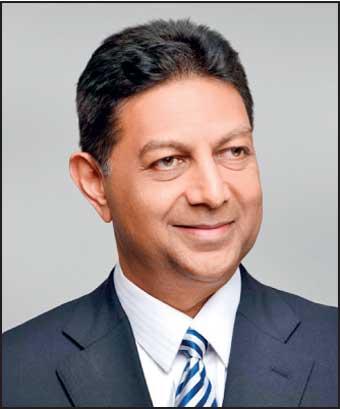 |
| Chairman Harsha Amarasekera |
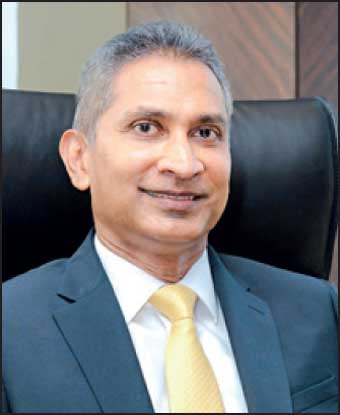 |
| Managing Director/CEO Sanjaya Gunawardana |
Sampath Bank yesterday said it has reported a total operating income of Rs. 28.5 billion and Profit After Tax (PAT) of Rs. 6.2 billion for the quarter ended 31 March 2026.
Total operating income was supported by steady growth in Net Interest Income (NII), up 5% year-on-year (YoY) and net fee and commission income, up 28% YoY. Notwithstanding this performance, PAT declined by 26% YoY due to significantly higher impairment provisions of Rs. 4.5 billion recognised in response to the continued expansion of the loan book and taking into account the evolving geopolitical conditions.
Additionally, one-off gains from the disposal of Treasury Bills and Bonds moderated to Rs. 0.7 billion in 2026, a decrease of Rs. 2 billion compared to the elevated levels recorded in the previous year.
The bank in a statement said:
The total asset base crossed the Rs. 2 trillion milestone for the first time, representing a significant achievement supported by a strong loan growth of Rs. 127 billion in 1Q 2026.
Sampath Group delivered a Profit Before Tax (PBT) of Rs. 9.4 billion and a PAT of Rs. 6.8 billion for the quarter.
The bank reported total interest income of Rs. 46.5 billion, reflecting a YoY growth of 6%. This increase was primarily driven by the expansion of the loan portfolio during the reporting period and in the latter part of the previous year, compared to the negative loan growth recorded in the corresponding period of the previous year, as well as an upward movement in the Average Weighted Prime Lending Rate (AWPLR).
Interest expense for the quarter also increased by 6% to Rs. 26.4 billion, reflecting growth in both deposit and borrowing portfolios. As a result, NII stood at Rs. 20.1 billion, an increase of 5% compared to the corresponding quarter of the previous year.
The Net Interest Margin (NIM) contracted marginally by 2 basis points (bps) to 4.09%, from 4.11% reported for 2025. This decline was primarily attributable to lower yields across the bank’s investment portfolio, reflecting reduced rates in the Government securities portfolio compared to the previous period.
During the three-month period ended 31 March 2026, the bank’s total non-fund based income declined marginally by 4% to Rs. 8.3 billion, mainly due to a decrease in capital gains from the sale of Treasury Bills and Bonds. Capital gains declined from Rs. 2.7 billion in 1Q 2025 to Rs. 0.7 billion in 1Q 2026, representing a YoY decline of 75%.
Net fee and commission income, driven by credit expansion, higher trade volumes, and increased card usage, recorded a robust growth of 28% across all income channels, reaching Rs. 6.1 billion by the end of the quarter.
The bank recorded a total exchange gain of Rs. 1.5 billion during 1Q 2026, reflecting a YoY increase of 24%. This increase was primarily attributable to the depreciation of the Sri Lankan rupee against the US dollar by Rs. 5.52 during the quarter.
In 1Q 2026, the bank reported a total impairment charge of Rs. 4.5 billion, reflecting an increase of Rs. 4.6 billion when compared to the reversal of Rs. 0.2 billion reported in the previous period.
The bank recorded an impairment charge of Rs. 4.1 billion on loans and advances, compared to a reversal of Rs. 0.1 billion reported in 1Q 2025, driven by significant (10.4%) expansion of the loan portfolio and the resultant collective impairment requirements. Even though this growth has resulted in higher provisioning requirements, it is expected to generate net positive results during the current financial year.
Furthermore, the bank continued its policy of conservative provisioning and an additional overlay allowance of Rs. 1.5 billion was recognised as a prudential measure in response to heightened geopolitical uncertainties. This forward-looking approach reflects the bank’s commitment to prudent credit risk management, ensuring adequate buffers and resilience against potential adverse developments in the operating environment and the broader global landscape.
The bank also conducted a comprehensive review of its ISL customers, allocating prudent provisions in its Financial Statements based on each customer’s unique credit risk profile. This targeted assessment reinforces the bank’s disciplined risk management practices and its focus on maintaining financial stability in a challenging global context.
An impairment charge of Rs. 0.4 billion was recognised against other financial instruments during 1Q 2026, primarily due to new investments made during the quarter.
During the quarter, operating expenses increased by 19% YoY, driven primarily by costs related to the rollout of new strategic initiatives. The increase was mainly attributable to salary enhancements granted in 2025, the expansion of the cadre to undertake new initiatives and support business growth, and higher investments in technology. These strategic long-term investments are expected to deliver enhanced income in the coming years.
As growth in operating expenses outpaced the improvement in operating income, primarily due to the decline in one-off disposal gains recorded in 2025, the bank’s cost-to-income ratio (CIR) deteriorated by 620 bps, increasing from 38.8% in 1Q 2025 to 45% in 1Q 2026.
The total tax expense for the period amounted to Rs. 5 billion, representing a YoY decline of 43%, mainly attributable to lower profits and the finalisation of prior period tax assessments.
The Return on Average Shareholders’ Equity (after tax) stood at 14.05% as at 31 March 2026, compared to 17.93% as at end-December 2025. Similarly, the Return on Average Assets (before tax) declined to 1.68% from 2.60% reported as at 31 December 2025.
The bank maintained all capital ratios well above the regulatory minimum requirements. As at 31 March 2026, the CET 1, Tier 1, and Total Capital ratios stood at 13.17%, 13.17%, and 15.79%, respectively, compared to 14.75%, 14.75%, and 17.65% as at year-end 2025. The decline in capital ratios was primarily due to the increase in risk-weighted assets arising from substantial loan growth during the quarter.
Liquidity levels remained robust, with the All-currency Liquidity Coverage Ratio (LCR) at 187.87% and the Net Stable Funding Ratio (NSFR) at 161.30% as at 31 March 2026, both comfortably above the regulatory minimum requirement of 100%.
The recognition of profit for capital purposes under Basel III following audit certification, together with the proposed Tier II debenture issue, is expected to further strengthen the bank’s capital position during the remainder of the year.
During the reporting period, total assets grew by 6%, reflecting an annualised growth of 24%, to Rs. 2.1 trillion as at 31 March 2026, supported by the expansion of the loan portfolio. Gross loans increased by Rs. 127.5 billion, from Rs. 1,223.6 billion at end-2025 to Rs 1,351.1 billion. This growth was primarily driven by a Rs. 105 billion increase in Rupee-denominated loans, while Foreign Currency (FCY) loans recorded a modest increase of Rs. 22 billion during the period.
The bank’s total liabilities increased by 7% since year-end 2025, reflecting an annualised growth rate of 28%, to Rs. 1.92 trillion as at 31 March 2026. This growth was primarily driven by the expansion of the deposit portfolio. Deposits increased by Rs. 69 billion from Rs. 1.65 trillion at year-end 2025 to Rs. 1.72 trillion as at 31 March 2026. The increase was mainly driven by Rupee-denominated deposits, which contributed Rs. 49 billion, while FCY deposits increased by Rs. 20 billion.
At the Annual General Meeting held on 30 March, the shareholders of Sampath Bank approved a first and final cash dividend of Rs. 10.30 per share for the financial year 2025. The bank consequently recognised a provision of Rs. 12.1 billion in the 1Q 2026 Financial Statements to facilitate the payment of the approved final dividend to shareholders.
As part of its contribution to green finance, Sampath Bank launched a Green Fixed Deposit supported by a comprehensive Green Deposit Framework, which obtained independent limited assurance at the pre-issuance stage, thereby enhancing credibility and stakeholder confidence.



