Friday Oct 16, 2026
Friday Oct 16, 2026
Tuesday, 10 February 2026 05:39 - - {{hitsCtrl.values.hits}}
|
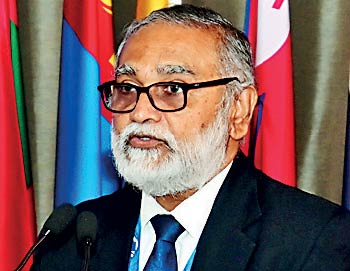
Admiral (Retd.) Sirimevan Ranasinghe
|
Sri Lanka Ports Authority (SLPA) Chairman Admiral (Retd.) Sirimevan Ranasinghe yesterday underscored the importance of technology adoption, skills development, and strategic international partnerships in positioning the Port of Colombo as a resilient and future-ready maritime hub.
Addressing the Terminal Technology and Trade Engagement (TT&TE) 2026 in Colombo, held under the Colombo Plan Maritime Advisory Program (MAP), Ranasinghe said the gathering reflected a shared commitment among policymakers, port authorities, terminal operators, technology providers, and international partners to modernise Sri Lanka’s maritime sector.
“This engagement reflects our collective commitment to shaping Sri Lanka into a resilient, modern, and future-ready maritime sector,” he said, noting that collaboration across institutions and borders was now essential for ports seeking to remain globally competitive.
The SLPA Chairman paid particular tribute to the Colombo Plan, describing it as a longstanding partner that has played a significant role in capacity building and infrastructure development within the country’s ports sector. He said the MAP, in particular, has delivered critical training initiatives aimed at enhancing security, efficiency, and productivity.
Among recent highlights, Ranasinghe cited cybersecurity capacity-building programs and specialised support for the Maritime Single Window initiative, both of which he described as increasingly vital as ports become more digital and interconnected.
Ranasinghe said the current engagement provides the country’s maritime sector with a valuable opportunity to directly interact with US-based terminal technology providers, building on discussions initiated at an international conference in Europe in 2025.
“This meeting allows us to explore strategic alliances with US terminal technology providers, while enabling the exchange of knowledge on terminal automation, digitalisation, and advanced operating models,” he said.
Such exposure, he noted, would help Sri Lanka better understand global best practices in managing automated terminals and adapting them to local conditions.
Beyond productivity gains, Ranasinghe highlighted that efficiency improvements must go hand in hand with sustainability objectives, as ports face growing pressure to reduce environmental impact. “It is my firm belief that this will be another meaningful engagement between Sri Lanka and the Colombo Plan in our journey towards becoming a smart, sustainable, and globally competitive maritime hub,” he said. – (CdeS)