Monday Sep 21, 2026
Monday Sep 21, 2026
Wednesday, 17 December 2025 00:25 - - {{hitsCtrl.values.hits}}
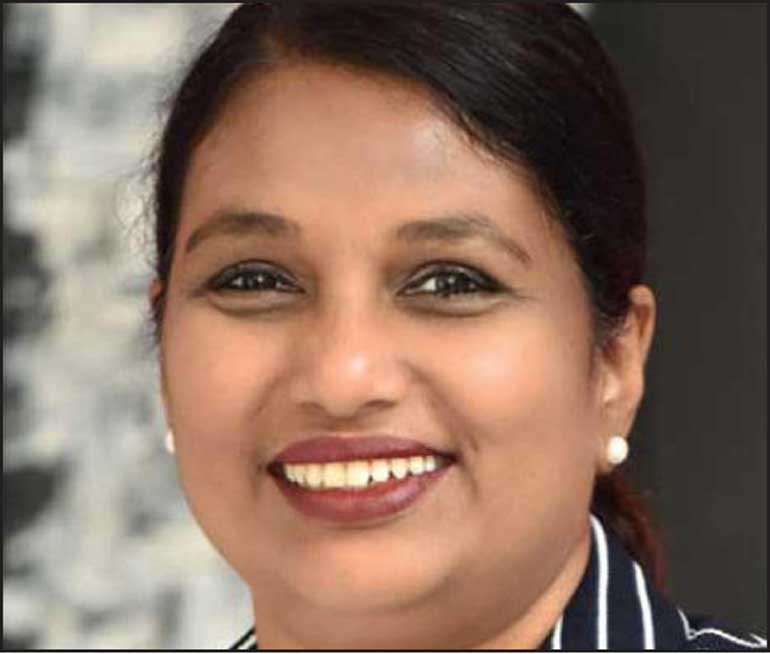
SLASSCOM Chairperson Shehani Seneviratne
Sri Lanka’s technology services sector (including IT, BPM, and tech services) is entering a phase of pay normalisation, with companies moving away from crisis-era salary hikes and sharpening their focus on performance- and skill-based rewards, according to the SLASSCOM Compensation and Benefits Survey Report 2025.
The survey, covering IT, BPM and tech-enabled businesses, shows incremental budgets settling into more sustainable levels, even as competition for skilled professionals remains tight and global cost pressures intensify.
According to the Central Bank of Sri Lanka, Computer and IT/BPO related services exports amounted to $ 671.6 million in the first ten months of 2025, down 3.8% from a year ago. Export earnings from the sector amounted to $ 848 million in 2024, up 6.7% from a year earlier.
In a statement, SLASSCOM said 72% of the companies returned from the 2024 survey, signalling strong continuity and industry-wide trust in the study.
This year’s findings highlight how Sri Lankan organisations are recalibrating their total rewards strategies to respond to an increasingly competitive and dynamic technology landscape.
In 2025, companies are moving beyond traditional pay structures toward personalised benefits, role-specific incentives, and flexible work models that reflect evolving employee expectations. Organisations are also prioritising career development, skills enhancement, and holistic employee experiences to attract and retain high-potential talent.
Key industry-wide trends
One of the most significant developments this year is the stabilisation of market increments. Following the unprecedented salary increases extended by IT companies to support employees during the economic crisis, incremental budgets have now settled into a more sustainable rhythm.
For 2026, IT organisations are planning differentiated salary increases for top performers versus regular performers, while BPM companies are projecting higher adjustments. The sector shows signs of moving towards performance-linked rewards. Equally noteworthy is the growing momentum toward skill-based organisational structures.
Workplace shifts and employee expectations
With a multi-generational workforce, companies are introducing new-age, personalised benefits as part of total rewards packages. However, the survey confirms that total cash compensation continues to dominate employee priorities, even as organisations experiment with flexible, non-monetary elements of rewards.
Employee migration, has dropped in priority from first to second place in 2025. Yet, outward mobility remains visible, particularly among skilled professionals pursuing higher education abroad.
Job demand and global competitiveness
Demand for specific roles in IT that continue to surge, reflecting global technology trends. Traditional design and publishing roles show declining demand or require significant reskilling as digital capabilities evolve.
From a global competitiveness perspective, the report indicates the top destinations for Global Business Services (GBS). However, in 2025, two new countries have emerged as attractive alternatives for outsourcing and GCC expansion. This shift underscores the urgency for Sri Lanka to optimise both talent quality and cost competitiveness to strengthen its position as a preferred GCC hub.
The survey also highlights the expanding footprint of Global Capability Centres in Sri Lanka, particularly in specific roles. In fact, 52% of the survey participants operate as GCCs, positioning the sector as a major contributor to the country’s export services economy.
“The 2025 Compensation and Benefits Report provides invaluable insights into Sri Lanka’s evolving tech talent landscape. As competition for skilled professionals intensifies globally, organisations must adapt their total rewards strategies to attract, retain, and grow talent effectively. This report equips industry leaders with the knowledge to make informed, forward-looking decisions that will strengthen Sri Lanka’s position as a competitive and innovative tech hub,” said SLASSCOM Chairperson Shehani Seneviratne.
Participant landscape
This year’s survey draws on a diverse mix of organisations across IT, BPM, dual-sector, and non IT companies with IT functions. The majority are established players, underscoring the maturity and stability of Sri Lanka’s tech-enabled industry base. At the same time, fresh entrants and new categories have added exciting perspectives, making this edition the most dynamic yet.




