Monday Sep 28, 2026
Monday Sep 28, 2026
Monday, 28 September 2026 04:59 - - {{hitsCtrl.values.hits}}
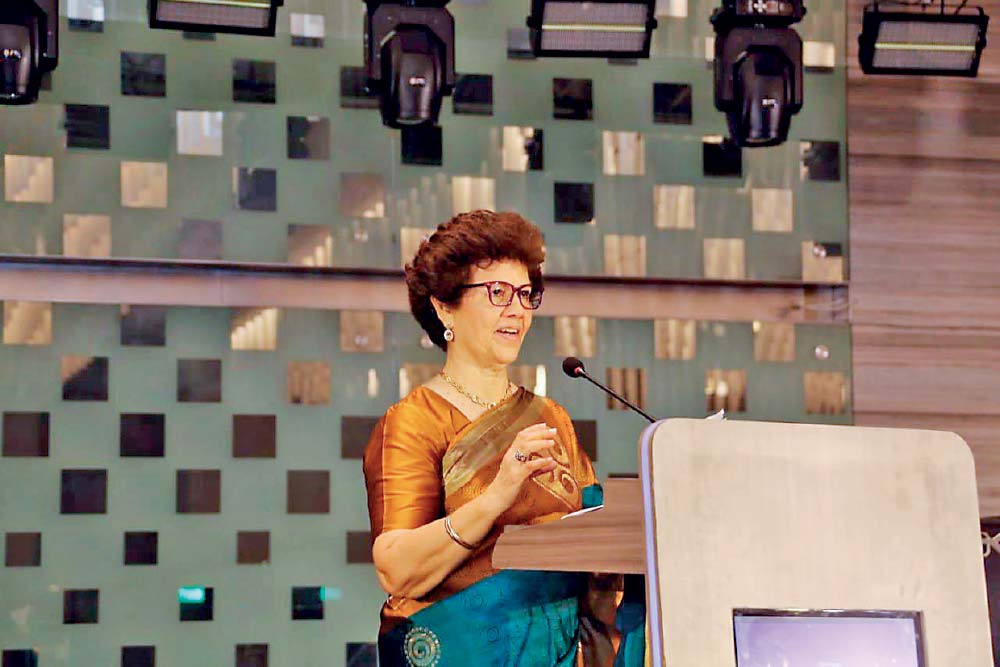
SLAITO President Bobby Jordan Hansen
By Charumini de Silva
Newly elected Sri Lanka Association of Inbound Tour Operators (SLAITO) President Bobby Jordan Hansen has called for a formal role for the Association in shaping tourism policy, a genuine level playing field across the industry, and a more targeted approach to marketing the country internationally.
Hansen, who became the second woman to lead the SLAITO at the 46th Annual General Meeting last Friday, said the Association must evolve with an industry that has expanded significantly since its establishment in 1975, while ensuring the concerns of predominantly small and medium-sized operators are reflected in national tourism policy.
“As Sri Lanka considers the future structure of tourism and a new Tourism Act, we believe the SLAITO should have a formal and meaningful role in tourism policy, planning, development, and promotion,” she stressed.
She asserted that the call was not for preferential treatment but recognition of the SLAITO’s longstanding experience and international market networks.
“Our members are the bridge between Sri Lanka and the international tourism marketplace. We know what overseas markets want, what tourists experience here, and what needs to change. We want to bring that knowledge into shaping the future of Sri Lankan tourism,” Hansen said.
The veteran tourism professional, who said she has spent over five decades in the industry across inbound tourism, hotels, tour operations, airlines, and related services, noted the sector’s scale today demanded a corresponding evolution in its institutional framework.
“Sri Lanka welcomed over 2.36 million tourists in 2025 and generated around $ 3.2 billion in tourism earnings,” she said, highlighting the sector’s growing importance to the national economy.
Hansen’s second priority was establishing what she termed a “genuine level playing field,” particularly as formal tourism businesses face competition from an expanding informal economy.
“Registered operators invest in employees, pay taxes, and comply with regulatory and quality requirements, while some unregistered businesses operate outside the same framework,” she added.
Welcoming the Government’s stated intention to empower the Tourism Police to identify unregistered businesses, Hansen stressed that the objective should be formalisation rather than punishment.
“Our objective here should not be to punish these operators—it should be to bring them into the formal economy. So they become compliant and everybody benefits,” she said.
She called for clearer and more consistent rules covering accommodation, tours, transport, and other tourism services, including businesses selling through online platforms.
“The principle is simple. Competition is healthy, unfair competition is not,” Hansen said, arguing that greater compliance would improve standards and consumer protection, while broadening the tax base.
On destination marketing, the new SLAITO Chief said Sri Lanka needed to move beyond broad promotional messaging and adopt a more sophisticated, segmented approach reflecting changing traveller behaviour.
“Too often, our general ‘Sri Lanka’ message doesn’t fully communicate everything this country has to offer; whether that’s culture, wildlife, surfing and diving, or nature,” she said.
Hansen called for marketing strategies tailored to specific markets, traveller segments, and experiences, noting that the expectations of solo travellers, multigenerational families, luxury tourists, and budget travellers differed substantially.
She also cautioned against treating social media and influencers as substitutes for a coherent national marketing strategy.
“The objective isn’t simply to inspire someone to visit Sri Lanka; it’s to turn that interest into a booking and to ensure the safety, the value, the cultural experience, and ultimately the outcome all deliver on that promise,” she explained.
Hansen said the SLAITO’s members were well placed to support this effort because of their daily engagement with international tour operators and travel agents.
She also placed the tourism workforce at the centre of the Association’s agenda, warning that the migration of experienced hospitality workers to overseas markets was affecting service standards.
The SLAITO, she said, could expand its contribution to training and knowledge-sharing while working with the Government and the private sector to create more attractive career pathways for younger people.
Hansen asserted that the SLAITO sought partnership rather than confrontation with the Government.
“We want to work with the Government, not against it. Around 95% of our members are small and medium operators. What we ask, on behalf of this industry, is that everyone operates under clear and fair rules, and that we bring our experience and international networks to bear in support of the country’s tourism development,” she said.
Hansen said the SLAITO’s next chapter should focus on creating greater value for visitors while ensuring tourism benefits businesses, workers, communities, and the wider economy.
“That is the future the SLAITO and I are committed to building,” she said, ending her address with the Association’s rallying call: “SLAITO Jaya Wewa!”




