Saturday Sep 26, 2026
Saturday Sep 26, 2026
Saturday, 26 September 2026 00:00 - - {{hitsCtrl.values.hits}}
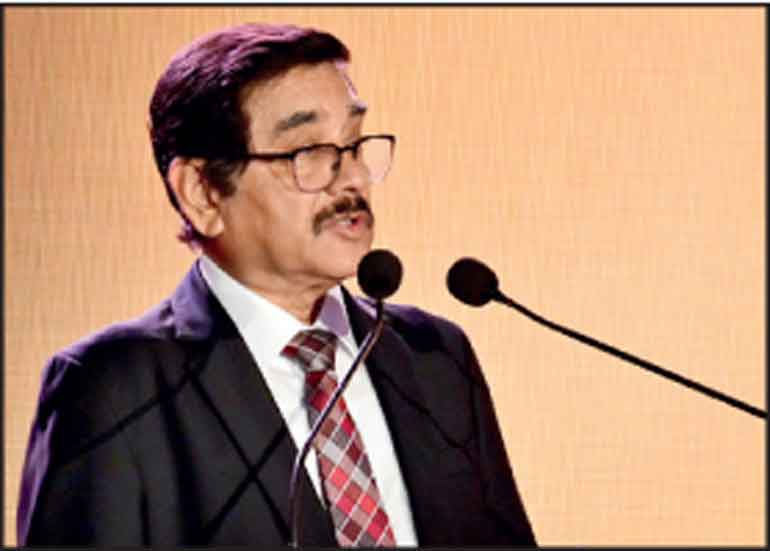
CBSL Governor
Dr. Nandalal Weerasinghe
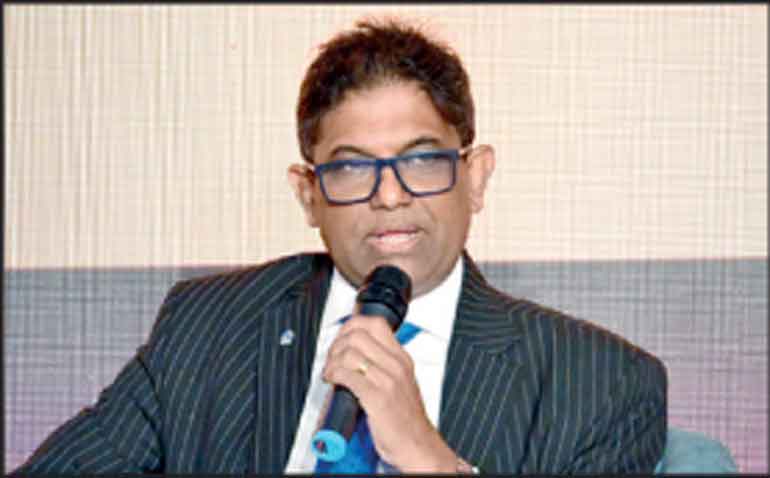
Standard Chartered Bank Sri Lanka CEO Bingumal Thewarathanthri
Sri Lanka should aim to return to international capital markets before its International Monetary Fund (IMF) program ends next year, but must avoid the aggressive borrowing that left it exposed in the past, Standard Chartered Bank Sri Lanka Chief Executive Officer Bingumal Thewarathanthri said.
Thewarathanthri was speaking at the 49th Annual Meetings of the Association of Development Financing Institutions in Asia and the Pacific (ADFIAP), hosted by DFCC Bank in Colombo this week, a day after Fitch Ratings upgraded Sri Lanka to ‘B-’ from ‘CCC+’ with a Stable Outlook.
“We just got to ‘B-’ and we have to ride this wave to get to BB territory, so we can access capital markets, hopefully before the ongoing IMF Extended Fund Facility (EFF) program ends next year. But we should not get too aggressive, so that we avoid getting into a vulnerable position as in the past,” he said.
The target is ambitious. The lowest rung of BB territory, ‘BB-’, sits three notches above Sri Lanka’s current rating, and the EFF program is slated to run through 20 March, 2027. Sri Lanka’s rating had fallen as far as ‘RD’, restricted default, in May 2022, before climbing back to ‘CCC+’ in December 2024 once the international bond restructuring was completed.
Investors have already priced in the improvement. The upgrade lifted Sri Lanka’s 2036 and 2038 bonds almost 2 cents to all-time highs of around 103 cents on the dollar. The bonds, restructured in 2024, were reported to be set for their biggest rally since the IMF’s $ 700 million tranche in April.
Most of the country’s dollar bonds ranked among the day’s best emerging-market performers, according to Bloomberg-compiled data. Locally, the All Share Price Index (ASPI) rose 74.83 points to 21,054.01, while the S&P SL20 gained 0.70%.
Central Bank Governor Dr. Nandalal Weerasinghe, delivering the keynote address at the meetings on 23 September, 2026, said the upgrade reflected continued progress in macroeconomic stabilisation and reforms.
“Following the severe economic crisis, the restoration of macroeconomic stability has provided a stronger foundation for the next phase of development for our country,” Dr. Weerasinghe said. “The focus now is on transforming this stability into sustainable investment, higher productivity, and long-term growth.”
He said Sri Lanka is strengthening its financing architecture to that end. The National Climate Finance Strategy 2025–2030, launched by the Finance Ministry on 24 October, 2025, identifies 12 instruments to attract domestic and international investment for climate action.
They range from disaster risk insurance, public-private partnerships and green, blue and sustainability-linked Bonds to green loans, a Green Revolving Fund, Environmental, Social and Governance (ESG) swaps and a carbon market. The Central Bank’s Sustainable Finance Roadmap 2.0 for 2025–2029 complements the strategy by directing financial resources towards sustainable economic activities.
Together, Dr. Weerasinghe said, these initiatives create room for development finance institutions to play a catalytic role through longer-term financing, risk-sharing and the mobilisation of private capital.
On payments, he pointed to the integration of LANKAQR with UnionPay, UPI, Alipay+, WeChat Pay and NepalPay, which allows tourists to pay at participating local merchants. The National Payment System Roadmap 2026–2027 sets out the next stage of a secure, inclusive and globally connected payment system.
“Looking ahead, stronger partnerships will be important in converting Sri Lanka’s economic stability into sustainable growth,” he said.
On Wednesday, IMF Mission Chief Evan Papageorgiou said the Fund’s core assumptions continue to factor in Sri Lanka returning to international capital markets around 2027, adding that the country had a ‘good trajectory to achieving this in 2027 or thereabouts’.
Fitch itself said Sri Lanka is considering a return to international bond markets in 2027, and that a follow-on IMF facility is possible, which could anchor policy settings and provide a financing backstop.
The rating agency also flagged the limits of the recovery, which lends weight to Thewarathanthri’s caution.
A ‘B-’ rating is still considered speculative and indicates material default risk, placing Sri Lanka alongside Iraq, Angola and Pakistan.
Fitch expects the interest-to-revenue ratio to ease to 41% in 2026, still three times the 12.7% ‘B’ median, and forecasts reserves of $ 7.7 billion, or 2.9 months of current external payments, by end-2026, with risks tilted to the downside. External debt repayments are expected to rise over the next five years, particularly after 2028.
– Pix by
Sameera Wijesinghe




