Friday Oct 02, 2026
Friday Oct 02, 2026
Thursday, 18 June 2026 00:25 - - {{hitsCtrl.values.hits}}
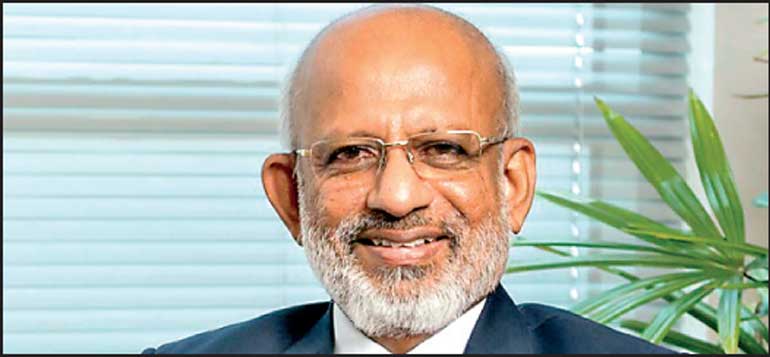
Chairman Prof. Hareendra Dissabandara
The Securities and Exchange Commission of Sri Lanka (SEC) intensified efforts in 2025 to bring State-Owned Enterprises (SOEs) to the capital market, arguing that listings could help address longstanding governance, financing, and accountability challenges while reducing reliance on Treasury support.
In his review accompanying the SEC’s 2025 Annual Report, SEC Chairman Prof. Hareendra Dissabandara said the capital market has a central role to play in mobilising long-term financing for both corporates and SOEs as Sri Lanka seeks to sustain its economic recovery and accelerate growth.
“Many SOEs continue to face structural challenges, including fiscal constraints, governance gaps, and limited access to diversified financing,” he noted.
According to Prof. Dissabandara, the capital market offers a viable pathway for SOEs to enhance transparency, strengthen accountability, attract strategic investment, and reduce dependence on the Treasury.
During 2025, the SEC worked with the Colombo Stock Exchange (CSE), the Trade, Commerce, Food Security and Co-operative Development Ministry, and the Department of the Registrar of Companies to facilitate the groundwork required for SOEs to progressively access market-based funding.
The initiative included targeted industry engagements and the presentation of successful post-listing growth stories aimed at demonstrating the benefits of capital market participation.
The SEC Chairman said Sri Lanka’s economic recovery has reached a stage where stronger long-term growth will require a significant expansion of investment and capital formation, making efficient capital allocation increasingly important. He noted that capital-raising through the CSE increased strongly during 2025, reflecting growing confidence in market-based financing.
Prof. Dissabandara also pointed to opportunities arising from the Central Bank of Sri Lanka’s (CBSL) directive requiring banks to reduce single borrower exposures from January 2026, a move that could encourage large corporates that have traditionally relied on bank financing to explore equity and debt market funding alternatives. In response, the SEC and the CSE intensified engagement with companies to position listing as a sustainable funding solution.
Beyond the SOE listing initiative, the SEC highlighted progress across a broader capital market reform agenda.
During the year, the regulator launched 12 capital market transformation strategies under the theme “12 Pillars, One Vision for a Resilient Market,” aimed at modernising market infrastructure, strengthening regulation, broadening product offerings, and expanding investor participation.
A major infrastructure milestone was the establishment of the Central Counterparty framework through CSE Clear Ltd., which the SEC said would strengthen settlement security, improve market resilience, and align Sri Lanka’s post-trade infrastructure with international standards.
The regulator also continued efforts to diversify investment products.
During 2025, nine Green, Blue, Social, Sustainable and Sustainability-Linked Bond issuances raised approximately Rs. 54 billion, accounting for 40% of total corporate debt capital raised during the year. Overall, the CSE has recorded 11 such issuances amounting to approximately Rs. 82.35 billion.
The SEC further expanded the market’s product range through frameworks covering Perpetual Bonds, Infrastructure Bonds, High-Yield Bonds, and Sukuk, while introducing stock borrowing and lending and Regulated Short Selling.
Prof. Dissabandara said the regulator also strengthened market surveillance, investor protection, anti-money laundering controls, and financial literacy initiatives during the year, while continuing investments in technology, cybersecurity, and digital transformation to support a more resilient and globally competitive capital market.
The Chairman noted that Sri Lanka’s economy expanded by 5% in 2025 and benefitted from improved macroeconomic stability, stronger foreign reserves, and a sovereign rating upgrade that marked the country’s exit from default, helping restore investor confidence and support a strong rebound in the stock market.



