Tuesday Sep 15, 2026
Tuesday Sep 15, 2026
Thursday, 1 January 2026 00:20 - - {{hitsCtrl.values.hits}}
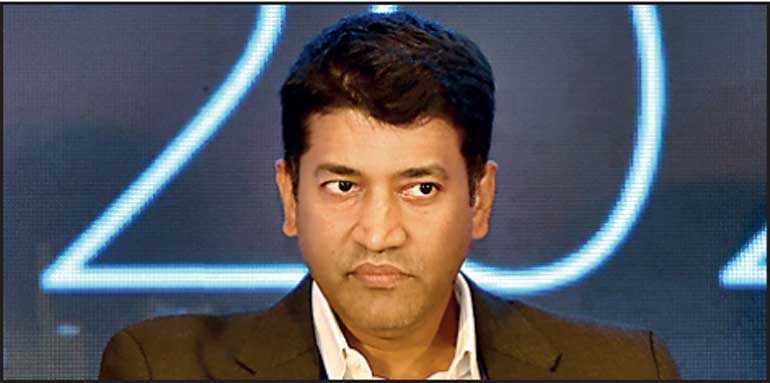
Booking.com Regional Head Santosh Kumar
By Charumini de Silva
Booking.com Regional Head for South Asia Santosh Kumar said rebranding Sri Lanka and unlocking its next phase of economic growth will require a collective national effort that goes well beyond Government-led initiatives, stressing that recovery alone is not a long-term strategy for sustainable development.
He said platforms that bring together policymakers, industry leaders, and investors are essential at this stage of Sri Lanka’s recovery, as the country looks to transition from stabilisation to growth.
“At this period of time, attracting investment is not just important, it is essential if Sri Lanka is to unlock its next phase of economic growth,” he told the Daily FT on the sidelines of the Sri Lanka Economic and Investment Summit.
Quoting renowned brand strategist Simon Anholt, he noted that a nation’s image is its greatest asset, but also a shared collective responsibility. In Sri Lanka’s case, Kumar said rebranding cannot be left solely to the Government.
“Rebranding Sri Lanka is not just the job of the Government. It is a collective responsibility that policymakers, individual organisations, hoteliers, and every citizen of the country must take on together,” he said, adding that the task ahead is to define that shared responsibility and seize the current moment.
Kumar acknowledged that Sri Lanka has successfully navigated a difficult recovery period following multiple crises, with rising arrival numbers reflecting renewed confidence in the destination and the enduring warmth of its people.
However, he cautioned that recovery alone is insufficient as a strategic objective. “Recovery is not a strategy. Our goal cannot be to chase volume. The real economic imperative is how Sri Lanka derives value,” he said.
He identified two key challenges that must be addressed to unlock that value: the “value challenge” and the “digital challenge.”
On the value front, Kumar said Sri Lanka must remove the barriers that prevent it from commanding a premium position on the global tourism stage. This requires unifying fragmented branding and promotional efforts into a single, cohesive message that highlights high-value, niche experiences.
“Sri Lanka has the potential to sell differentiated experiences, whether in wellness, ecotourism, or cultural immersion, but these need to be positioned coherently,” he said.
He added that the country must also shift from being perceived as a seasonal destination to a year-round, 365-day market.
Kumar also outlined that global travel decisions today are overwhelmingly made on mobile devices, and that Sri Lanka’s competition extends far beyond neighbouring resorts or destinations.
“Our competition is every destination that offers a seamless, digital booking experience,” he said, warning that properties and experiences that are not easily discoverable or bookable online are effectively invisible to international travellers.
He stressed the need to formalise Sri Lanka’s tourism supply chain and embrace technology so that high-quality local offerings can compete effectively with leading destinations across the region.
This transformation, Kumar said, requires strong public-private collaboration, with the Government providing a stable policy environment and quality infrastructure and the private sector delivering world-class service standards and innovative products.
Reaffirming Booking.com’s commitment to Sri Lanka, Kumar said the global travel platform stands ready to support the country’s ambitions through data-driven insights, technology, and international reach.
“We bring the data intelligence to identify high-value customers, the technology to put Sri Lankan hotels and experiences on the global map, and the global reach to tell Sri Lanka’s authentic story,” he said.
Kumar said if Sri Lanka can align its branding, value proposition, and digital capabilities, while working collectively across sectors, it can successfully move from recovery to a more resilient, high-value growth trajectory.




