Thursday Oct 15, 2026
Thursday Oct 15, 2026
Thursday, 15 January 2026 00:28 - - {{hitsCtrl.values.hits}}
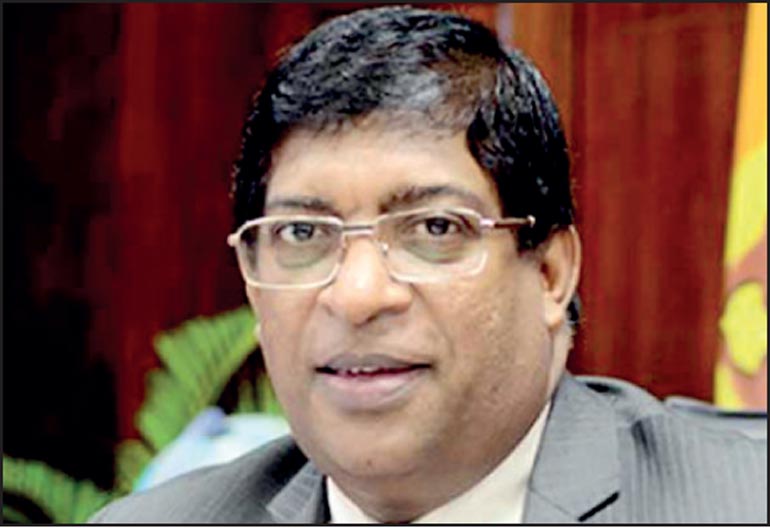
Former Finance Minister and MP Ravi Karunanayake
Former Finance Minister and MP Ravi Karunanayake has cautioned that Sri Lanka’s economic recovery in 2026, while showing visible improvement on the surface, remains tightly constrained by debt obligations, fragile foreign exchange flows, and rising fiscal pressures, particularly after recent natural disasters.
Quoting in reference to Finance Ministry quarterly bulletins and official fiscal data, Karunanayake said Sri Lanka is “not out of danger yet,” despite gains made under the International Monetary Fund (IMF)-supported Extended Fund Facility (EFF).
He noted that the Government’s ability to manage external debt servicing next year depends almost entirely on strict adherence to revenue targets, expenditure discipline, and uninterrupted foreign inflows.
According to Finance Ministry data, Sri Lanka has committed under the IMF program to keep foreign debt servicing below 4.5% of GDP and reduce total public debt to about 95% of GDP by 2032.
Karunanayake pointed out that these benchmarks leave “very little room for fiscal error,” stressing that debt sustainability is now being tested annually, not postponed to the end of the decade.
He revealed that contrary to public perception, Sri Lanka is already servicing restructured debt and not waiting until 2028.
Debt restructuring agreements have reduced immediate repayment pressures by nearly $ 17 billion between 2023 and 2027, a relief he described as “significant but temporary.” He warned that once grace periods taper off, the burden will return unless growth and revenue improve materially.
He said taxation remains the Government’s primary tool to meet IMF-mandated fiscal consolidation.
With regard to the Budget prior to the cyclone impact, he indicated that the reduction of VAT and Social Security Contribution Levy thresholds was to exceed the 15% of GDP that the Sri Lankan economy has never seemed to sustain.
But he also warned: “Aggressive tax expansion not accompanied by economic growth could diminish compliance and stifle small and medium enterprise development.”
Quoting Finance Ministry fiscal performance reports, he acknowledged that revenue performance has improved compared to the crisis years, but said it remains “highly sensitive to shocks.” He asserted that tax policy alone cannot stabilise the economy unless supported by export growth, investment inflows, and productivity gains.
On the external front, Karunanayake said the rebuilding of foreign exchange reserves is a clear positive. The gross official reserves are also projected to reach almost $ 6.8 billion by end-2025, aided by IMF disbursements, multilateral loans, worker remittances, and tourism receipts.
However, he said that projections for 2026 have already been lowered, as vulnerability in balance of payments remains.
A foreign exchange inflow is still policy-driven, and outflows driven by importation, servicing of debt, and emergency expenditures can quickly offset an increase in reserves should there be a weakness in discipline, according to him.
The former Finance Minister said the fiscal stress became evident after Cyclone Ditwah forced a major revision of the 2026 Budget.
The budget deficit has been raised further by sanctions totaling Rs. 500 billion for the purpose of reconstructing and providing assistance, thereby rising to 6.5% from 5.1% of GDP. Expenditures, despite being necessary, have brought to light the closeness of the Budget structure to being in balance, as warned by him.
Karunanayake noted that a resurgence in reconstruction work, foreign investments, and an increase in capital expenditures could help maintain a growth rate above 5% in 2026, thereby easing pressure on agricultural and export sectors to a certain extent. He went on to say that the country’s GDP has not yet recovered to pre-crisis levels.
He concluded that Sri Lanka’s economic position in 2026 is best described as “stabilised but not secured.” The IMF program, debt restructuring, and reserve rebuilding have created breathing space, he said, but sustaining recovery will require consistent revenue generation, disciplined spending, and careful management of foreign exchange flows.
“This is not the time for fiscal populism or policy reversals,” Karunanayake asserted, warning that the cost of missteps now would be far higher than during normal economic cycles.




