Friday Oct 30, 2026
Friday Oct 30, 2026
Friday, 30 October 2026 00:25 - - {{hitsCtrl.values.hits}}
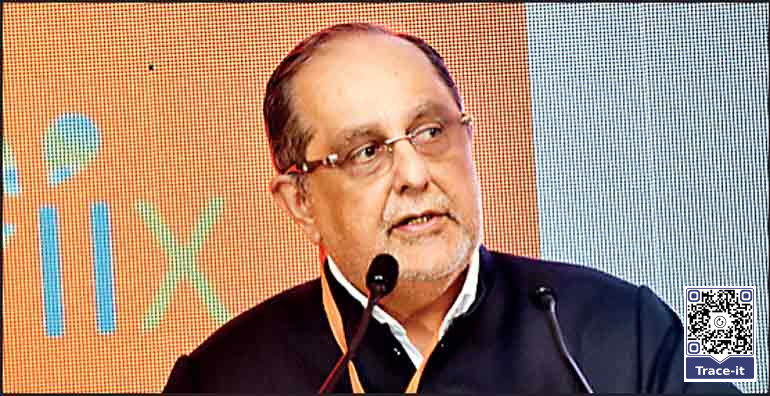
President’s Special Envoy for Foreign Direct Investment and Western Province Governor Hanif Yusoof
– Pic by Shehan Gunasekara
President’s Special Envoy for Foreign Direct Investment and Western Province Governor Hanif Yusoof has said Sri Lanka has for far too long failed to connect its talent and ambition with the opportunities they deserve. He set out what the country needs to build an inclusive economy that draws local and international capital.
Outlining the Government’s commitment to inclusive finance and to creating an environment for capital to grow, Yusoof told the Orange Economy Summit 2026 in Colombo on Wednesday that Sri Lanka lacked neither ambition nor opportunity. He described the country’s greatest natural resource as its people, not its land, forests or location.
The country had come through one of the most difficult periods in its economic history, he said, with a financial crisis and uncertainty that affected almost every household.
“Recovery alone is not enough. We must build a better economy, a fairer economy, a more inclusive economy,” Yusoof said. That meant an economy where a person’s future is determined by talent and hard work rather than background and circumstances.
Yusoof pointed to one of the economy’s starkest gaps: only about a third of working-age women participate in the labour force, compared with a higher proportion of men. While the country discusses how to attract billions of dollars in foreign investment, he said, a significant part of its own women’s potential remains underutilised. The same holds for young entrepreneurs in rural villages, persons with disabilities and small businesses that could become international exporters if they had access to finance, technology and markets.
“These are not people without potential. They are people without sufficient opportunity,” he said.
The Government’s most important goal, Yusoof said, is to create the connection between business and society. That requires encouraging education, improving digital connectivity, strengthening transparency and creating an environment where local and international investors can operate with confidence. He identified opportunities in tourism, small industries, agriculture, services, technology and entrepreneurship.
“We must also recognise that climate resilience is now an economic necessity,” Yusoof said. Cyclone Ditwah had shown how quickly livelihoods, infrastructure and years of progress could be lost, he said, and investment must also protect communities and future generations.
Sri Lanka should aim to become a regional centre for inclusive and sustainable investment, Yusoof said, attracting international capital to support small businesses, climate-resilient enterprises and emerging sectors. Linking impact investment with capital market institutions, including the Colombo Stock Exchange, could open new pathways for international capital to reach promising Sri Lankan businesses. As Special Envoy, he said, he saw his role as helping bring investment and opportunity together.
Coming from business, Yusoof said, he understood that financial returns matter. But investors must also ask what difference their capital makes to people’s lives, including whether it creates jobs and empowers women. Financial returns and social impact, he said, need not compete.
“We do not simply need more capital. We need that capital to reach the right people, create real opportunity and produce lasting value,” he said.
The Government cannot achieve this alone, Yusoof said. Banks, financial institutions, universities, private companies and development partners must work together and move from discussion to action. He said success, judged five years from now, should be measured not by the partnerships signed but by the women who have become entrepreneurs and professionals, the enterprises that have entered international markets and the jobs created.




