Thursday Oct 15, 2026
Thursday Oct 15, 2026
Tuesday, 20 January 2026 02:55 - - {{hitsCtrl.values.hits}}
 |
 |
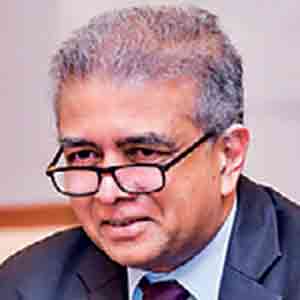 |
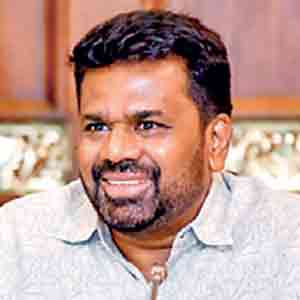
| President Anura Kumara Dissanayake | Digital Economy Deputy Minister Eranga Weeraratne | Senior Presidential Adviser on Digital Economy Dr. Hans Wijayasuriya |
President Anura Kumara Dissanayake yesterday signalled a renewed push towards a cashless economy, positioning digital payments and formalisation of economic activity as central priorities under the Government’s Digital Economy agenda for 2026.
Chairing a review meeting on projects implemented in 2025 and initiatives proposed under the 2026 Budget, the President called for faster progress on cashless transactions, digital public infrastructure (DPI), and the integration of informal economic activity into the formal system, stressing that these reforms are critical for future economic planning and development.
The 2026 Budget has allocated Rs. 25.5 billion towards Sri Lanka’s digital economy, focusing on initiatives to expand cashless transactions, DPI, and formalising economic activity.
The allocation covers the scaling up of digital Government payments through GovPay, upgrades to Government cloud infrastructure, roll-out of the Sri Lanka Unique Digital Identity, expansion of broadband access, and incentives to promote QR-based and electronic payments, including the waiving of service charges on Government e-payments from January 2026.
The Budget also earmarked funding to attract investments in data centres, artificial intelligence (AI), and cloud infrastructure, strengthen data protection and digital governance frameworks, and support startups and innovation as part of a broader push to position Sri Lanka as a competitive digital economy.
The President’s Media Division said yesterday’s discussion was held to review the progress and plans for 2026, including a national program to provide high-speed broadband facilities, provision of single-window facilities, the digital identity card project, and the project to digitalise payment of traffic spot fines.
Noting that much of the economic activity of rural communities remains in the informal sector, the President noted the need to formally document these activities and stressed that this is essential when formulating future economic and development plans.
The performance, progress, and future plans of institutions under the Digital Economy Ministry, including the Sri Lanka Computer Emergency Readiness Team (CERT), the Data Protection Authority, and the Telecommunications Regulatory Commission (TRC), were also reviewed.
The current status and new recruitments of the GovTech institution, established to implement the Government’s digitalisation program, were also discussed.
Digital Economy Deputy Minister Eranga Weeraratne, Secretary to the President Dr. Nandika Sanath Kumanayake, Senior Presidential Adviser on Digital Economy Dr. Hans Wijayasuriya, Senior Additional Secretary to the President Roshan Gamage, Digital Economy Ministry Secretary Waruna Sri Dhanapala, and senior officials of the Ministry and its institutions also participated in the discussion.




