Thursday Oct 22, 2026
Thursday Oct 22, 2026
Friday, 10 July 2026 00:24 - - {{hitsCtrl.values.hits}}
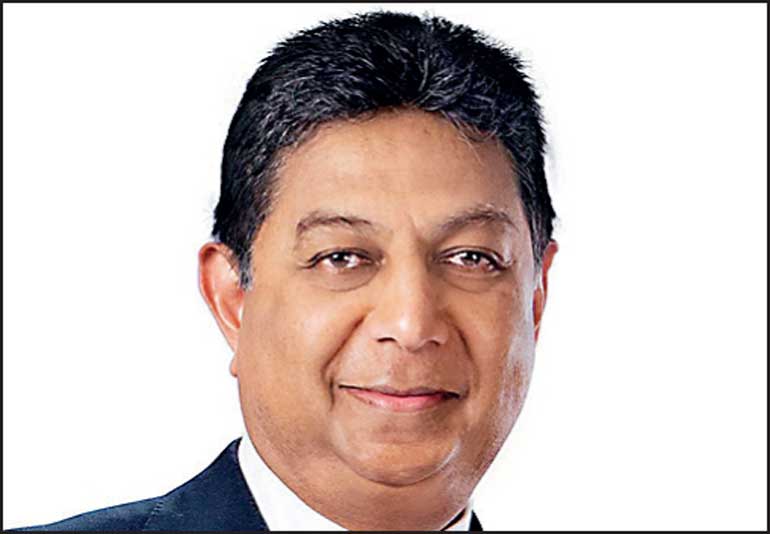
Colombo Port City Economic Commission Chairman Harsha Amarasekera, PC
The Colombo Port City Economic Commission will shortly invite proposals for an international university, hospital, and school, as it shifts its focus from developing real estate to building the institutional foundations needed to attract multinational companies and skilled professionals.
Commission Chairman Harsha Amarasekera, PC said the three projects were integral to the next stage of Port City’s development, arguing that globally recognised education and healthcare institutions had become prerequisites for companies considering long-term regional operations.
“There will be a Request for Proposal (RFP) for a university, one for a hospital, and one for a school,” Amarasekera said at a recent forum organised by the Public Relations Forum of Sri Lanka in association with The Sri Lanka Institute of Directors, AMCHAM and Port City Colombo.
“The criteria will be based on the international recognition of the university, the hospital, and the international school. All three are considered fundamental to the success of the whole City.”
He said the facilities would also serve the wider Colombo metropolitan area by strengthening domestic education and healthcare while reducing the outflow of foreign exchange on overseas schooling and medical treatment.
Amarasekera said Port City was conceived as a Special Economic Zone (SEZ) centred on internationally traded services rather than manufacturing, with businesses operating within the City serving overseas markets instead of the domestic economy.
“It is a dollarised economy,” he said, noting that the Commission currently permits transactions in 14 foreign currencies, with additional currencies expected to be approved over time.
That framework, he said, forms part of a broader strategy to position Port City as a base for global capability centres, innovation hubs, compliance operations, and business continuity facilities serving companies with regional operations.
Rather than relocating entire headquarters, companies could establish satellite operations in Colombo capable of supporting business continuity during geopolitical or operational disruptions elsewhere, he said. Under the Commission’s regulatory framework, transferred personnel could obtain visas within four days, allowing firms to move operations with minimal interruption.
Amarasekera acknowledged, however, that Sri Lanka’s shortage of skilled technology professionals remained a significant constraint on attracting large-scale investment.
He said discussions with prospective investors showed that while companies were prepared to establish operations in Colombo, expansion frequently stalled once initial recruitment needs had been met because sufficient local talent was unavailable.
“If they can’t find the talent at the correct price point, they can attract the talent from India until such time our universities and technical colleges produce those numbers,” he said.
Amarasekera argued that allowing companies to recruit foreign professionals should be viewed as a transitional measure that would support knowledge transfer while generating economic activity, as expatriate employees earning in foreign currency would spend on housing, services, and other local consumption.
He also outlined the Commission’s governance framework, saying all businesses seeking to operate within Port City require Commission approval, while applications for incentives are evaluated against transparent criteria before recommendations are submitted to Cabinet for approval.
Separately, Amarasekera rejected suggestions that the project had transferred ownership of reclaimed land to China, reiterating that the land is owned by the Government of Sri Lanka and vested in the Port City Economic Commission, with certain parcels leased to the project developer to recover reclamation costs.
He said five developments are currently under construction within Port City, with a further five expected to be awarded by the end of the year and two smaller projects targeted for completion before December as the Commission seeks to accelerate the transition from infrastructure development to commercial operations.




