Tuesday Sep 15, 2026
Tuesday Sep 15, 2026
Monday, 23 March 2026 00:27 - - {{hitsCtrl.values.hits}}
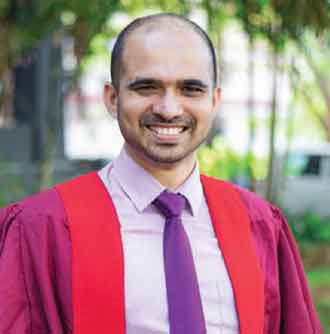
Prof. Janaka Fernando Director of Postgraduate Centre for Business Studies, Faculty of Management Studies and Commerce, University of Sri Jayewardenepura
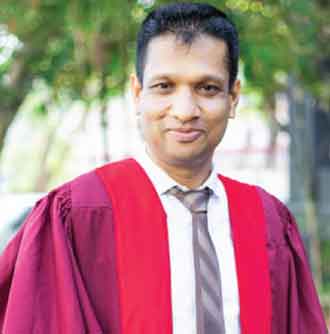
Prof. Ananda Rathnayake Head, Department of Business Economics, Faculty of Management Studies and Commerce, University of Sri Jayewardenepura
India’s Dominance in the Asian Century
The centre of gravity in the global economy has shifted before—and it is shifting again. The 19th century was shaped by the industrial and financial dominance of the United Kingdom, with London at the centre of global trade. The 20th century, in turn, became the American century—defined by the scale of the United States economy, the reach of its financial system, and the centrality of the dollar. The 21st century is widely described as the Asian Century—a period marked not only by the rise of large economies, but the reorganisation of global economic geography towards Asia.
Production, services, capital, and digital flows are increasingly anchored in the region. Yet, while Asia’s economic weight has expanded, its institutional architecture remains uneven—particularly in South Asia.
India sits at the centre of Asia’s ongoing transformation, with its influence particularly pronounced within South Asia’s evolving economic landscape. With a nominal GDP estimated at approximately US$ 4.1 trillion in 2025, sustained economic growth of around 6.5% in FY2024–25, momentum in the 7–8% range, and total exports nearing US$ 825 billion, India has moved decisively into a new phase of globalisation.
Its services economy—accounting for over 53–55% of GDP and generating more than US$380 billion in services exports—has positioned it as one of the world’s leading providers of IT, financial, and business services. India is no longer a domestically oriented emerging market; it is a globally integrated services power with outward-facing capital and enterprise ambition.
Global Instability and the Imperative of Diversification
This structural gap has become more consequential in the context of increasing global uncertainty. The international economic environment is characterised by geopolitical tensions, supply chain realignments, and periodic instability across key regions, particularly parts of the Middle East.
For decades, Gulf-based hubs have played a central role in facilitating trade, finance, and services across Asia and Africa. While their importance remains intact, evolving geopolitical risks are prompting firms to reconsider concentration strategies. Global enterprises are increasingly adopting a diversification approach to economic infrastructure:
This is not a departure from existing hubs, but a shift towards resilience. Within this evolving landscape, the Indian Ocean region is gaining prominence as a space for distributed and complementary platforms—creating an opening for new nodes to emerge.
Port City Colombo in the Asian Century
Geographically, Colombo is positioned along one of the world’s most significant maritime corridors, connecting South Asia, East Africa, and the Gulf. Its proximity to India—particularly the southern economic corridor—places it within immediate operational reach of Indian enterprise.
In functional terms, Port City Colombo represents an attempt to institutionalise the missing layer in South Asia’s economic architecture. Within South Asia, Sri Lanka occupies a relatively distinct position. While the region is often characterised by complex political and institutional dynamics, Sri Lanka has historically maintained an outward-oriented economic posture and functional engagement across regional partners.
Extending India’s Economic Geography
For Indian firms, the relevance of such a platform is increasingly clear as enterprises scale globally. They require:
India’s cities—Mumbai, Bengaluru, Chennai, and Hyderabad—offer deep capabilities in finance, technology, and services. However, they operate within a domestic regulatory framework that is not always optimised for global intermediation.
Indian Enterprise as Ecosystem Builder
The success of any international hub ultimately depends on the quality of its participants. Indian firms—across IT, financial services, infrastructure, and professional services—bring:
Conclusion: A Strategic Node in the Asian Century
As the Asian Century unfolds, the importance of institutional platforms that connect regions to global systems will only increase. South Asia’s ability to benefit from India’s rise will depend on whether it can develop such platforms within its own geography.
Port City Colombo represents one of the first serious attempts to align regional infrastructure with this trajectory—not as a competing centre, but as a complementary platform.




