Saturday Sep 26, 2026
Saturday Sep 26, 2026
Saturday, 26 September 2026 00:02 - - {{hitsCtrl.values.hits}}
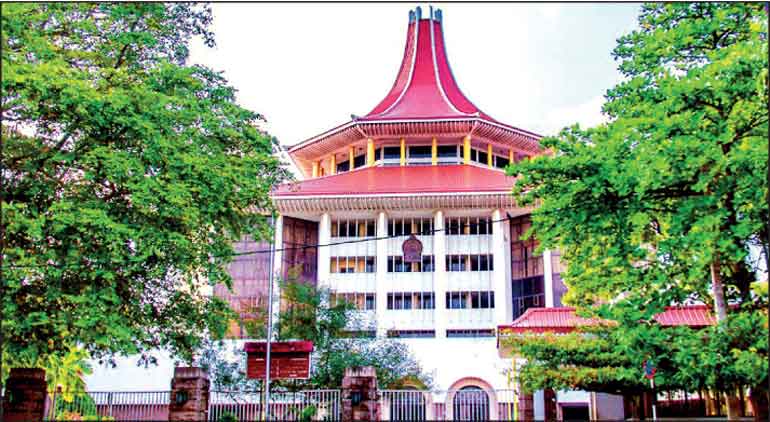
Parliament yesterday passed the 22nd Amendment to the Constitution (22A) with 158 votes in favour and 62 against with 220 MPs sitting. The vote cleared the two-thirds special majority required and extends the tenure of the country’s senior judges.
The vote came at the end of a two-day Second Reading debate opened by Justice and National Integration Minister Harshana Nanayakkara. Proceedings were set by the Committee on Parliamentary Business, and Nanayakkara had presented the Bill on 18 August. The Supreme Court held that the Bill could pass with a special majority and did not need a referendum, and the Speaker informed Parliament of this on 22 September.
The Amendment changes Article 107(5), raising the retirement age of Supreme Court judges from 65 to 67 and of Court of Appeal judges from 63 to 65. Future Chief Justices must step down at 67 or after six years in office, whichever comes first. It also increases the number of judges the Court of Appeal may seat.
Parliament also passed the companion Judicature (Amendment) Bill with 158 votes for and 61 against with 219 MPs sitting at the time. The Bill raises the retirement age of High Court judges from 61 to 63 and sets it at 62 for all other judges and magistrates. It also lifts the maximum number of High Court judges from 110 to 120. Both Bills were endorsed by Speaker of Parliament yesterday evening.
The Government has said the changes are intended to address shortages of judicial officers and strengthen the judicial system. The Supreme Court largely backed that position. It distinguished between a cut in judicial tenure, which would threaten independence, and a non-discriminatory, non-discretionary increase applying uniformly to all sitting judges, holding that the latter cannot amount to an inducement.
It also dismissed claims of “Court Capture” or “Court Packing”, noting that the judges who stood to benefit had served under successive governments of differing political composition. The Bench observed that Sri Lanka’s judicial retirement ages remain low by international standards, with apex court judges retiring at 75 in the United Kingdom, Canada and Brazil, and at 70 in Australia, New Zealand, South Africa, Japan and the Philippines.
Opponents were not persuaded. A record 72 Special Determination petitions were filed, 64 of them against 22A. Their central argument was that extending the retirement age of sitting judges amounted to a ‘legislative bribe’ that would compromise judicial independence protected under Article 3.
Samagi Jana Balawegaya (SJB) General Secretary and MP Ranjith Madduma Bandara argued in the party’s petition that altering the tenure of serving judges affects judicial independence, the separation of powers and the sovereignty of the people.
Opposition MP Dayasiri Jayasekera contended that the Bill contains no transitional provision expressly excluding incumbent judges, potentially allowing their tenure to be extended after appointment.
Petitioners including the Bar Association of Sri Lanka (BASL) also sought a Full Court of all 17 judges and the recusal of Chief Justice P. Padman Surasena, on the basis that he would be the first Supreme Court judge to benefit from the extension. The Bench rejected both applications.




