Saturday Oct 31, 2026
Saturday Oct 31, 2026
Saturday, 31 October 2026 00:04 - - {{hitsCtrl.values.hits}}
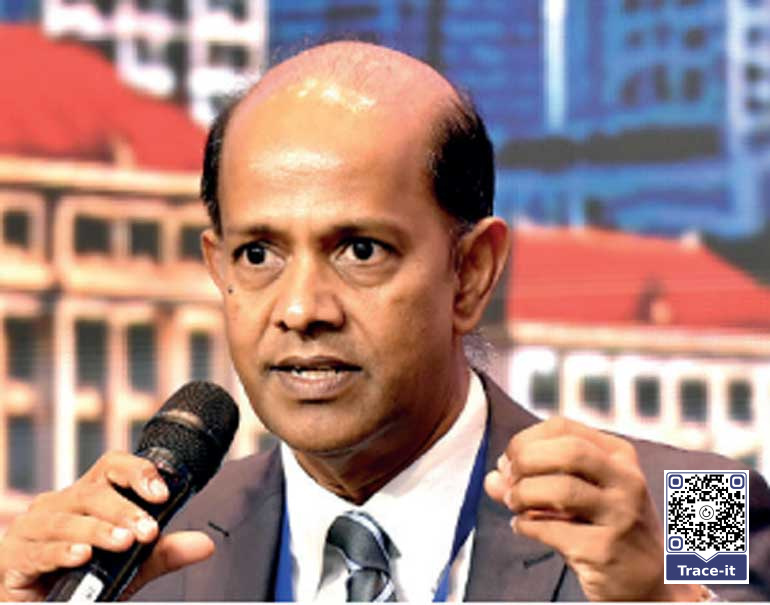
PUCSL Director General and CEO Damitha Kumarasinghe
- Pic Ruwan Walpola
By Charumini de Silva
The Public Utilities Commission of Sri Lanka (PUCSL) believes the new Electricity Act could help attract foreign direct investment (FDI) into the power sector by replacing the traditional single-buyer model with a competitive market that gives investors greater flexibility to sell electricity.
PUCSL Director General and CEO Damitha Kumarasinghe said the Electricity Act No. 36 of 2024, which he said had come into force in March 2026, envisages multiple buyers and suppliers, allowing generators to explore direct supply arrangements with customers rather than relying solely on the national system operator.
“The new Electricity Act gives options for everybody. Options for electricity user and options for investors, both existing and future,” he said at the Sri Lanka Economic and Investment Summit 2026.
Under the previous framework, procurement powers were concentrated within the Ceylon Electricity Board (CEB), creating a single-buyer structure.
The new framework envisages a multi-buyer market in which electricity generators could identify buyers and route power to them through the network, subject to the applicable legal and regulatory arrangements.
Kumarasinghe said this could help address procurement-related constraints faced by investors and widen opportunities for private participation in electricity generation and supply.
He stressed, however, that the benefits would depend on completing the outstanding legal steps required to implement the Act fully.
“We need to quickly do the necessary legal actions to create a level playing field,” he said, warning that without these measures, the system could remain overly focused on the national system operator, limiting the benefits for investors and electricity users.
Kumarasinghe said the proposed framework would introduce competition not only for access to the market but also within the market itself. The electricity users could have greater choice over their electricity suppliers, while generators would have more opportunities to compete for customers.
In this environment, the national system operator would need to remain competitive against alternative suppliers, including private generators and electricity users’ own-generation options.
He said PUCSL’s role would be to facilitate investment by ensuring a level playing field and enabling the choices envisaged under the new law.
The regulator’s position complements its call for a simple, transparent and fair wheeling tariff to facilitate electricity transactions between generators and customers using the transmission and distribution network. Kumarasinghe has said such charges should cover network costs and provide a reasonable return without becoming so high that they discourage investment.
A functioning wheeling framework, together with a competitive electricity market, could help energy-intensive businesses secure power supply and give private generators greater certainty over potential buyers. This would be particularly relevant to investors considering data centres and other industries with substantial electricity requirements.
Kumarasinghe said the Government had enacted a forward-looking electricity law and that PUCSL viewed it positively. The priority now, he indicated, was to complete the necessary legal and regulatory work so that investors and electricity uses could benefit from the options it envisages.
The pace and effectiveness of implementation will be critical to determining whether the proposed shift from a single-buyer structure translates into greater competition, more private investment and improved choice for electricity users.




