Tuesday Oct 20, 2026
Tuesday Oct 20, 2026
Tuesday, 21 July 2026 05:34 - - {{hitsCtrl.values.hits}}
The Planters’ Association of Ceylon (PA) yesterday said that it has called on the Government to treat the systematic theft of high-value agricultural crops as a serious economic threat, warning that unchecked losses are deterring investment, eroding export competitiveness, and putting the livelihoods of farmers at risk.
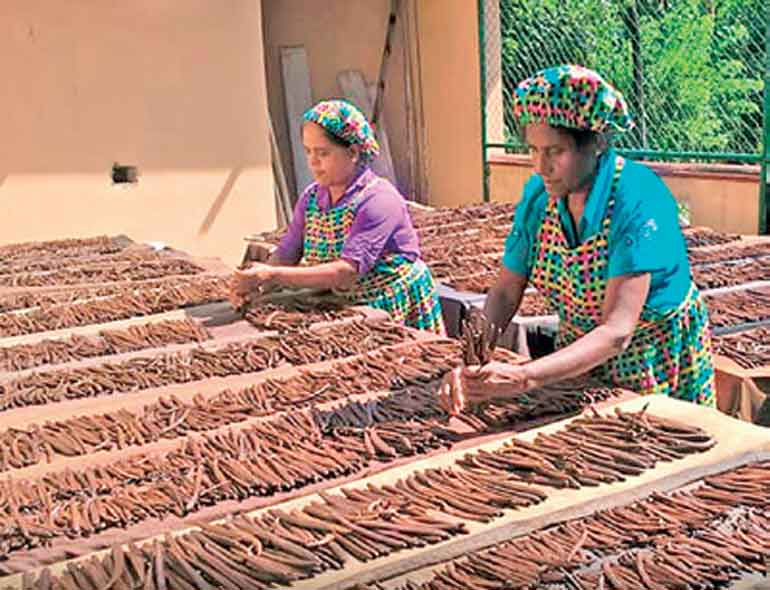
Across Sri Lanka’s plantation districts, the organised theft of pepper, ginger, cardamom, cinnamon, vanilla, avocado, and other high-value crops has reached a scale that the industry says can no longer be dismissed as an isolated or manageable problem, the PA said.
Regional Plantation Companies (RPCs) and smallholder growers have reported increasing losses that wipe out entire seasons of work and companies are spending tens of millions of rupees on security that cuts directly into their ability to compete internationally. The Association said in several cases, farmers and estate managers have abandoned expansion plans for high-value crops entirely after concluding that the returns cannot justify the risk.
The Association estimates that crop losses across the sector may be running into millions, though it is now seeking formally verified data from members to establish the true figure. What is already clear, the Association said, is that the financial damage extends well beyond the stolen harvest itself.
Theft operations are organised and deliberate. Association members report that incidents cluster around the full moon, when natural light allows groups to work through fields without torches. A well-coordinated team can strip a section of cinnamon in two to three hours, clear a cardamom plot in a single pass, or harvest 40 to 50 kilos of pepper from a single vine before dawn. Once the crop leaves the field and enters informal supply channels, it is effectively untraceable.
The PA said that one company is currently spending approximately Rs. 20 million to protect a single crop over a three-month period. Those costs do not appear in any Government measure of agricultural competitiveness, but they are real and recurring and they fall entirely on the producer. For estates already competing against lower-cost producers in Vietnam, India, and Kenya, this adds further strain, with RPCs losing revenue and the State losing tax income as a result.
The PA pointed to pepper as a crop where the damage to investor confidence has been most visible. Several growers who had begun trialling pepper, a high-value crop with strong export potential, have pulled back from expansion after sustained theft on their plots. Cardamom has been similarly affected. One company that committed to planting 18 hectares spent several years deploying watchers and security personnel before concluding that the cost was unsustainable. The project was not extended.
The Government has publicly committed to growing Sri Lanka’s agricultural exports and attracting investment into the sector. The Association’s position is that this goal cannot be achieved while the conditions on the ground make high-value crop production an unacceptable risk for growers.
Agricultural theft is a criminal offence under existing Sri Lankan law. The Association’s concern is that the penalties attached to that offence bear no relation to its economic consequences. In many cases, a fraction of the value of what was stolen provides no meaningful deterrent to repeat offenders. When the punishment is cheaper than the crime, the law becomes ineffective.
Technology has so far failed to fill the gap. CCTV systems are defeated by power cuts. Fingerprint entry controls have been circumvented. Drones face practical obstacles in shade-grown and wind-exposed terrain. The infrastructure installed to protect crops, including fencing and other equipment, has itself become a target for theft.
Accordingly, the PA called on the Government to revise and effectively enforce the penalties for agricultural theft so that fines and sentences reflect the actual value of the crops stolen and create a genuine deterrent. The PA also called for the development of a traceability framework for high-value produce within informal supply chains, so that stolen crops can be identified and prosecuted once they leave the field. Lastly, the Association called for the formal recognition of crop theft in national agricultural policy and the allocation of resources to enforcement accordingly.
The PA is also collecting verified data from its members on the scale of losses across both smallholder and estate operations, and intends to present this to the relevant Government Ministries.
“Sri Lanka has the climate, the land, and the agricultural knowledge to be a serious player in high-value crop exports. But we cannot build that future if a farmer can spend nine months on a crop and lose everything the night before he is paid. This is not a minor inconvenience. It is a structural problem that needs a structural response,” the PA said.




