Sunday Oct 11, 2026
Sunday Oct 11, 2026
Monday, 12 January 2026 03:50 - - {{hitsCtrl.values.hits}}
|
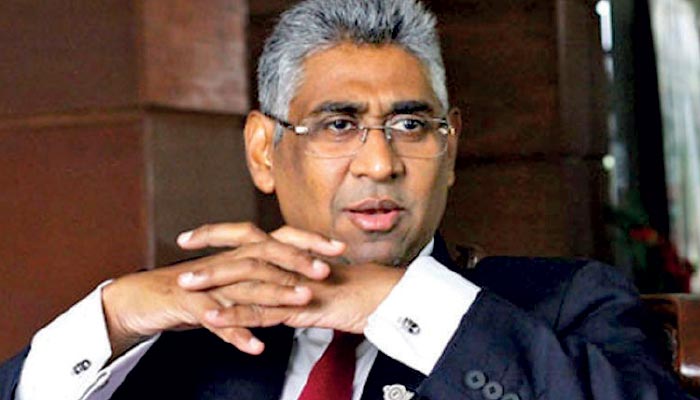
Opposition MP Faiszer Musthapha |
Opposition MP Faiszer Musthapha warned Parliament that amendments to the Colombo Port City Economic Commission Act could create systemic risk, weaken banking regulation, and destabilise the domestic economy if left unchanged.
Speaking during the debate on the Colombo Port City Economic Commission (Amendment) Bill, Musthapha said the proposed changes to offshore banking provisions marked a sharp departure from the existing regulatory framework under the Banking Act.
He began by welcoming the December 2025 appointment of President’s Counsel Harsha Amarasekera as Chairman of the Colombo Port City Economic Commission, saying Amarasekera’s legal and corporate experience would add value to Port City development. However, Musthapha said this did not mitigate fundamental concerns in the Bill.
“The amendments create systemic risk, which could destabilise the domestic economy,” he told Parliament, arguing that the revised framework would allow the Port City Commission to issue offshore banking licences outside the Banking Act.
Musthapha noted that prior to the amendment, offshore banking licences were issued under the Banking Act, with the Central Bank as the primary regulator. Under the proposed changes, licences would be issued under the Port City Act, raising questions over regulatory expertise and accountability. “You are effectively creating a shadow banking system,” he said, questioning whether the Port City Commission had the technical capacity to issue banking licences.
He also warned that provisions allowing offshore banks in Port City to borrow foreign currency from domestic banks could place pressure on Sri Lanka’s foreign exchange reserves and domestic banking system. “That is a very dangerous phenomenon,” he said.
Musthapha raised concerns over the requirement that Central Bank regulations for Port City offshore banks be aligned strictly with international banking standards, arguing that such standards were fluid and lacked precise definition. Citing Basel norms, he said Sri Lanka had previously strengthened safeguards by imposing higher capital adequacy ratios than the minimum international requirements. He proposed inserting the phrase “as far as practicable” to preserve regulatory discretion in the national interest.
On tax policy, Musthapha criticised the removal of income tax exemptions for Sri Lankan residents employed in Port City, warning that it could worsen the brain drain at a time when personal income tax rates were already high. “If you want to retain Sri Lankans working here, you must reconsider this amendment,” he said.
He also questioned whether the revised offshore banking regime would attract investors, noting that while a commercial bank operating domestically requires $ 60 million in capital, an offshore bank would require only $ 15 million, and that only foreign banking entities would be eligible to set up offshore banks in Port City. This, he argued, created an uneven playing field for Sri Lankan banks.
Beyond banking, Musthapha criticised broader investment bottlenecks, including lengthy approval processes and the absence of statutory timelines for decisions by the Port City Commission. He called for a one-stop shop approach to facilitate domestic investment and prevent Sri Lankan capital from flowing overseas.
Musthapha urged the Government to reconsider granting licensing powers to the Port City Commission. “We have a very strong Banking Act and an established regulatory process,” he said, warning that weakening it in favour of a parallel licensing framework would be very detrimental to the banking system.